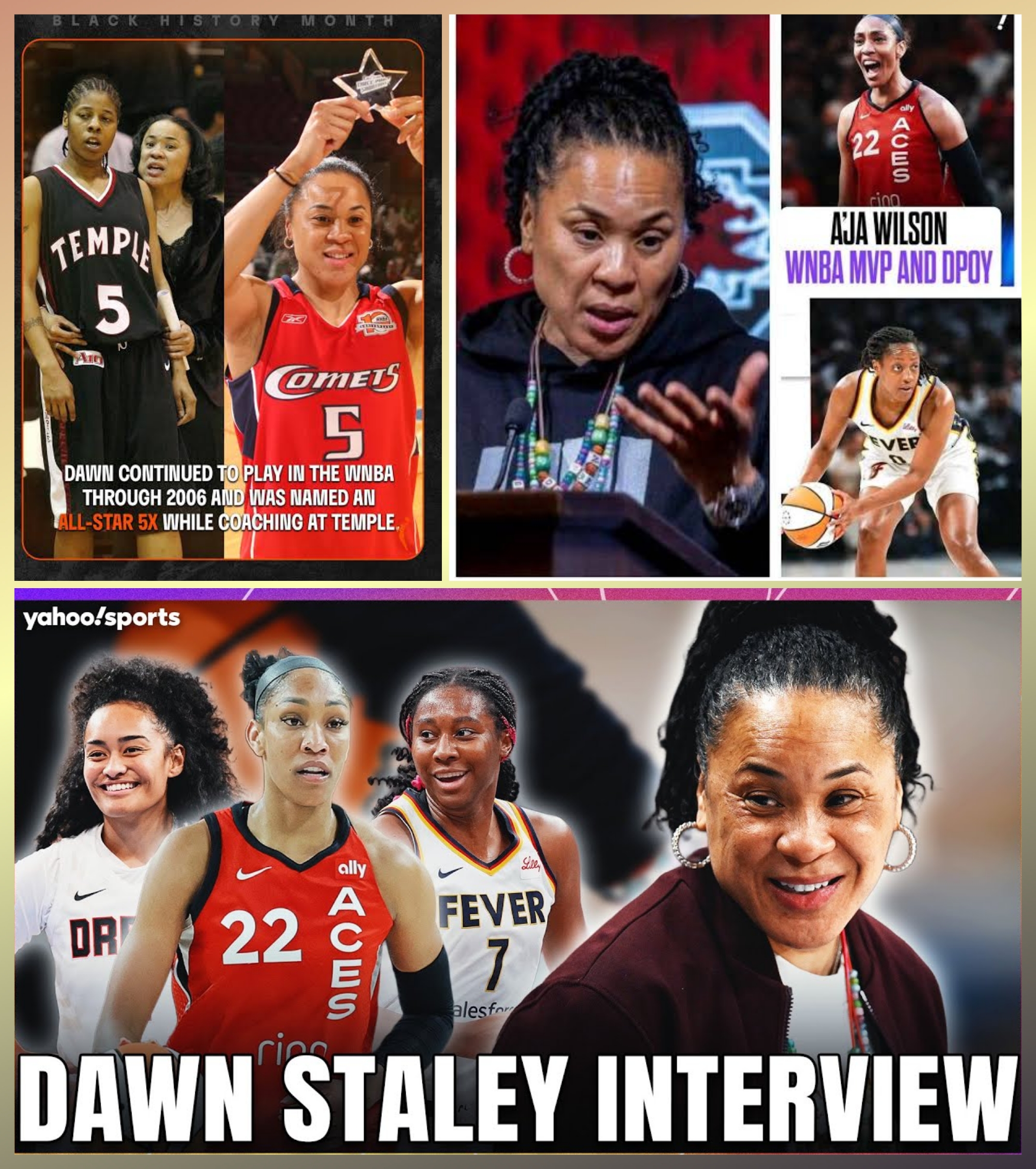
For Dawn Staley, the landmark WNBA collective bargaining agreement isn’t just good news — it’s personal.
Speaking Friday on the eve of South Carolina’s opening-round NCAA Tournament game against 16th-seeded Southern University, Staley framed the new CBA through the lens of her own career: one defined as much by sacrifice and limited options as it was by on-court brilliance. A three-time Final Four participant at Virginia and a decorated professional, Staley had little choice but to play overseas because domestic opportunities simply didn’t pay enough to sustain a career at home. That reality shaped her. And now, watching it change in real time for the players she coaches, she is openly enthusiastic.
“I will say the players’ association and all the officers in the players’ association, just bore down and fought for their worth and the worth of current players as well as the future,” Staley said.
The WNBA, for its part, appears to have met players where they needed to be met. Staley was equally pointed in crediting the league itself for recognizing the historical weight of the moment.
“They understand they have to be on this side of such an historical deal, they understand they have to be on this side of history to move our game forward,” Staley said.
The practical implications for Staley’s current roster are significant. Players like Raven Johnson and Tessa Johnson — both projected future pros — stand to enter a league that will pay incoming first-round picks far more than any previous generation. To illustrate the shift, Staley offered a striking benchmark: the new salary structure could mean incoming draftees earn more than South Carolina’s two No. 1 overall picks, A’ja Wilson of the Las Vegas Aces and Aliyah Boston of the Indiana Fever, made when they entered the league.
“When you enter into the league, you’re going to make probably 100 times, 75 times, more than someone 30 years ago, 10 years ago, five years ago,” Staley said. “You’re going to make much more money than the No. 1 pick and we’ve had two of them.”
Beyond salary, the agreement also addresses one of women’s basketball’s most persistent structural problems: the overseas grind. For decades, elite WNBA players have spent their offseasons playing in Europe or Asia to supplement their incomes, sacrificing rest, relationships, and longevity. The new deal is expected to give players more financial flexibility and greater control over whether they choose to play internationally — a freedom Staley’s generation never had.
That context made for a telling exchange when Staley turned to Raven Johnson, who passed on the option to enter last spring’s WNBA Draft and returned to South Carolina for a fifth season instead.
“Good thing you came back Raven,” Staley said.
It was a lighthearted moment with real weight behind it. Raven Johnson’s decision to return was made without full knowledge of what the new CBA would look like — yet the timing worked out in her favor. When asked Friday whether she and Tessa Johnson had been following the negotiations and what the deal might mean for their futures, it became apparent Staley had not yet formally briefed her players on the details. She stepped in to fill the gap herself, turning a press conference moment into something closer to a life lesson.
“It’s going to be lucrative,” the coach said plainly.
The broader picture here is one of generational shift. Staley built her reputation as a player navigating a system that undervalued women’s basketball. Now, as a coach who has delivered two national championships and a pipeline of WNBA talent, she is watching that system finally begin to correct itself — and doing so in a position to make sure the next generation understands exactly what they’ve been given.