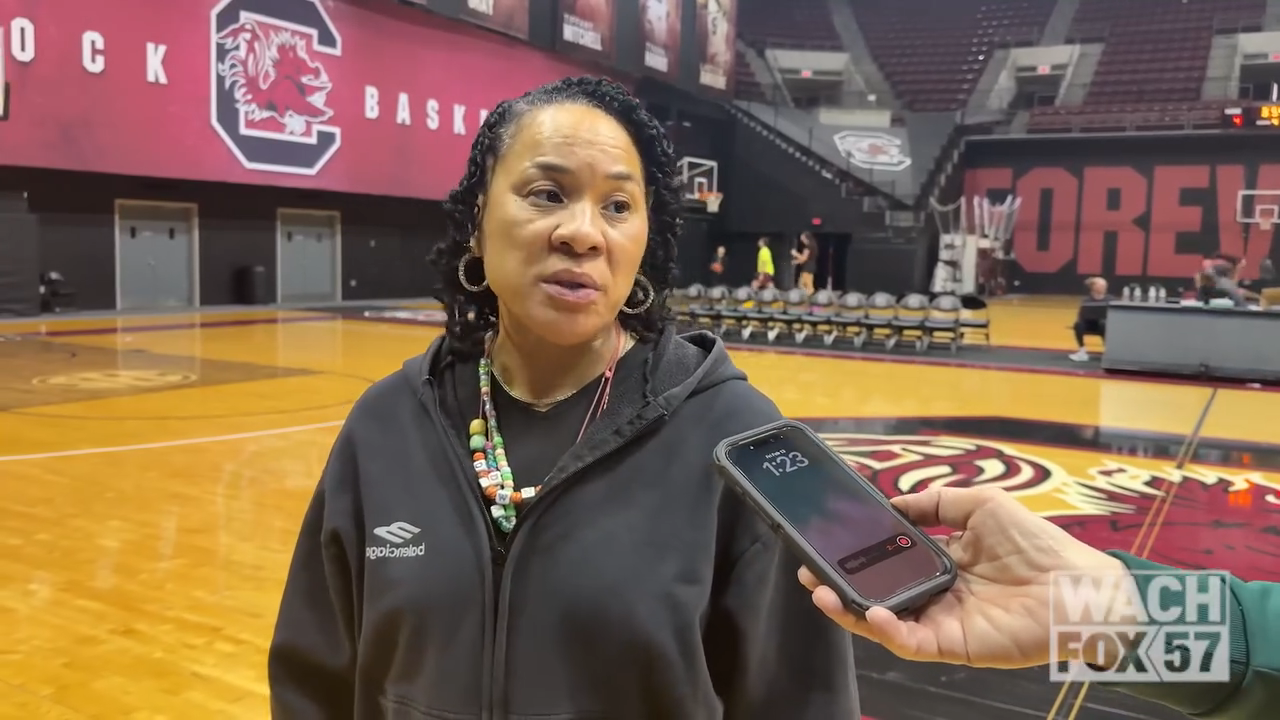
The most successful program in South Carolina athletics history operates at a $6 million annual deficit. Understanding why that number tells the wrong story requires understanding how college sports finance actually works.
The Moment That Stopped a State Senator Cold
In February, during a South Carolina state Senate hearing, Senator Darrell Jackson asked Athletic Director Jeremiah Donati a straightforward question: how many Gamecock sports programs were profitable?
The answer landed like a thunderclap.
“Twenty-two sports at South Carolina,” Donati responded. “Two are net positive … football and men’s basketball.”
Jackson did a double-take.
“So even women’s basketball is not net positive?” he asked.
“Correct,” Donati responded.
That exchange — brief, clinical, and deeply revealing — exposed one of the most misunderstood structural realities in college sports. The program that has won three national championships in eight years, that has filled Colonial Life Arena to capacity for over a decade, that has produced two No. 1 overall WNBA draft picks and generated more revenue than any other women’s basketball program in the SEC — that program operates at a loss.
The instinctive reaction is outrage. The analytical reaction is more complicated. And more honest.
The Television Money Problem: A Structural Inequity, Not a Failure
Before any meaningful analysis of South Carolina women’s basketball’s finances can begin, one foundational fact must be established: no women’s college basketball program in America makes a profit. Not South Carolina. Not UConn. Not Texas, LSU or UCLA.
This is not a reflection of women’s basketball’s commercial value. It is a direct consequence of how television revenue is distributed throughout college athletics.
In Fiscal Year 2025 — running from July 1, 2024 to June 30, 2025 — the University of South Carolina generated just over $44 million in media rights revenue, the vast majority of it flowing from the SEC’s television contract with ESPN. That is a transformative sum of money. It is also money that never reached the women’s basketball program.
According to South Carolina’s annual NCAA financial report, the football program received $18.6 million from media rights. Men’s basketball received $6.86 million. Another $18.5 million went into a non-specific sport allocation. Women’s basketball received nothing directly from that $44 million pool.
The football program — which generated over $20.6 million in profit in FY25 — would have barely broken even without its media rights allocation. That single data point reframes the entire conversation. If football, the most commercially dominant sport in American athletics, depends on television money to remain profitable, then the framing of women’s basketball’s deficit as a failure of the program is not just inaccurate — it is fundamentally misleading.
The Real Numbers: Investment, Revenue and the SEC Landscape
Over the past four fiscal years — spanning the 2021-22 through 2024-25 seasons — South Carolina women’s basketball won over 95% of its games (144-7), reached the Final Four every season and claimed two national championships. It is, by any competitive measure, the most dominant sustained run in the sport’s history.
Financially, the program generates real revenue. It simply invests more than it generates.
Dawn Staley’s program has averaged a $5.75 million annual deficit over those four years. In FY25, that deficit reached its peak at $6.24 million — an increase of over $600,000 from the previous year. On the surface, those numbers read as alarming. In context, they tell a different story entirely.
Across 15 of 16 SEC schools — Vanderbilt, as a private institution, is exempt from NCAA financial reporting requirements — five programs ran larger deficits than South Carolina in FY25: LSU (minus-$8 million), Texas (minus-$7.5 million), Ole Miss (minus-$7.4 million), Kentucky (minus-$6.6 million) and Arkansas (minus-$6.4 million). South Carolina’s deficit is not exceptional within its conference. What is exceptional is what South Carolina receives in return for that investment.
The Gamecocks spent over $13 million on women’s basketball in FY25 — more than any other SEC program. That investment included over $7 million in salaries for Staley, her assistants and support staff. Only LSU ($12.1 million) and Texas ($10.9 million) came within $3 million of South Carolina’s total expenditure. Critically, South Carolina invested $2 million more in its women’s basketball program than its men’s team, which operated on an $11 million budget.
That is a statement of institutional priority that very few athletic departments in the country are willing to make — and it reflects a sophisticated understanding of where the program’s competitive advantage lies.
On the revenue side, the picture is equally striking. South Carolina generated $6.88 million in women’s basketball revenue in FY25 — the highest figure in the SEC by a substantial margin. Tennessee, the second-highest revenue generator in the conference, produced $5.17 million. Every other SEC program fell below $5 million. And if the media rights money distributed to the men’s basketball program were instead allocated to the women’s program on the basis of comparable revenue generation, South Carolina women’s basketball would have outearned the men’s program by $8.59 million — before even accounting for NCAA Tournament unit distributions, which currently favor men’s programs exponentially.
The Ticket Pricing Paradox: A Dynasty Undercharging for Its Own Success
Perhaps the most analytically striking element of South Carolina’s financial picture is what the program was not doing — until very recently.
During the 2023-24 season, South Carolina went undefeated and won the national championship. In that same season, the Iowa Hawkeyes — riding the commercial wave of Caitlin Clark’s historic career — generated $3.3 million from ticket sales. UConn, powered by Paige Bueckers, produced $3.25 million. South Carolina, the undefeated national champion playing in an 18,000-seat arena that leads the nation in attendance, generated just $1.63 million.
The mathematics of that comparison are genuinely difficult to explain. UConn plays nearly half its home games in a venue with under 10,000 seats. South Carolina has 18,000 seats and a decade-long sellout culture. The idea that UConn could generate double South Carolina’s ticket revenue is, as the financial data makes clear, a consequence of pricing decisions rather than demand.
When Donati arrived as athletic director, he identified this gap immediately.
“We are taking a fresh look at ticket pricing for both season and single-game tickets and creating additional corporate partnerships to increase our revenue,” Donati said. “We want to find the balance of keeping a full basketball arena while also making sure that we’re asking and getting fair-market value for those opportunities.”
Staley’s response to the discussion of pricing adjustments reflected both her awareness of the program’s broad fan base and her pragmatic acceptance of market reality.
“I think if we do anything, it’s not going to hurt the people who can afford to come to our games. It’s probably going to who can really afford to, right? But it won’t hurt them as much. I think it’s hitting the right people, who can take the hit of a ticket increase,” she told The State.
The restructuring that followed was surgical in its design. General admission pricing moved minimally — parking passes held at $125, upper-level season tickets increased by just $5, most lower-bowl seating rose by $5 to $10. The program protected access for its broad, loyal fan base while aggressively repricing premium inventory.
The premium tier transformation was dramatic. Mid-court season tickets jumped from $375 to $1,900. Courtside season tickets moved from $650 to $2,450 — precisely matching what South Carolina charges for men’s basketball courtside seats. That alignment is itself a statement: the women’s program now prices its best seats at the same level as its men’s counterpart, an institutional acknowledgment that the product commands equivalent market value.
In FY25 — the first year of gradual pricing adjustments — ticket revenue rose to just over $2 million, nearly a $400,000 increase over the championship season the year before. The full impact of the premium seat restructuring will appear in the FY26 report. Based on the pricing changes implemented, the trajectory points significantly upward.
What the Deficit Actually Represents
The $6.24 million deficit South Carolina women’s basketball carried in FY25 is not evidence of a program failing to maximize its potential. It is evidence of a program investing at the level required to sustain a dynasty — and doing so in a financial ecosystem that systematically withholds the television revenue that would make profitability possible.
South Carolina spends more on women’s basketball than any other SEC program. It generates more revenue than any other SEC program. It wins more than any other program in the sport. The relationship between those three facts is not coincidental — it is causal.
The most telling number in the entire financial picture may be this one: South Carolina invested $2 million more in women’s basketball than men’s basketball in FY25. In a college athletics landscape where men’s programs almost universally receive preferential resource allocation, that inversion reflects a deliberate institutional bet on the program most likely to deliver return on investment — in championships, in national profile, in recruiting pipelines, and eventually, in revenue.
That bet has paid off three times in eight years.
As Donati’s pricing restructuring begins to fully take effect, and as the SEC’s media rights landscape continues to evolve toward greater equity, the structural conditions that currently force South Carolina women’s basketball into deficit spending may gradually shift.
Until then, the program will keep doing what it has always done: spend what it takes, win what it can, and trust that championships are the most compelling financial argument of all.
So far, that argument has been made three times.
And counting.