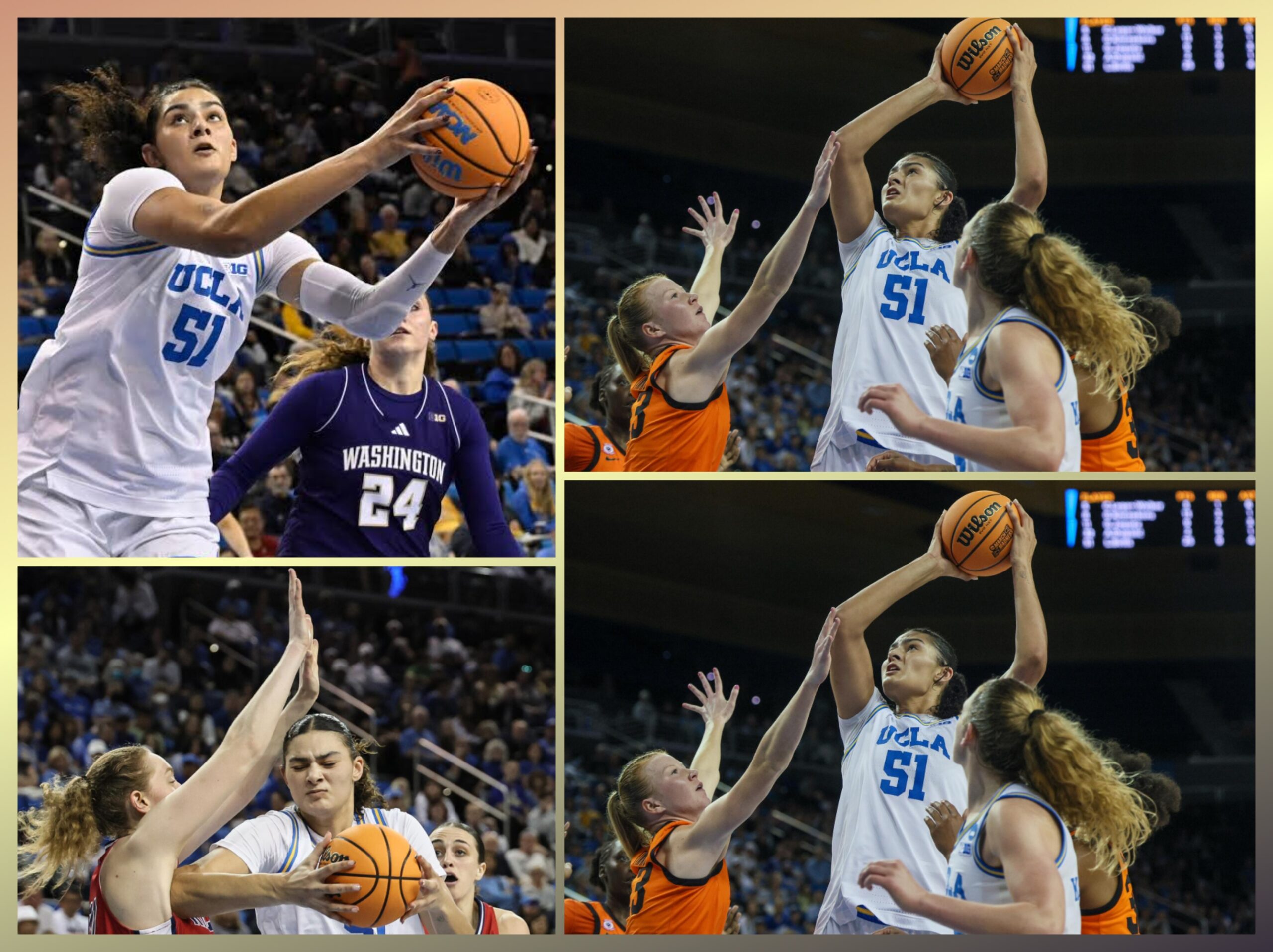
PHOENIX — Every championship game has a central tactical question. Sunday’s is straightforward to identify and extraordinarily difficult to solve.
How do you stop Lauren Betts?
The 6-foot-7 UCLA center is averaging 22.4 points in this NCAA Tournament — up from 17.2 during the regular season, which means she is elevating her game as the stakes rise. She had 16 points and 11 rebounds against Texas in the Final Four. She is patient, skilled, and — crucially — she has evolved into a player who no longer backs down from physical contact. She welcomes it now.
Dawn Staley knows all of this. And she has been thinking about it for a long time.
The Tactical Challenge Staley Is Facing
Staley did not minimize what Betts presents when she addressed the media in Phoenix. Her assessment was precise and honest.
“She brings about a great challenge,” Staley said. “One, because a couple years ago you could kind of be real physical with her, she would kind of back down a little bit. Now she embraces it. Now she welcomes it. She can play off of it so well.”
That evolution is the critical variable. When Betts was younger, the playbook for slowing her down involved physicality and fronting in the post — making the game uncomfortable enough that she would defer. That playbook no longer applies. She has done the work, taken the contact, and turned her previous vulnerability into a strength.
The schematic decisions Staley faces as a result are genuinely complex.
“You have to make a decision whether you’re going to double her, single cover her, whether you’re going to triple her, then figure out how you’re going to scramble out of that and prioritize who because they can shoot the basketball,” Staley said. “She’s the focal point. When your big is the focal point, it’s hard. When you work inside-out, it’s really hard.”
The inside-out dimension is what makes Betts truly dangerous — and what makes every defensive decision against her carry downstream consequences. Double her, and Gianna Kneepkens is open from three, where she shoots 42.9%. Single-cover her, and you are asking Madina Okot to go one-on-one against the best center in college basketball. Triple her, and the scramble recovery becomes a race that UCLA’s guards — Kiki Rice at 15.2 points per game, Gabriela Jaquez at 13.4 — are equipped to win.
“Everybody’s challenged when teams work inside-out,” Staley said. “Lauren can see it all and is patient enough to read the defenses and pass the ball where it’s supposed to go or bet on herself.”
The History That Informs the Matchup
South Carolina and UCLA last met on November 16, 2024 — when the Bruins ended the Gamecocks’ record 43-game winning streak with a 77-62 victory in Los Angeles. Betts contributed 11 points and 14 rebounds in that game. More damaging than her individual line was the collective consequence of how she commanded the defense: UCLA hit 10 three-pointers as South Carolina rotated out of post double-teams and left shooters open on the perimeter.
That result established the blueprint UCLA will attempt to execute on Sunday. The question is whether South Carolina now has the personnel to take it away.
The Roster Staley Has Now vs. The Roster She Had Then
The answer, she believes, is yes — and the roster construction tells the story. When UCLA beat South Carolina in November 2024, the Gamecocks were operating without a true center. When UConn beat them in last year’s national championship, same problem. The absence of a legitimate post presence had been South Carolina’s structural vulnerability in both losses.
That vulnerability no longer exists. Okot — 6-foot-6, 22 double-doubles this season — gives Staley an interior defender who can challenge Betts at the rim. Alicia Tournebize — 6-foot-7 — provides additional length off the bench. And Joyce Edwards, who played UCLA in just the sixth game of her career during their last meeting, has since developed into one of the most formidable frontcourt defenders in the country.
Edwards offered a direct assessment of Okot’s assignment Sunday.
“I feel like it’s up to our posts to beat or eliminate their post,” Edwards said. “She has to be super physical. Madina is used to battling with bigs that are more traditional. So I feel like she’s gonna go out there and she’s gonna do great.”
The confidence is earned. Okot has been Staley’s difference-maker against interior-dominant teams all season. Sunday is the largest version of that challenge she has faced — but the preparation has been building toward exactly this moment.
The Human Story Beneath the Matchup
What makes the Betts-Staley storyline genuinely compelling is the relationship that exists outside of basketball. Betts published a piece in The Players’ Tribune earlier this month, opening up about the mental health struggles she navigated over the past several years. In it, she specifically thanked Staley — her opponent in Sunday’s championship game.
“Dawn Staley, she spoke to my mom a little bit while everything was going on as well. And I don’t think a lot of people know that,” Betts wrote. “She’s been really amazing to me and my family through my entire basketball career.”
Staley explained the origins of that connection simply and without embellishment.
“I mean, it’s human nature,” Staley said. “You don’t want young kids to have to go through some things, such dark times that she went through. Sometimes you just need to know that you’re supported. It was nothing more than reaching out to support.”
She had recruited Betts out of high school and retained her contact information. When she heard Betts was stepping away to seek mental health treatment, she reached out. That is the kind of thing that does not show up in a scouting report, but it reveals something important about who Staley is as a person — and why players across the country, even those who do not play for her, feel connected to her.
Sunday, Staley will deploy every tactical resource she has to prevent Betts from winning a national championship. That has nothing to do with the support she offered Betts during a difficult chapter of her life. Both things can be true simultaneously — and with Dawn Staley, they usually are.
What Sunday Comes Down To
South Carolina has the roster. They have the defensive versatility, the interior depth, and the tournament experience that UCLA cannot match. They have a game plan built around making Betts’s job harder than it has been at any point this season.
But Betts is averaging 22.4 points in this tournament, has elevated her game in every meaningful game, and plays within a system that is specifically designed to make defenders choose their poison.
Staley’s answer to that system is better this year than it has ever been. Sunday afternoon, we find out if it is good enough.