
“South Carolina Wastes No Time—Williams-Brice Demolition Kicks Off Immediately After Clemson Loss!”
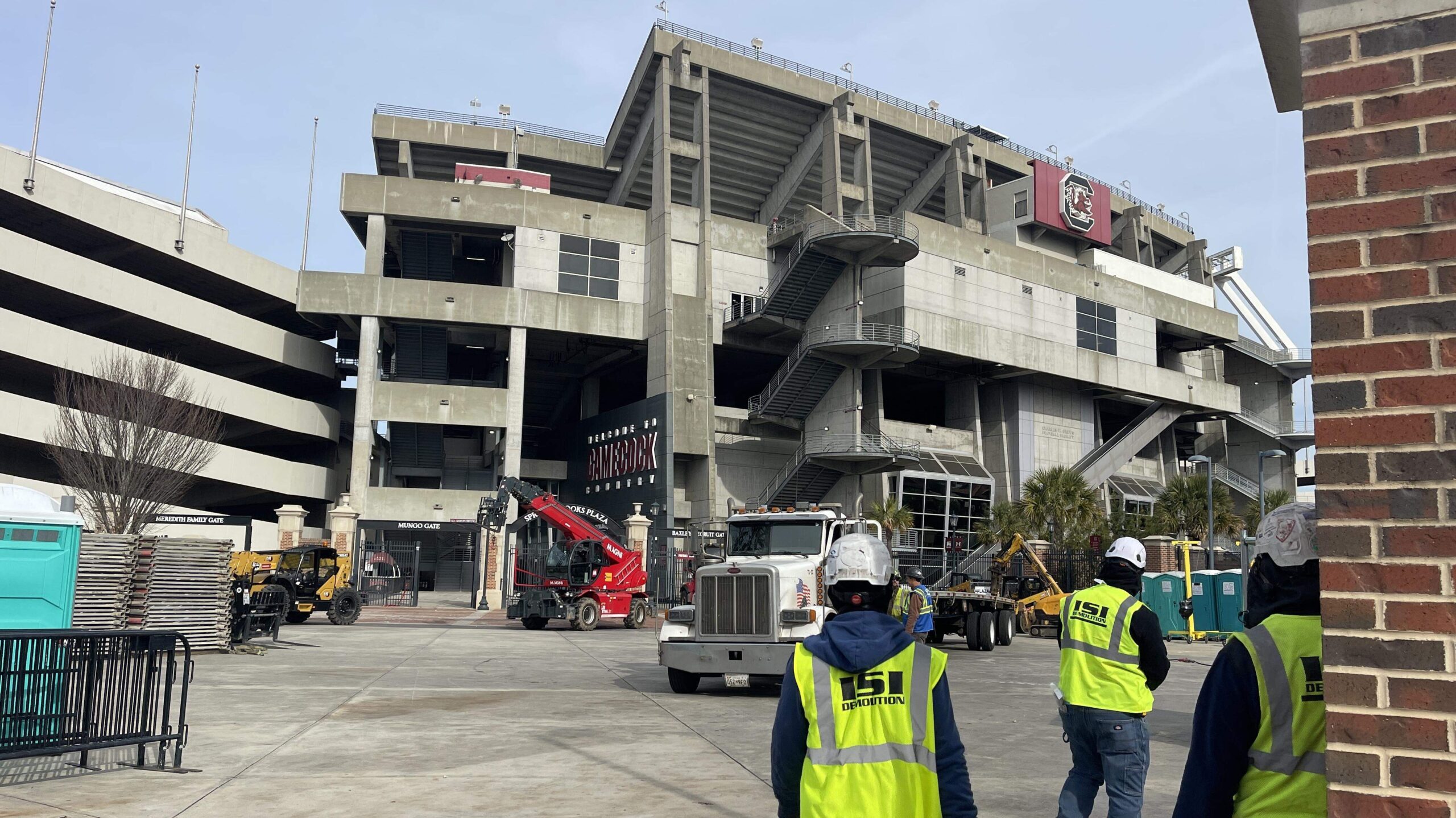
Williams-Brice Stadium no longer looks like a football venue — it has officially become an active construction site.
Just hours after South Carolina wrapped up its season with a loss to Clemson, crews were already at work early Sunday morning preparing for the first phase of a massive, multi-year stadium overhaul. By Monday, ISI Demolition crews were on the grounds, and temporary fencing had been installed around the perimeter as the project kicked into motion.
The renovation is scheduled to be completed ahead of the 2027 football season, though fans won’t see any changes to capacity or be moved from their seats during the entire 2026 campaign. When all upgrades are finished, Williams-Brice Stadium’s total capacity will drop by roughly 4,100 seats.
One of the biggest objectives is transforming the stadium’s premium seating options — increasing the number of suites from the SEC-low count of 18 to 42 luxury boxes by the time renovations conclude in 2027.
But the vision goes much deeper than premium areas. Planned improvements include:
- Two brand-new video boards in the south end zone
- Expanded concourses for easier movement
- Additional restrooms
- A dedicated student club-style area
- An in-house kitchen (currently, food is cooked off-site and transported)
- A new loading dock designed to help Columbia attract major concert events
Still, not everyone is thrilled about what’s coming.
As part of this overhaul, more than 14,000 fans seated in the west-lower bowl will be required to undergo a new seat-selection process for the 2027 season. Essentially, even long-time season-ticket holders aren’t guaranteed to reclaim their exact seats once construction is complete — and pricing for 2027 tickets has yet to be announced.
In a rapidly evolving college athletics world — especially with the House settlement clearing the way for schools to directly pay athletes — South Carolina is in search of new revenue streams. And Williams-Brice Stadium, with its massive fanbase and potential for premium upgrades, represents the program’s biggest financial opportunity. The move mirrors what several other universities across the country are already doing as they modernize their own facilities.
About The Author