
The Losses That Shaped a Legend: Dawn Staley Reflects on Her Virginia Championship Heartbreak
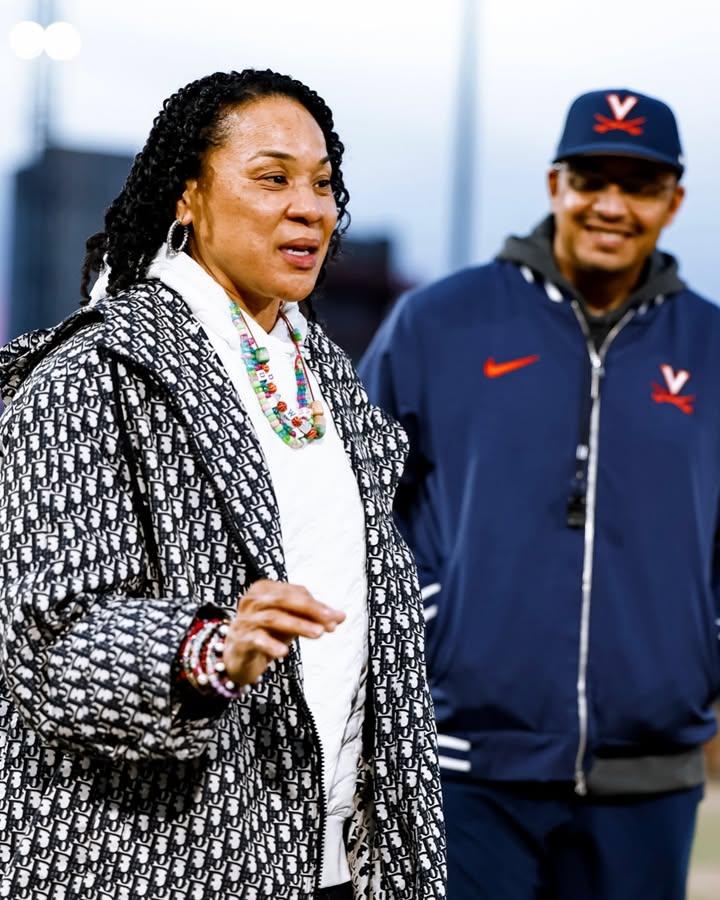
When Dawn Staley reflects on her storied playing career at the University of Virginia, it’s not the individual accolades or record-breaking performances that dominate her thoughts. Instead, it’s the losses—particularly the championship defeats—that remain most vivid in her memory. This revelation offers a profound window into the competitive fire that would eventually forge one of basketball’s most accomplished figures.
A Dream Deferred
Staley’s most painful memory centers on the 1991 NCAA Championship game, a contest that still resonates more than three decades later. Virginia faced Tennessee in the championship game and lost in overtime, 70-67 . The defeat was particularly crushing because of how close the Cavaliers came to glory.
With 1:25 remaining in regulation, Virginia held a five-point lead over Pat Summitt’s Lady Vols. By the time just 48 seconds remained, that advantage had shrunk to two points . Coach Debbie Ryan called a crucial timeout and designed a play for her star point guard.
Staley received the inbound, attacked the basket through traffic, stretched toward the rim, and missed. Virginia secured the rebound and got another look but couldn’t convert. Staley then fouled Tennessee with seven seconds left, allowing the Lady Vols to tie the game and eventually prevail in double overtime.
Despite the loss, Staley scored 28 points, grabbed 11 rebounds, dished six assists and recorded three steals in the championship game, earning Final Four Most Outstanding Player honors despite her team’s defeat.
The Weight of Unfulfilled Dreams
Staley has been remarkably candid about how deeply that championship loss affected her. In previous interviews, she acknowledged the lingering impact of falling short. As her former coach Ryan noted, Staley’s comment years later was revealing: “I think about it a lot and it still stings.” Ryan found this admission very emotional, adding that Staley “still remembers certain parts of that 1991 game where she feels like she could have done more” .
The pain was compounded the following year. In 1992, UVA fell to Stanford 66-65 in the national semifinal, a loss Staley found crushing because she thought it was her last chance at a college title. During those three consecutive Final Four seasons from 1990-1992, Virginia compiled an impressive 92-11 overall record, including a 40-4 mark in the ACC , making the championship drought all the more frustrating.
A Perspective Shaped by Loss
When asked directly about what stands out from her Virginia playing days, Staley’s immediate focus on championship losses rather than her numerous achievements speaks volumes. This mindset reveals the championship-or-bust mentality that would later define her coaching philosophy.
Staley herself once reflected, “I had a really hard time getting over that loss to Tennessee. It was probably because I was so close to getting my childhood dream” . The proximity to fulfilling her ultimate goal—being right there with victory within reach—made the defeat exponentially more difficult to process.
Yet she also demonstrated perspective about her college career. Looking back, Staley stated: “I gave it my all. I can truly walk away from my experiences at Virginia and say there is nothing more that I can do. I wouldn’t go back and change anything” .
From Player Heartbreak to Coaching Redemption
The championship losses at Virginia would ultimately become foundational to Staley’s coaching career. Before South Carolina’s 2024 championship game against Iowa, Staley reflected on the 1991 heartbreak: “It wasn’t meant to be. The fact that we won in 2017 made it really special. I didn’t think I was going to coach. I thought that was going to be that. But once I got into coaching, I wanted to check that box off .
Staley discovered something unexpected about winning as a coach. She found that coaching a championship victory brought her just as much joy, perhaps even more, than winning would have as a player . This realization transformed those Virginia losses from sources of lasting pain into motivation that fueled an extraordinary coaching career.
Ryan, her former coach, offered insight into this evolution, noting that when you win as a coach “it’s a different dynamic.” While Ryan still carries the 2017 championship trophy, she suspects Staley is only beginning her collection.
A Legacy Forged Through Adversity
Today, Staley’s coaching résumé includes three national championships at South Carolina in 2017, 2022, and 2024. Her teams have become synonymous with excellence, dominance, and the relentless pursuit of perfection—qualities undoubtedly shaped by her own experience of falling just short as a player.
Ryan noted that the 2017 championship victory was cathartic for both Staley and herself, saying “I carry the sting for all the players” . The coach who had guided Staley through those heartbreaking Final Four runs finally got to see her former star experience championship glory, even if it came from the sideline rather than the court.
The fact that championship losses remain Staley’s most vivid memories from her playing days isn’t a reflection of bitterness or regret. Rather, it demonstrates how deeply she cares about winning and how those painful experiences became the crucible in which one of basketball’s greatest coaching careers was forged. The teenager from North Philadelphia who came so close to glory at Virginia would eventually find it at South Carolina—not once, but three times and counting—proving that sometimes the most important victories are the ones that take the longest to achieve.
UVT
About The Author