
Dawn Staley’s Strategic Lineup Flexibility: Supporting Players, Not Punishing Them
South Carolina women’s basketball coach Dawn Staley made headlines on January 25 when she altered her starting lineup for the first time this season—but the decision carried a deeper philosophy than typical coaching adjustments might suggest.
The Change: Strategy Over Punishment
Rather than starting center Madina Okot as she had throughout the season, Staley inserted freshman guard Agot Makeer, creating a four-guard starting lineup. The adjustment came immediately after South Carolina’s first SEC loss of the season to Oklahoma, but Staley was adamant about clarifying her reasoning following the dominant 103-74 victory over Vanderbilt.
The move was designed to benefit Okot, not discipline her.
This distinction matters significantly in Staley’s player development philosophy. By framing the change as supportive rather than punitive, she protected Okot’s confidence while addressing tactical needs. The 6-foot-6 center responded brilliantly, coming off the bench to score 17 points on 8-of-9 shooting with seven rebounds and five steals against the Commodores.
Game-by-Game Decision Making
As No. 3 South Carolina (20-2, 6-1 SEC) prepares for Thursday’s road matchup at Auburn (13-8, 2-5 SEC), speculation naturally centers on whether Staley will maintain the adjusted lineup. The coach offered a playful but revealing response when asked about her plans.
“It’s a game-by-game (decision) but I won’t tell you today, though,” Staley said with laughter on January 28. “It’s a good look for us. At some point we’ll have that lineup in and hopefully capitalize like we did last game.”
The approach reflects sophisticated coaching—recognizing that modern basketball increasingly requires tactical flexibility based on opponent strengths and weaknesses rather than rigid adherence to predetermined rotations.
Why the Four-Guard Look Worked Against Vanderbilt
Vanderbilt featured a guard-heavy offense that prioritized perimeter play and pace. Makeer’s presence allowed South Carolina to match that speed and apply immediate defensive pressure.
The results were spectacular: South Carolina recorded three consecutive steals to open the game, jumping out to an 11-2 run in under two minutes. The aggressive defensive tone set by the smaller, quicker lineup disrupted Vanderbilt’s rhythm throughout the contest.
Auburn Presents Different Challenges
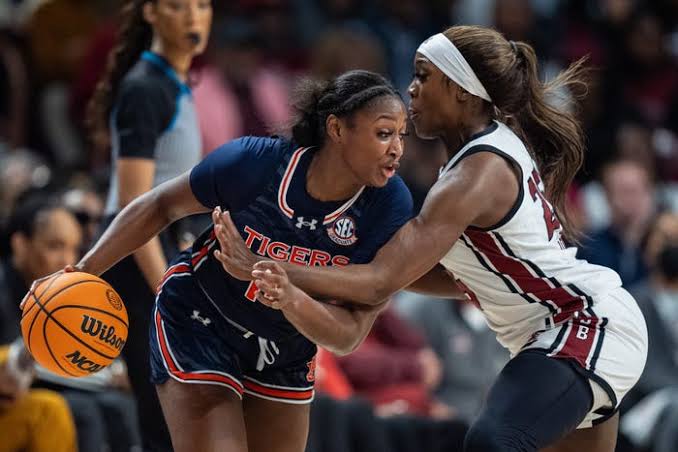
The Tigers pose matchup questions that differ significantly from Vanderbilt’s profile. Staley identified Auburn’s athleticism as the primary concern heading into Thursday’s 9 p.m. ET tipoff on SEC Network.
“They have incredible athletes,” Staley said, emphasizing that keeping Auburn’s players in front of defensively will be paramount.
“We have to control the paint because they like to just put their heads down and go,” Staley explained. “They have the personnel to do that.”
Auburn’s expected full-court pressure defense adds another dimension to Staley’s lineup considerations.
Evaluating the Options
Each starting configuration offers distinct advantages against Auburn’s anticipated game plan:
Starting Okot:
The 6-foot-6 center provides an immediate outlet against pressure, capable of running the floor and presenting a threat near the rim in transition. Her size could help South Carolina establish paint control early—something Staley identified as essential against Auburn’s attacking style.
Starting Makeer:
The freshman guard adds ball-handling help if Auburn’s press makes life difficult for primary point guard Raven Johnson. Multiple guards capable of advancing the ball reduces turnover risk and creates more passing options against trapping defenses.
The Texas Lesson
South Carolina’s January 15 matchup against Texas provides relevant context. Despite winning that game, the Gamecocks committed 20 turnovers against the Longhorns’ productive full-court press. Auburn is expected to employ similar pressure tactics, making ball security a critical concern regardless of who starts.
“They’ll probably press us, go after every rebound so it’s an intangible type of game where their will, our will and all the little things you need to do to win basketball games,” Staley said.
The Philosophy Behind the Flexibility
Staley’s willingness to adjust her starting lineup—something she historically does rarely—signals both confidence in her roster depth and commitment to putting players in positions to succeed rather than forcing predetermined roles.
By publicly emphasizing that the Okot change was made to benefit her rather than punish her, Staley protected the freshman’s confidence while addressing tactical needs. That Okot responded with one of her best performances of the season validates the approach.
The game-by-game evaluation philosophy also keeps opponents guessing. Teams preparing for South Carolina can no longer assume a specific starting configuration, requiring additional preparation and potentially creating strategic advantages for the Gamecocks.
What to Expect Thursday
While Staley declined to reveal her starting lineup plans, her comments suggest she’ll evaluate Auburn’s specific strengths and weaknesses before making a final decision. The Tigers’ athleticism and expected pressure defense could favor either configuration depending on how Staley weighs paint control versus ball-handling support.
What seems certain is that both Okot and Makeer will play significant roles regardless of who starts. Staley has demonstrated that starting status doesn’t necessarily correlate with impact—Okot’s 17-point performance off the bench against Vanderbilt proved that emphatically.
The Broader Implications
Staley’s approach offers a masterclass in modern coaching philosophy:
- Player development over ego – Framing lineup changes as supportive rather than punitive protects confidence
- Tactical flexibility – Matching lineups to specific opponents rather than rigid adherence to roles
- Trust in depth – Confidence that multiple players can contribute regardless of starting status
- Strategic ambiguity – Keeping opponents uncertain about personnel decisions
As South Carolina navigates a challenging SEC schedule with championship aspirations, this flexibility could prove crucial. The ability to adjust tactically while maintaining player confidence and team cohesion separates good programs from great ones.
Thursday’s game at Auburn will provide another data point in evaluating whether Staley’s lineup experimentation becomes a permanent strategic tool or remains a situational adjustment. Either way, the philosophy behind it—supporting players while maximizing tactical advantages—reflects championship-caliber coaching.
About The Author