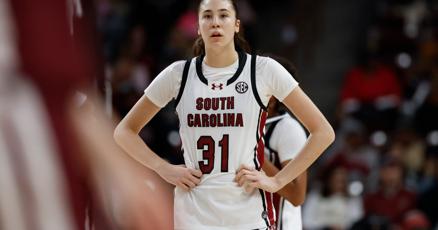
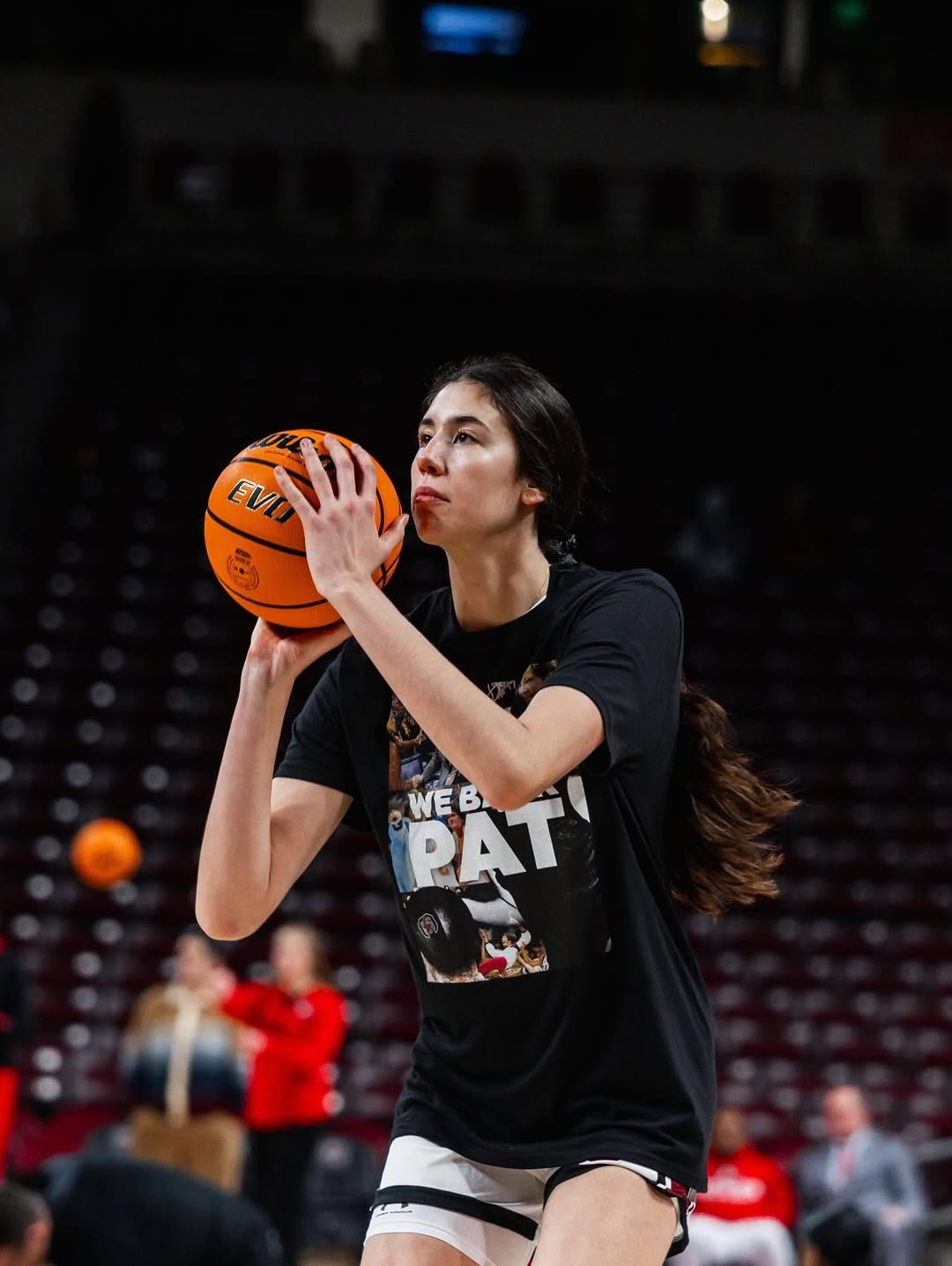
French forward Alicia Tournebize delivered a breakout performance against Oklahoma that showcased her considerable potential, but the 6-foot-7 freshman has been unable to replicate that success in subsequent games against Vanderbilt and Auburn. The struggle appears rooted in an attempt to force the same production rather than allowing the game to come naturally.
DEFENSIVE DISCIPLINE ISSUES
The most concerning aspect of Tournebize’s recent performances has been her defensive approach. She has accumulated 13 fouls across the last three games, including fouling out in just 10 minutes against Auburn on Thursday—a particularly problematic ratio that limited her potential impact.
Analysis: Fouling out in 10 minutes represents catastrophic foul trouble—averaging 1.3 fouls per minute means Tournebize was whistled for infractions at an unsustainable rate. For context, most post players can manage 30-35 minutes while staying under the five-foul limit; Tournebize’s current pace would have her disqualified in under eight minutes if extrapolated across a full game.
While post play inevitably generates contact and some fouls are unavoidable due to positioning and rebounding battles, Tournebize’s foul accumulation stems from correctable technical errors rather than unavoidable physical play.
THE REACHING PROBLEM
The primary issue plaguing Tournebize’s defense is excessive reaching—attempting to swipe at the ball or disrupt opponents with her hands rather than utilizing her natural physical advantages.
Analysis: This represents a fundamental misunderstanding of how to leverage her physical tools. At 6-foot-7 with exceptional length, Tournebize possesses the wingspan to disrupt passing lanes and alter shots simply by maintaining vertical positioning with arms extended. The instruction to “stay big” refers to this principle—occupying maximum space through proper positioning rather than chasing the ball with reaching fouls.
Reaching fouls are particularly frustrating for coaches because they’re entirely preventable and often occur away from the basket where the defensive player gains minimal advantage even if successful. A reaching foul 15 feet from the basket on a player who wasn’t threatening to score represents a wasted foul that could have been “saved” for protecting the rim—a far more valuable defensive action.
The technical correction required is relatively straightforward: Tournebize needs to trust her length and vertical presence rather than attempting to create steals or disruptions through hand activity. Elite shot blockers like Kamilla Cardoso (Tournebize’s predecessor in South Carolina’s frontcourt) master this principle—they alter shots through positioning and timing rather than wild swipes that generate fouls.
PSYCHOLOGICAL FACTOR: CHASING THE OKLAHOMA PERFORMANCE
The root cause of Tournebize’s struggles appears psychological rather than physical. The analysis suggests she’s “trying too hard to recapture what she did in Norman”—pressing to duplicate her Oklahoma success rather than playing within the natural flow.
Analysis: This represents a common trap for young players following breakout performances. The Oklahoma game established a performance benchmark in Tournebize’s mind, creating internal pressure to meet or exceed that standard in every subsequent appearance. This pressure manifests as forcing actions—taking difficult shots, reaching for steals, hunting for highlight plays—rather than accepting what the defense provides.
The solution requires patience and maturity: understanding that not every game will feature the same opportunities, and that consistent, mistake-free basketball often proves more valuable than spectacular but inconsistent play. A quiet 6 points, 5 rebounds, and 2 blocks in 20 minutes without foul trouble contributes more to winning than 12 points and 8 rebounds in 10 minutes followed by disqualification.
OFFENSIVE DEVELOPMENT: THE ALLEY-OOP PROJECT
South Carolina’s coaching staff continues attempting to create alley-oop opportunities for Tournebize despite limited success thus far. The observation that attempts are “so close that you can see why they keep going to it” suggests the play is mechanically sound but requires additional repetition for proper timing and execution.
Analysis: The alley-oop represents an ideal offensive weapon for a player with Tournebize’s combination of height, mobility, and finishing ability around the rim. Successfully integrating this play into South Carolina’s offense would create several advantages:
Vertical spacing: Alley-oops utilize airspace that traditional post moves cannot access, making them virtually undefendable when properly executed.
Transition efficiency: In fast-break situations, alley-oops convert transition opportunities into high-percentage shots faster than traditional post entries.
Defensive attention: Once opponents must respect the alley-oop threat, it opens driving lanes for perimeter players who no longer face help defenders sagging into the paint.
The challenge is execution timing—the passer must release the ball at precisely the right moment relative to Tournebize’s cutting movement, and Tournebize must time her jump to meet the ball at its apex. The assessment that “they just haven’t had enough reps to get it to work” identifies the issue: this timing requires extensive practice repetition and game experience to calibrate properly.
The fact that South Carolina keeps attempting the play despite initial failures demonstrates coaching confidence in both the strategic value and Tournebize’s ability to eventually execute consistently. This persistence is appropriate—abandoning the play after early struggles would forfeit a potentially significant offensive weapon.
INTEGRATION TIMELINE CONSIDERATIONS
Tournebize’s struggles must be contextualized within her unique circumstances: she’s an international player who enrolled mid-season (joining the team January 1) without the benefit of summer workouts, preseason training camp, or extended practice time with teammates.
Analysis: The typical freshman adjustment period—learning defensive schemes, understanding offensive sets, developing chemistry with teammates—occurs over months during the offseason and early non-conference schedule. Tournebize is attempting to compress this learning curve while simultaneously competing in SEC games against elite competition.
The reaching fouls and forced offensive attempts suggest a player still calibrating to the college game’s speed, physicality, and defensive sophistication. High school and international competition, even at elite levels, rarely matches the combination of size, athleticism, and tactical discipline Tournebize faces nightly in SEC play.
COACHING APPROACH AND DEVELOPMENT PATH
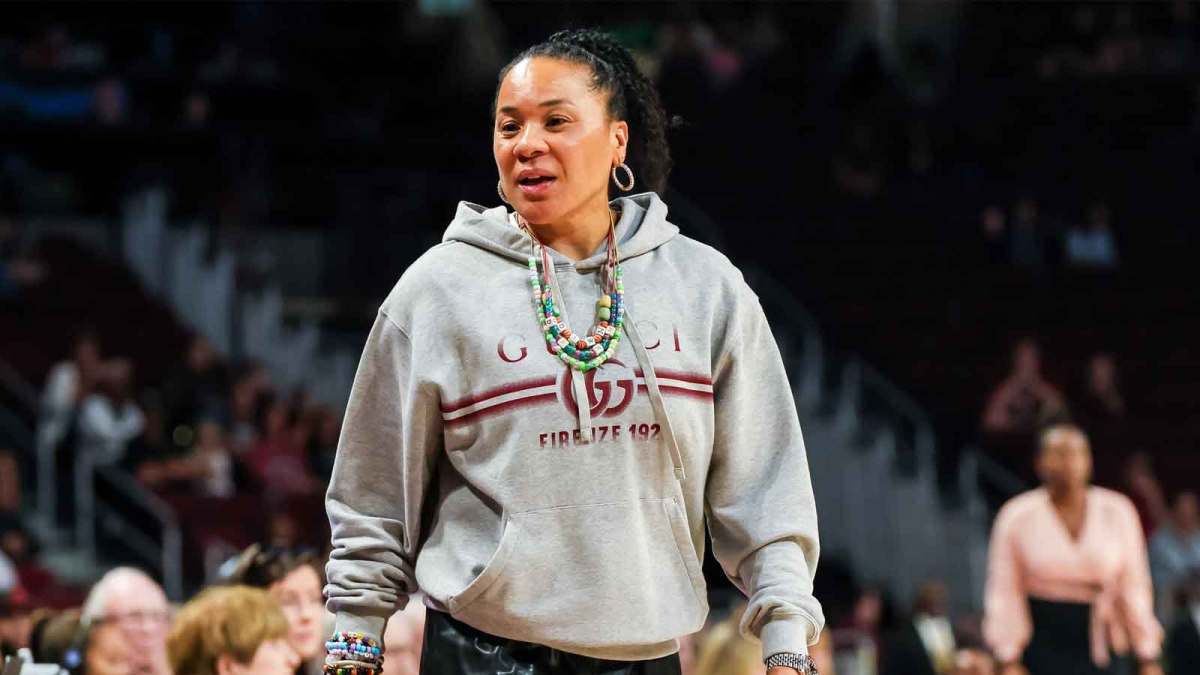
South Carolina’s continued deployment of Tournebize despite her struggles indicates coaching staff belief in her long-term potential and willingness to accept short-term growing pains as necessary developmental costs.
Analysis: The alternative approach—benching Tournebize until she demonstrates complete readiness—would eliminate immediate foul trouble issues but delay the learning process necessary for her to become a reliable contributor. By continuing to give her minutes (even if abbreviated by foul trouble), the coaching staff prioritizes long-term development over short-term risk mitigation.
This approach makes particular sense given South Carolina’s comfortable margins in recent games. The 30-point victory over Auburn provided an ideal environment for Tournebize to gain experience without her mistakes jeopardizing the outcome. If she commits reaching fouls in a blowout, it’s a teachable moment; the same fouls in a close game could prove costly.
REALISTIC EXPECTATIONS AND TRAJECTORY
The immediate goal for Tournebize shouldn’t be replicating her Oklahoma performance, but rather establishing a consistent baseline of productive minutes without critical mistakes. This means:
- Playing 15-20 minutes while staying under three fouls
- Converting high-percentage opportunities around the basket
- Protecting the rim with verticality rather than reaching
- Making the simple, correct play rather than forcing spectacular outcomes
Analysis: If Tournebize can achieve this baseline consistency through the remainder of the regular season, she’ll enter the SEC and NCAA Tournaments as a genuinely useful rotation player rather than a developmental project. The alley-oop and other advanced offensive elements can develop organically as her comfort level increases.
The Oklahoma game demonstrated her ceiling—the player she can become with experience and refinement. The Vanderbilt and Auburn games revealed her current floor—the mistakes that arise when trying to force production. The development path forward requires narrowing the gap between these extremes through repetition, patience, and technical correction.
For South Carolina, having Tournebize available and developing—even imperfectly—in January positions the program well for March, when depth and frontcourt options could determine championship outcomes. The short-term frustration of foul trouble represents an acceptable price for long-term preparation, provided the technical corrections occur before the stakes increase dramatically in tournament play.