
The Most Beautiful Reunion in Women’s College Basketball Is Coming to an End Thursday Night
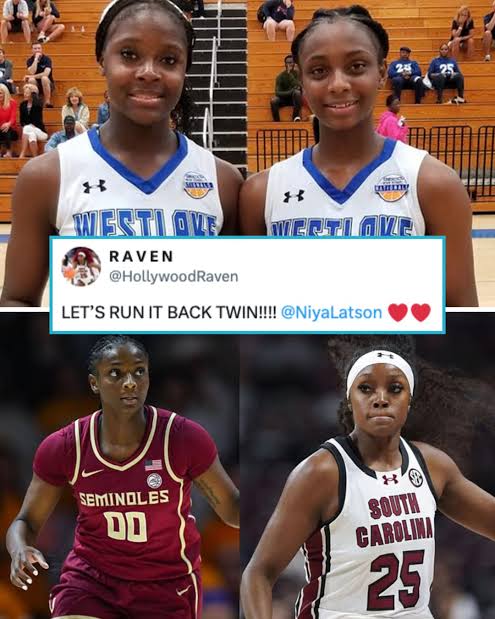
Full Circle: The Raven Johnson and Ta’Niya Latson Story Is One of the Most Beautiful in Women’s College Basketball
COLUMBIA, S.C. — Some reunions are arranged. Some are accidental. And then there are the ones that feel, in retrospect, like they were always inevitable — as if the years apart were simply a detour on the way back to something unfinished.
When Ta’Niya Latson transferred from Florida State to South Carolina ahead of the 2025-26 season, she was rejoining a teammate she had not shared a court with in nearly eight years. But for anyone who watched them play together at Westlake High School in Atlanta — where they won three state championships and established themselves as one of the most gifted backcourt pairings in Georgia prep history — the reunion felt less like a surprise and more like an overdue correction.
Thursday night at Colonial Life Arena, that reunion will officially come to an end. Senior Night ceremonies are never easy. For Raven Johnson and Ta’Niya Latson, they carry the particular weight of two people who know, better than most, that some partnerships cannot be reconstructed once they are gone.
Where It Started: A Freshman Who Promised the Impossible
To understand what this season has meant, you have to go back nine years to a hallway at Westlake High School in Atlanta, where a 14-year-old Raven Johnson passed her future head coach and made a declaration that would have seemed presumptuous from anyone else.
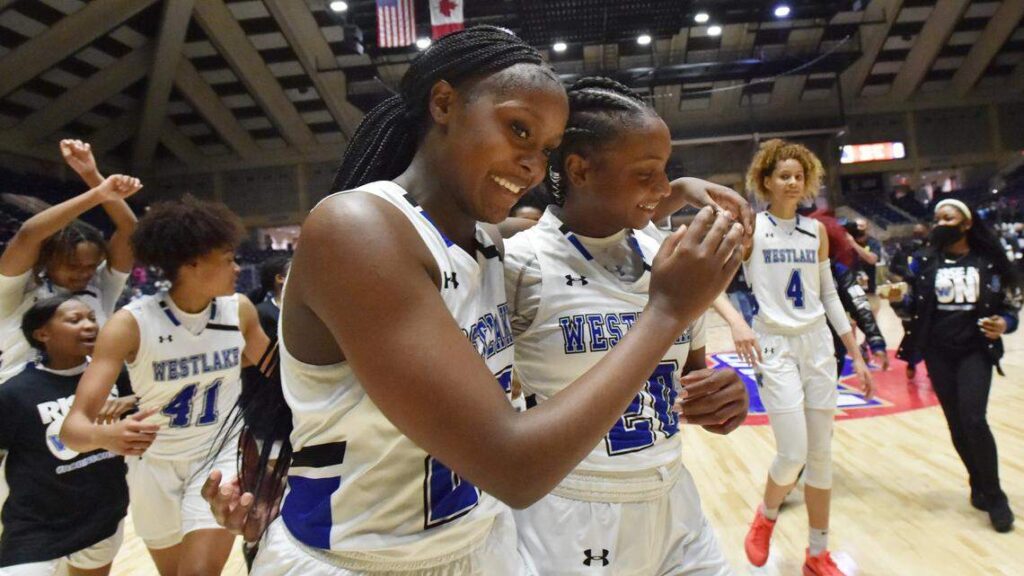
“I’m going to help these seniors win a state championship,” Johnson told Hilda Hankerson.
The result exceeded even that audacious promise. “She didn’t help us win one, she helped us win four,” Hankerson recalled this week, still processing the magnitude of it. “I never had a freshman speak like that. She delivered what she said.”
The anecdote is instructive not merely as a piece of biographical color, but as a window into the specific quality that has defined Johnson’s career at every level — the combination of outward confidence and internal accountability that distinguishes genuine leaders from those who simply talk. She made a promise to her coach as a freshman and then spent four years keeping it. The pattern, it turns out, has held at every stop since.
For Johnson’s sophomore year, Ta’Niya Latson arrived as a freshman, and what Hankerson observed from that moment forward stayed with her. “It’s like they could read what the next one was going to do,” she said of the backcourt combination at the top of a 2-3 zone. The instinctiveness, the anticipation, the wordless communication between two players whose basketball minds were operating on the same frequency — it was visible from almost the first moment they shared a court.
“I’m getting a little sad that I won’t be able to see them play together anymore,” Hankerson admitted this week. “But it’s been a great ride.”
The Long Way Back
After high school, their paths diverged. Johnson signed with South Carolina and began building what would become one of the most decorated careers in program history. Latson transferred to American Heritage High School in Florida before eventually landing at Florida State, where she led the nation in scoring at 25.2 points per game last season.
Neither could have anticipated, in those early days at Westlake, that their paths would eventually converge again in Columbia. The full-circle nature of it only became clear this past spring, when two decisions — made essentially simultaneously — rewrote the narrative of what Johnson’s final season would look like.
Fresh off a heartbreaking loss in her third national title game appearance, Johnson announced she would return to South Carolina for her final year of eligibility. The timing was not coincidental. She made the announcement the moment Latson revealed she was transferring to join the Gamecocks. One could not have happened without the other.
“Honestly she makes things easier,” Johnson said after the season opener. “My instinct is to go her way, find her wherever she is. She brings out the best in me. She makes me play harder than what I’m capable of.”
That final sentence deserves to sit for a moment. Johnson, a two-time national champion averaging career-high numbers across nearly every statistical category, is crediting her former high school teammate with unlocking a version of herself she had not previously reached. It is the kind of assessment that players give when the connection transcends strategy — when two people understand each other’s game at a level that no coaching staff can manufacture.
What the Numbers Confirm
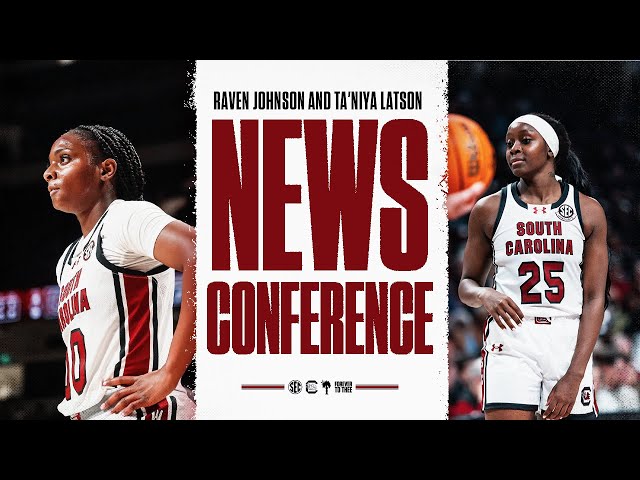
Statistics do not always capture chemistry, but in this case they provide compelling corroboration for what the eye test already suggests. Since Latson joined South Carolina, Johnson is averaging career highs in points (9.8), assists (5.4), field goal percentage (48.7%), three-pointers made per game (0.9), points per scoring attempt (1.15), and points per play (0.97). Across the board, she is playing the best basketball of her life at the age when most players are already preparing to exit college basketball.
Latson’s evolution has been equally significant, if differently expressed. She accepted a reduced scoring role — from 25.2 points per game to 14.8 — in exchange for a level of efficiency she had never previously reached. She is shooting over 50% from the field for the first time in her career, posting career highs in effective field goal percentage (54.2%), points per scoring attempt (1.17), and points per play (1.04). The raw scoring numbers are down. The quality of every shot she takes is dramatically up.
This is what genuine partnership looks like in basketball. Not two players competing for the same oxygen, but two players whose strengths actively amplify each other — one creating space and connections for the other, both operating at a higher level than they would individually.
The moment that perhaps best illustrated this dynamic came during the Tennessee game on February 8th. Johnson clapped for the ball the instant it touched Madina Okot’s hands — not because a play was called, not because Staley had drawn it up, but because she already knew Latson would be cutting backdoor before Latson had even moved. Latson’s hand went up at the three-point line as a decoy. Johnson saw past it, threading a pass into the exact space Latson actually wanted.
Dawn Staley watched it unfold and offered the only explanation that made sense: “That’s all Raven and Ta’Niya, that’s all their connection.”
You cannot coach what those two have. You can only be grateful it ended up in your program.
What This Season Has Meant
Against Ole Miss on February 22nd, with South Carolina securing a share of their fifth consecutive SEC regular-season title, Latson sat next to Johnson on the bench and heard something that crystallized exactly what she had stepped into.
“Raven was on the bench and was like, ‘This is my fifth one,'” Latson recalled. “I was like ‘Dang, must be nice.’ That’s just the standard here. That’s something that comes naturally for this program, so just being able to kind of blend in and act like I’ve been here before even though I haven’t is something that I try my best to do.”
The quote reveals a player of considerable self-awareness — someone who understood that joining South Carolina mid-dynasty meant subordinating individual history to collective culture. Latson arrived from a program where she was the singular star. She came to Columbia and chose, deliberately, to become something different — a complement, a partner, a piece of something larger than herself.
The decision has paid off in ways that go beyond statistics. South Carolina at 27-2 is a program that does not need to be rebuilt around any individual. But Latson has woven herself so thoroughly into its fabric that her fingerprints are on almost everything the Gamecocks do offensively.
The End of a Beautiful Chapter
Neither Johnson nor Latson would engage with the media the day before Senior Night. The emotional weight of what Thursday represents made those conversations too difficult to navigate. That restraint, in its own way, says everything about what the night means to them.
For Johnson, it is the end of a five-year journey that began with a torn ACL and ends with two national championships, a 136-7 record as the primary point guard, and a legacy that will define the standard at South Carolina for years to come. For Latson, it is the close of one transformative season — a choice to prioritize winning over individual production, and a chance to share a court one final time with the player who first taught her what elite partnership looks like.
Hilda Hankerson, the woman who watched it begin all those years ago in a high school hallway and on a 2-3 zone defense in Atlanta, said it simply this week: “It’s been a great ride.”
From a state championship promise made by a 14-year-old to a Senior Night stage in Columbia, South Carolina, with thousands watching — it has been more than that. It has been one of the most quietly beautiful stories women’s college basketball has produced in years, and Thursday night, it draws to a close.
Some partnerships are too good to last forever. The best ones, however, leave something behind that cannot be erased — in the record books, in the culture of a program, and in the memory of everyone lucky enough to have witnessed them.
About The Author