
How UCLA Dismantled South Carolina: A Complete Championship Performance
UCLA didn’t just win a national championship Sunday in Phoenix. They authored one of the most authoritative title-game performances in recent memory, turning what was billed as a clash between two No. 1 seeds into a masterclass in preparation, execution, and collective belief.
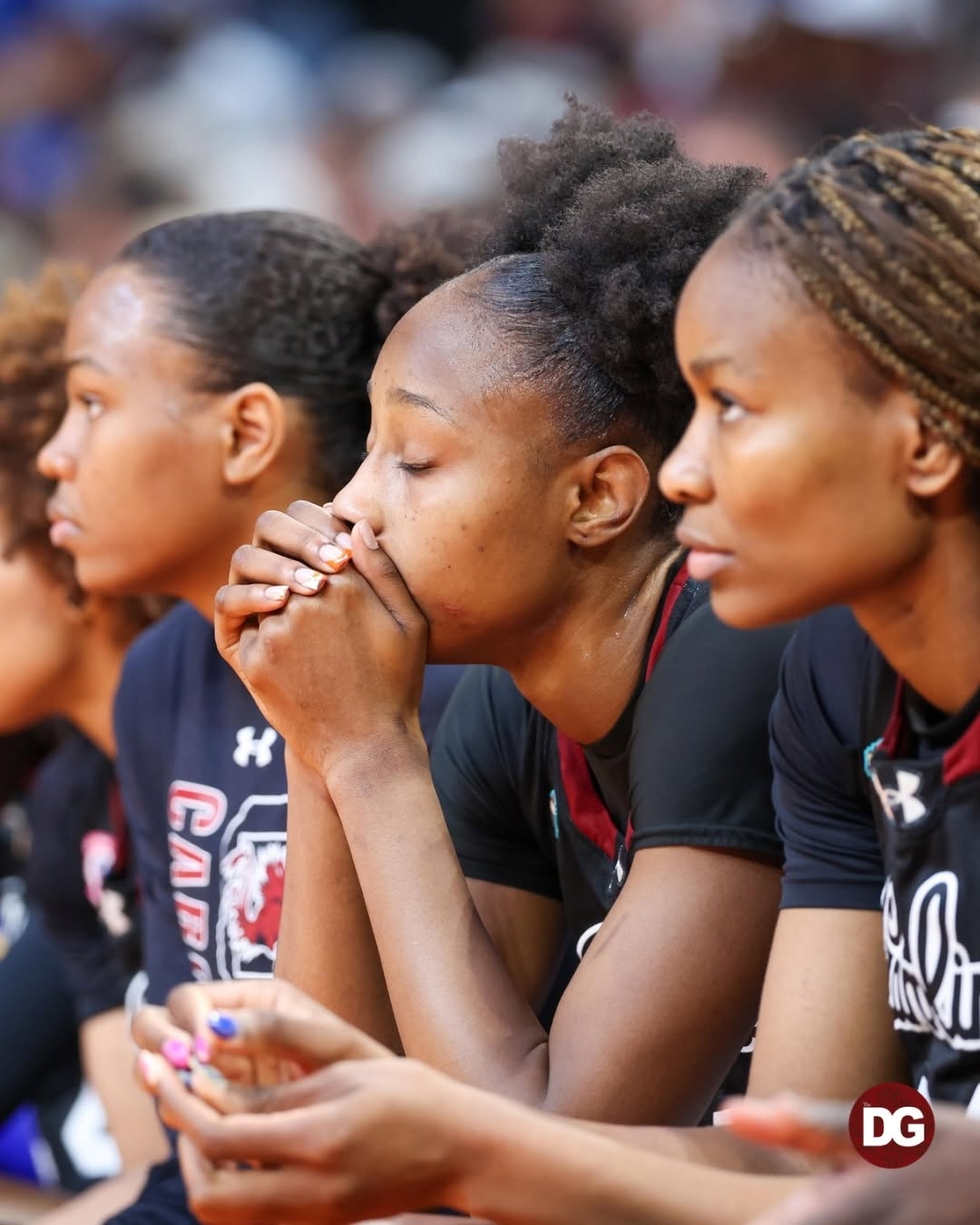
The final score — 79-51 — told part of the story. The manner of the victory told the rest. This was not a hot shooting night that ran away from a good team. This was a 37-1 program operating at the peak of its identity for 40 minutes against the standard by which every other program in women’s college basketball measures itself. South Carolina, playing in its third consecutive national championship game under Dawn Staley, never found an answer. By halftime, most observers had quietly accepted that one wasn’t coming.
Here is a detailed examination of why UCLA was simply better — and why the margin was as wide as it was.
1. Lauren Betts Set the Tone Before South Carolina Could Establish One
Championship games are often decided by who imposes their will first, and UCLA answered that question within the opening minutes. Lauren Betts finished with 14 points and 11 rebounds, but reducing her impact to those numbers misses the actual story.
The Gamecocks had no answer for her in the paint. Not a partial answer — no answer. Betts forced South Carolina’s defense into a perpetual state of reaction from the opening tip. Her presence around the rim altered shot selection, triggered help rotations that opened driving lanes and perimeter looks for teammates, and established a physical tone that the Gamecocks never matched or recovered from.
The sequence is important to understand. UCLA didn’t diversify until they had already won the interior battle. They fed Betts early, watched South Carolina scramble to contain her, and then let the rest of the offense grow organically from the space her dominance created. It was a calculated approach, and it worked precisely as designed.
When a team’s interior anchor controls the paint that completely, everything else becomes easier. UCLA understood that. South Carolina had no structural response.
2. The Defense Was Not Just Good — It Was Suffocating
Numbers do not lie, and the numbers UCLA’s defense produced against South Carolina are almost difficult to process. The Gamecocks shot 29% from the field. Their top three players combined for 15 points on 5-of-22 shooting. Against a program that has reached six consecutive Final Fours, that kind of defensive performance does not happen by accident or misfortune.
UCLA’s defensive rotations were disciplined, their length disrupted South Carolina’s passing lanes at the source, and their physicality made every single possession uncomfortable. The Gamecocks, who built their season around offensive continuity and trust within their system, were taken out of everything they wanted to do. Not occasionally — consistently, from the opening quarter.
The progression of the game told its own story. By the end of the first quarter, South Carolina looked unsettled. By halftime, they looked unsure of themselves. By the second half, the body language said what the scoreboard had already confirmed. A team of South Carolina’s caliber only looks that disorganized on offense when the defense they are facing is genuinely exceptional. UCLA’s was.
3. Five Players in Double Figures Made Adjustments Irrelevant
The most durable characteristic of championship-level offenses is that they cannot be solved by a single defensive adjustment. UCLA had that quality on full display Sunday.
Gabriela Jaquez led all scorers with 21 points to go with 10 rebounds and five assists — a performance that would have been the headline on most nights. But the more analytically significant fact is that five Bruins scored in double figures. Every time South Carolina identified a threat and shifted resources to contain it, someone else accepted the invitation.
That balance is the product of a system that genuinely trusts all of its pieces rather than simply paying lip service to the concept. Gianna Kneepkens made three three-pointers and recorded four assists in 26 minutes, during which UCLA outscored South Carolina by 41 points. Kiki Rice facilitated with characteristic poise. Betts anchored everything inside. No single player needed to go off for the offense to function, and that collective reliability is what separates good teams from the ones that hold trophies in April.
4. Composure Was the Championship’s Deciding Variable
There is a specific kind of composure that only veteran teams possess — the ability to play a national championship game at full competitive intensity without letting the weight of the moment compress decision-making or distort execution. UCLA had it. South Carolina, playing in its third straight title game, has had it in previous years. On Sunday, the gap in composure was visible and significant.
UCLA never trailed. Not for a possession. They built a double-digit lead before the first quarter ended, carried a 36-23 advantage into halftime, and never wavered from the pace and process they had established. There were no rushed possessions, no emotional overcorrections, no stretches where the moment seemed to land on their shoulders. Just steady, purposeful execution by a group that had come back specifically to finish what they had started.
Many players on this roster had experienced deep tournament runs that stopped short of the ultimate prize. That experience left something behind — a competitive scar tissue that manifests as calm when the stakes are highest. When Sunday arrived, they didn’t tighten. They expanded.
5. Cori Close Built Something That Was Ready When the Moment Came
Fifteen years of program-building led to Sunday’s result, and the cohesion of UCLA’s performance reflected every year of that investment. This was not a team that looked reactive or desperate or fortunate to be on the biggest stage. They looked prepared, intentional, and completely aligned with their identity.
Close has frequently spoken about the influence of John Wooden’s philosophy on her approach to coaching — the emphasis on discipline, teamwork, and executing the fundamentals at the highest level when the stakes demand it. Sunday was the fullest expression of that philosophy she has ever produced. The game plan was precise. The adjustments were made. The players executed.
The 31-game winning streak that brought UCLA to Phoenix was not a run of good fortune — it was the manifestation of a program that had finally assembled all of its components in the right order. The roster, the development, the culture, and the belief had been building toward exactly this. When it came together, it didn’t just produce a win.
It produced a breakthrough that fifteen years in the making looked like it always belonged.
What This Means in the Larger Context
South Carolina’s loss should not diminish what the Gamecocks built this season. Three consecutive national championship game appearances under Staley represent a standard of sustained excellence that almost no program in the sport’s history has matched. On Sunday, they encountered a team that was simply better on the night — better prepared, better balanced, and better equipped for the specific challenges the matchup presented.
For UCLA, the 79-51 margin was not about running up the score. It was the natural result of a team operating at full capacity against elite opposition. The Bruins controlled every dimension of the game — interior presence, defensive disruption, offensive balance, and competitive composure — from the opening tip to the final buzzer.
UCLA’s first national championship wasn’t a moment. It was a statement. And it took 40 minutes of the most complete basketball they have ever played to make it.
About The Author