The Story Talaysia Cooper’s SEC Odyssey Continues: The Full Circle of a Misused Talent Finding Her Stage
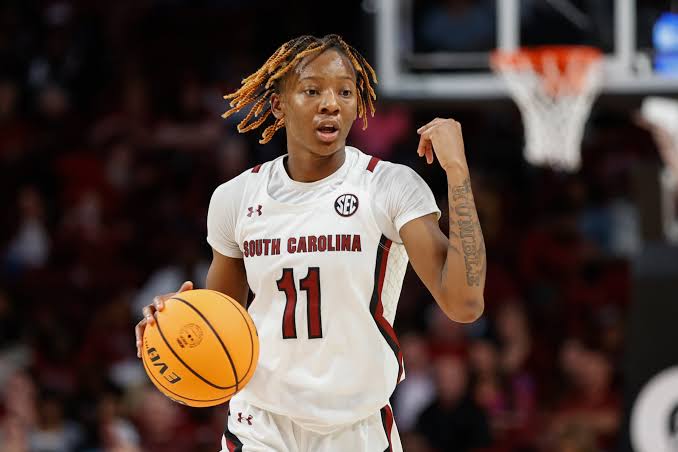
The story of Talaysia Cooper is one that women’s college basketball should use as a case study — in what happens when recruitment and fit don’t match, how the transfer portal can serve as a corrective mechanism, and what elite talent can accomplish when it finally lands in the right environment. After two stops across the SEC, Cooper is headed to a third. And this time, the circumstances suggest the chapter could be her best.
Ole Miss head coach Yolett McPhee-McCuin has landed Cooper as her first transfer portal acquisition of the 2026-27 offseason, ranking the move as the program’s second consecutive cycle securing a top-five portal player. The announcement came Wednesday, less than a week after the portal opened, and Cooper’s words on social media set the tone for everything that follows: “Fresh Start. Strong Finish.”
Those four words are not just a caption. They are a manifesto written by a player who has earned the right to write it.
The South Carolina Chapter: Promise Without Platform
Cooper arrived at South Carolina as one of the most decorated recruits in program history. A five-star recruit out of East Clarendon High School in Turbeville, South Carolina, she was the 2021 South Carolina Gatorade Player of the Year and a 2022 McDonald’s All-American. Coming home to play for Dawn Staley in front of Gamecock Nation should have been a story with a clean, triumphant narrative arc.
Instead, her one season in Columbia produced limited opportunities. She averaged 2.9 points and 8.4 minutes per game — the output of a talent buried under depth and rotation constraints, not of a player with fundamental problems. The raw materials were never in doubt. The fit was.
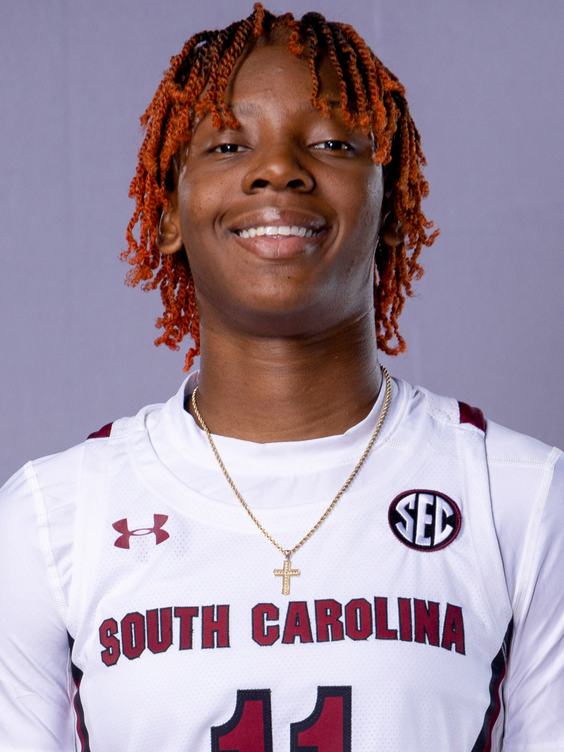
Cooper left South Carolina outside the normal transfer portal window, which meant she had to sit out a full season before being eligible to play again. That is a significant cost — an entire year of competitive development lost — and the fact that she accepted it rather than simply remaining comfortable speaks to how certain she was that a change was necessary.
The Tennessee Chapter: A Star Is Revealed
What happened at Tennessee vindicated Cooper’s willingness to sacrifice that year. Under coach Kim Caldwell, she became one of the most productive guards in the SEC, averaging 16.3 points, 5.2 rebounds, 3.4 assists and 2.9 steals per game across her two Tennessee seasons. The numbers were not gradual — they were immediate evidence of a player who had always been capable of this level of production, waiting for the right stage.
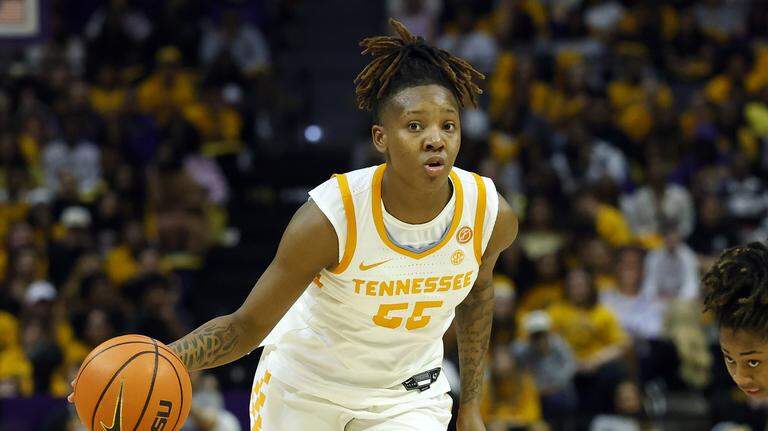
She led the Lady Volunteers last season in points, assists, and steals, earning All-SEC Second Team honors for the second consecutive year. She scored in double digits in 25 of 29 games. Her season high was a 30-point performance — against Ole Miss, of all teams, in Oxford. That number will carry a certain irony now that Oxford is her next destination.
Cooper was equally decorated on the defensive end. She was named a Naismith Defensive Player of the Year Semifinalist, appeared on the Wooden Award Watch List, and earned spots on six different preseason watch lists heading into her final season. For a player whose early college career produced single-digit scoring averages, the transformation was striking.
Her departure from Tennessee came after a notable incident at the SEC Tournament, where she was benched by Caldwell for much of the second half of a loss to Alabama without public explanation, before returning to full participation in the NCAA Tournament. Whatever the internal dynamics, the result was the same: Tennessee ended its season in the Round of 64 against NC State, and Cooper entered the portal shortly after.
“First, I just want to say thank you to the University of Tennessee, the coaching staff, my teammates, and everyone who has supported me during my time here,” Cooper wrote. “Being a Lady Vol has meant more to me than I can fully put into words. I’ve grown a lot on and off the court, and I’ll always be grateful for the relationships and experiences I’ve gained here. After a lot of thought and prayer, I’ve decided to enter the transfer portal to continue my journey. This decision wasn’t easy at all, but I’m trusting what’s best for me moving forward.”
The tone of that message is worth noting. There is no bitterness, no vague implication of wrongdoing. It reads like a player who is self-aware enough to know that how you exit one chapter shapes how you begin the next.
The Ole Miss Chapter: Why This Landing Makes Sense
McPhee-McCuin made clear that this recruitment was not a spontaneous transaction. “I’ve known her since she was in 9th grade and I’ve always been a fan of her game,” she said. “There’s no doubt in my mind, Coop will thrive with a fresh start and reach her peak to compete at the highest level and prepare for her future as a pro.”
That context — a coach who has tracked Cooper since before she was a recruit — suggests this is a relationship built on genuine familiarity and trust, not just portal opportunism. That matters for a player entering her final college season. The margin for adjustment is thin. Cooper does not need a year to prove she belongs or to learn a system from scratch. She needs a home where she can operate at full capacity immediately.
The backdrop adds an additional layer of intrigue: the last time Cooper played at Ole Miss, Tennessee fell 94-81 in a game marked by post-game drama between Caldwell and McPhee-McCuin in the handshake line. That game — in which Cooper scored 30 points, her career high — now reads like an unlikely audition for where she would end up next.
Ole Miss is also not a program in transition. McPhee-McCuin has established a track record of securing elite portal talent, having landed 2026 SEC Newcomer of the Year Cotie McMahon in the previous offseason cycle. Cooper is not walking into a rebuild. She is walking into a program that has shown it can develop and deploy transfer talent at a high level.
For South Carolina fans, Cooper’s arrival at Ole Miss sets up a reunion of a different kind. She faced the Gamecocks twice during her Tennessee career. Now, wearing the red and blue of the Rebels, she will face them again in SEC play — a reminder that the path between Columbia and Columbia’s opponents often runs through the transfer portal in modern college basketball.
There is a larger pattern worth acknowledging in Cooper’s career arc. She was recruited as a McDonald’s All-American — the kind of player who should, under ideal circumstances, blossom into an All-SEC contributor at her first stop. The fact that it took two transfers and a redshirt season to get there says less about Cooper’s ability and more about how misalignment between talent and opportunity can delay even the most promising careers. The transfer portal, for all the chaos it introduces into the sport, has served Cooper exactly as it was designed to serve her.
She is 21 years old with one year of eligibility remaining and the statistics of a legitimate pro prospect. The question heading into her Ole Miss season is not whether she can play at a high level — that has been settled. The question is whether she can lead a program to the place where her talent always suggested she belonged. A fresh start. A strong finish. After everything she has been through to get here, it would be hard to bet against her.
About The Author