
The Transfer That Shaped a Career: How Gamecocks Guard’s Year at South Carolina Elevated Her WNBA Draft Stock
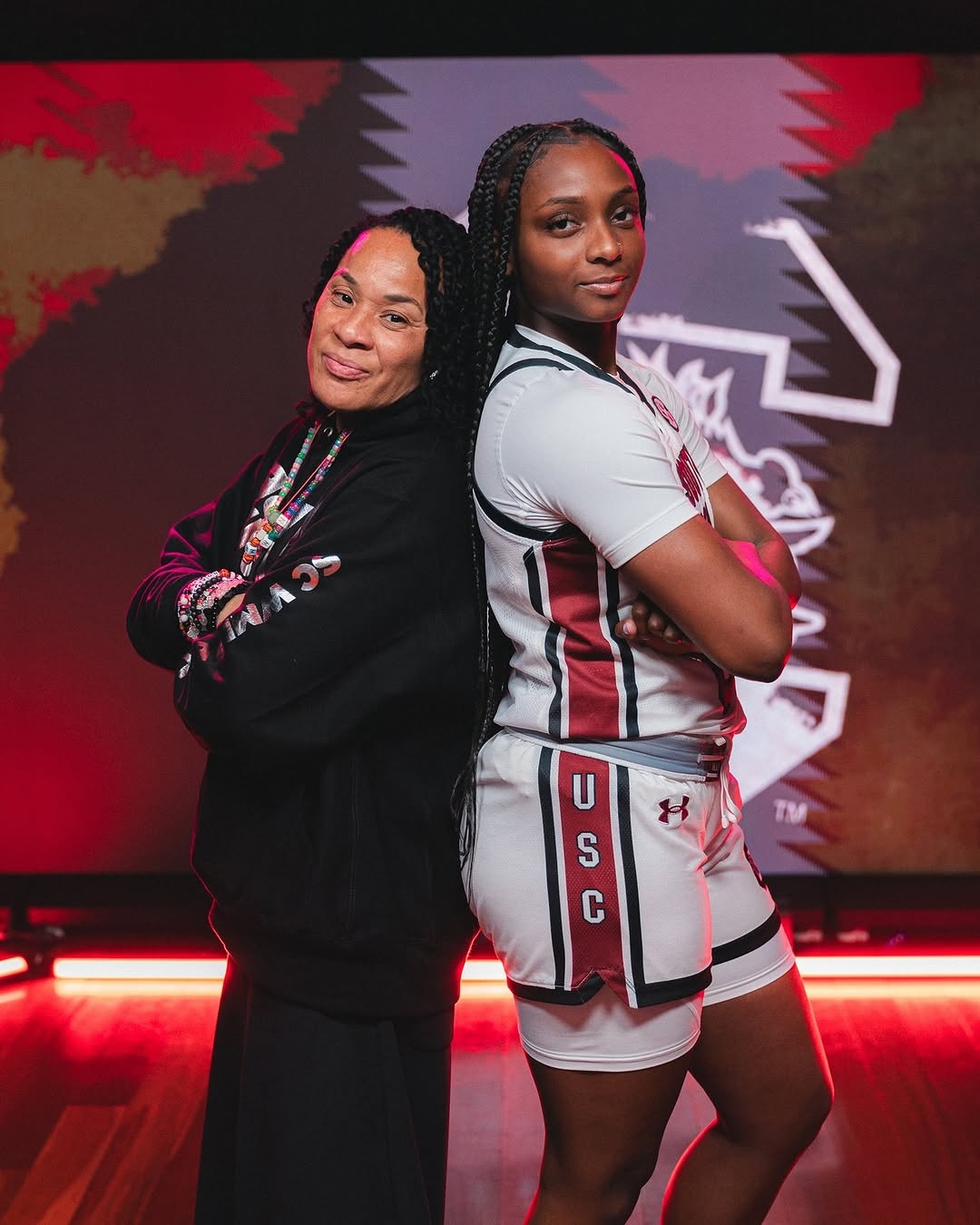
Ta’Niya Latson did not need to transfer to South Carolina to become a first-round WNBA Draft pick. Her scoring exploits at Florida State had already made her one of the most recognizable names in college basketball. What she did need — and what Dawn Staley’s program delivered — was the chance to become something more than a scorer.
On Monday night in New York City, that transformation gets its official reward.
From Scoring Champion to Complete Player
The numbers Latson posted at Florida State were extraordinary by any standard. She was the nation’s leading scorer, averaging at least 21 points per game across three seasons with the Seminoles and peaking at 25.2 points per game in her final year On3 — a Division I-leading figure that put her name at the top of every conversation about the best offensive players in the country.
But elite scoring at a mid-tier program only tells part of the story. Florida State went 70-30 and never made it past the second round of the NCAA Tournament during Latson’s three seasons Garnet and Cocky , despite her individual brilliance. The program simply could not surround her with enough talent to compete at the highest level, and that limitation — through no fault of her own — left questions about how her game would translate when the competition intensified.
The transfer to South Carolina was designed to answer those questions. Latson said as much herself. “There were things I was missing, like the defensive presence,” Latson told ESPN. “I knew coming to South Carolina, I had to get better at defense. And also finding my spots offensively while playing with other great players. It hasn’t always been easy, but I feel like it will pay off going to the next level and make things easier in training camp.” ESPN
That level of self-awareness is rare in elite scorers, and it is central to understanding why her draft stock held firm even as her raw numbers declined.
Rebecca Lobo’s Verdict: The Year Was Worth It
Basketball Hall of Famer and ESPN analyst Rebecca Lobo was among the most precise voices in assessing what Latson’s South Carolina season accomplished in terms of professional preparation.
“I think she was just able to illustrate, over the course of the season, some of the things that she wasn’t asked to do at Florida State that she’s going to need to be able to do to be a good WNBA player,” Lobo told reporters Friday. “And I certainly think that it did help her draft stock to show all of those things.”
The distinction Lobo is drawing matters enormously. A player whose usage rate exceeds 38 percent — as Latson’s did at Florida State — is essentially being asked to carry an entire offense. That environment, while showcasing her scoring ability, did not require the complementary skills that WNBA coaches prioritize when building rosters. Her usage rate dropped from a nation-leading 38.2 percent to 22.9 percent with South Carolina Swish Appeal , but rather than viewing that as diminishment, Lobo frames it as the most important professional audition she could have given.
“She showed what her game looks like when she’s surrounded by a different level of talent,” Lobo said. “While she was at South Carolina, she showed that she can play with other great players.”
The efficiency numbers reinforce that framing completely. Under Dawn Staley’s coaching, Latson increased her field goal percentage to 48.6 percent while significantly cutting down on her turnovers. Swish Appeal Her win shares also increased to 7.0 — a meaningful indicator that her overall contributions to winning basketball grew even as her individual spotlight narrowed.
The Complete Picture Lobo Paints
What Lobo is describing in her assessment is a player who checked the specific boxes that NBA and WNBA front offices evaluate when deciding whether a scorer is a system ball-stopper or a genuine franchise-building piece. The answer, after one year in Columbia, is clearly the latter.
“She’s not somebody who’s going to go to the WNBA and have the usage rate that she had at Florida State,” Lobo said. “She showed that she can be a better defender than she had to be when she was at Florida State, that she can be a facilitator while still playing to her strengths, while still being outstanding out in transition and scoring and creating off the bounce and getting in the paint and distributing to others.”
The defensive improvement alone represents a significant professional development milestone. Latson ranked among the SEC’s top 20 in six different statistical categories, including eighth in steals per game at 1.7, seventh in assist-to-turnover ratio, and eighth in free throw percentage South Carolina Athletics — a multi-dimensional profile that her Florida State numbers could never fully demonstrate.
Her defensive box plus/minus reached a career-high 6.6 this season, and her defensive win shares hit a career-best 2.3. These are not numbers that happen by accident on a team with South Carolina’s defensive demands. They reflect a player who showed up committed to the growth she said she was seeking.
The Draft Projection: Mid-First Round and Climbing
The scattered nature of mock draft projections for Latson reflects not a lack of conviction about her talent but genuine competition among teams for a player who fits multiple roster profiles. USA Today and Tankathon project Latson as high as No. 7 overall to the Portland Fire, while ESPN places her at No. 13 to the Atlanta Dream, and CBS Sports has her landing at No. 10 with the Indiana Fever. Garnet and Cocky
Each destination makes its own kind of sense. The Fever spent much of last season dealing with backcourt injuries and need experienced guard depth, while Latson’s ability to create her own shot in the paint and draw fouls at will would be invaluable behind Caitlin Clark and Kelsey Mitchell. Swish Appeal The Atlanta Dream, fresh off acquiring Angel Reese and re-signing Allisha Gray, would give Latson another environment where she is not the primary scoring option — exactly the role that, according to Lobo, she has already proven she can thrive in.
The South Carolina Year in Perspective
The raw numbers tell a surface story that is easy to misread. Latson’s scoring average fell by more than 11 points per game when she moved from Florida State to South Carolina. That number, taken in isolation, might suggest a step back. In context — surrounded by Joyce Edwards, Raven Johnson, Madina Okot, and Ta’Niya Latson — it suggests exactly what it was: a player who adapted.
She earned All-America and all-conference status for the fourth consecutive year, reached her first NCAA Sweet 16 and Final Four, and in that Final Four debut produced 16 points and 11 rebounds against UConn. South Carolina Athletics The postseason, in particular, showed a player rising to the moment on the biggest stages — which is precisely the context in which WNBA scouts draw their sharpest conclusions.
Rebecca Lobo’s assessment, offered on the eve of the draft, amounts to this: Ta’Niya Latson came to South Carolina knowing what she needed to develop, did the work to develop it, and leaves Columbia as a more complete professional prospect than she arrived. The first-round selection that follows on Monday night is not just a reward for her scoring. It is a reward for the choice she made, and the growth that followed.
About The Author