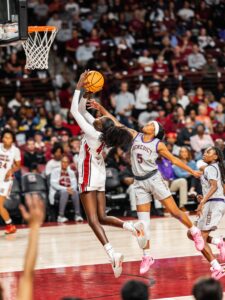
The Very Big Questions That Still Haunt Gamecocks WBB Almost-Perfect Season
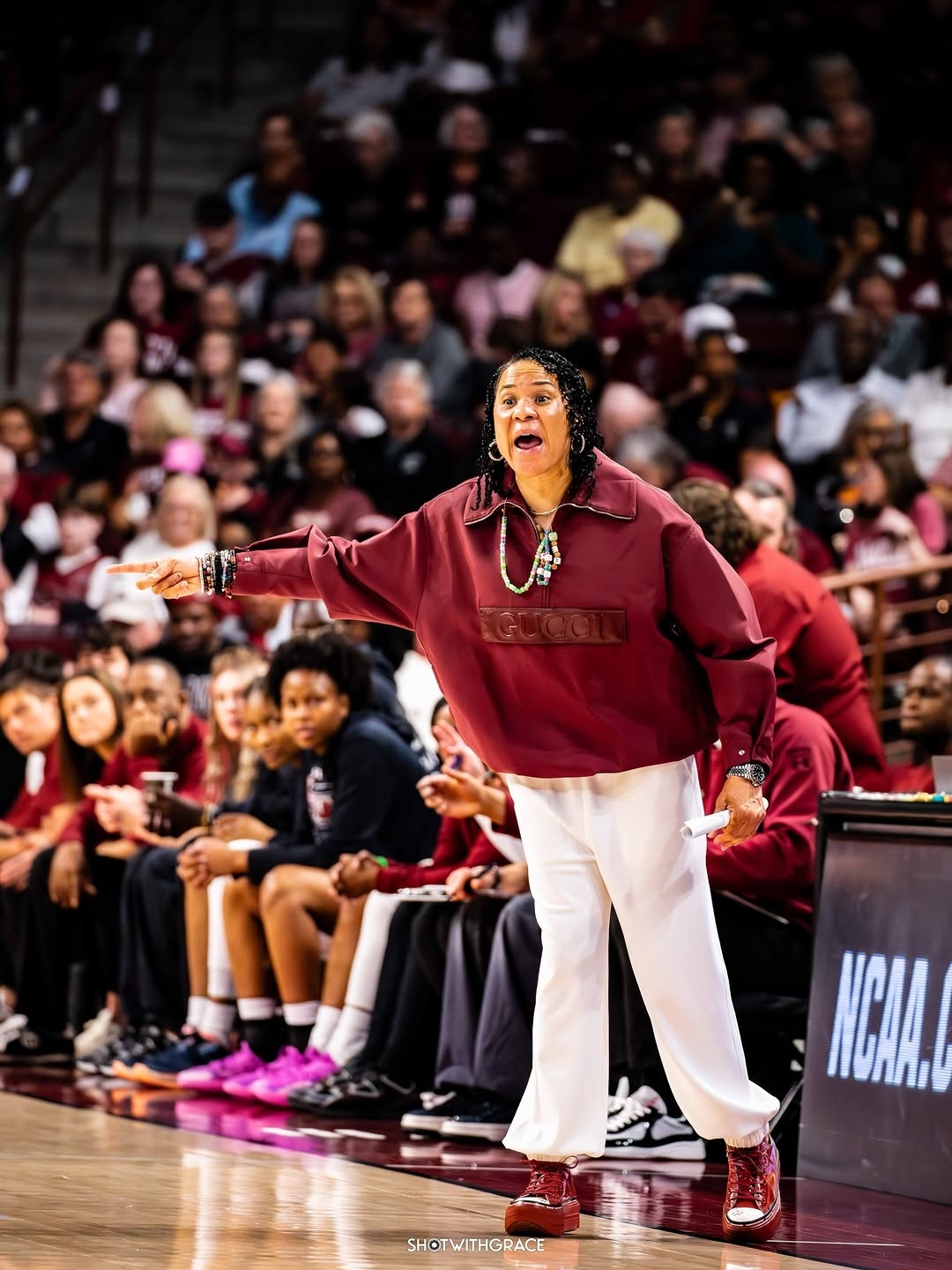
Every great season carries its ghosts. The moments that almost happened. The possessions that slipped away. The injuries that quietly rewrote the story before anyone fully realized it. South Carolina’s 2024-25 campaign was extraordinary by almost any measure — a Final Four run, historic victories, and individual performances that will be discussed for years. But as the dust settles on a season that ended one game short of everything, the questions that linger are as compelling as the answers the Gamecocks provided.
What If Chloe Kitts Doesn’t Get Hurt?
Of all the “what ifs” on this list, this one carries the heaviest weight — because Chloe Kitts’ torn ACL in early October didn’t just remove a player from the rotation. It fundamentally rewired the identity of an entire roster before the season had even begun.
South Carolina had spent the offseason deliberately building toward being bigger, more athletic, and more versatile. The additions made sense. The vision was clear. And then Kitts — the leading returning rebounder, an All-American, and by all accounts the vocal defensive leader of the group — went down in practice and took a significant portion of that vision with her.
“The versatility was gone until Makeer’s emergence in March.” That sentence tells the story of an entire season in fourteen words. The Gamecocks spent months searching for something that was supposed to already be there — rebounding consistency, defensive identity, frontcourt leadership — and didn’t fully find it until the calendar turned to the tournament.
Kitts is also, as those around the program consistently emphasize, a fearless competitor in the moments when fearlessness is the only currency that matters. There were games throughout the season — close games, physical games, games that required someone to make a play when nothing was working — where that specific quality was noticeably absent.
How different does this season look with a healthy Kitts from November onward? Significantly, honestly, and in ways that are difficult to fully quantify but impossible to dismiss.
Hi
This one lives in the uncomfortable territory of pure speculation, and even the most honest analysis has to acknowledge its limitations upfront — the way UCLA played that night, it is entirely possible that no game plan adjustment would have been sufficient.
The Bruins were simply exceptional. Their execution was nearly flawless. Their size was a problem South Carolina’s roster, in its final configuration, was not ideally equipped to solve.
And yet. The “what if” persists. What if the Gamecocks had attacked the game differently — changed the tempo, adjusted the defensive assignments, found a different way to attack UCLA’s perimeter? Basketball is a game of adjustments, and sometimes a single tactical shift early in a game changes everything that follows. We will never know whether a different approach would have given South Carolina a chance.
What we know is that the approach they chose didn’t work. And in a national championship game, that is the only thing that ultimately matters.
What If South Carolina Had Won It All?
This is the one that sits heaviest — not because of what was lost, but because of what was so close.
Dawn Staley would have stood alone in the conversation about the greatest coaches in the history of women’s basketball, tied for third on the all-time national championship list. Raven Johnson would have completed her South Carolina career with three national championships and a career winning percentage that would have been essentially incomprehensible — 95% instead of “only” 94%. Ta’Niya Latson would have been fully and completely vindicated in her decision to leave Florida State for Columbia, her transfer narrative ending not with a question mark but with a championship trophy.
And South Carolina would have done something beyond any individual achievement — it would have re-established itself, beyond any debate, as the preeminent program of the past decade. Not probably. Not arguably. Definitively.
Instead, the season ends one game short. The dynasty is still a dynasty. The legacy is still extraordinary. The program is still the standard.
But the ghosts remain. And in the quiet moments of an offseason that will eventually give way to another season of possibility, those ghosts whisper the same question over and over again.
What If Ashlyn Watkins Doesn’t Sit Out The Season?
It is easy to forget now, buried beneath everything that followed, that Ashlyn Watkins was supposed to be part of this story. Recovering from a torn ACL, there was genuine hope that she would return to the court midseason and provide exactly the kind of athletic, versatile frontcourt presence that South Carolina’s roster was built to accommodate.
It never happened. And while predicting exactly how productive Watkins would have been — given the uncertainty of her timeline, her conditioning upon return, and how quickly she could have integrated back into the system — is genuinely difficult, the honest answer is that her presence would have changed something. What that something was, we will never fully know. But a player of Watkins’ profile never disappears from a rotation without leaving a gap somewhere.
What If Adhel Tac Doesn’t Get Hurt?
Adhel Tac’s final game of the season came on February 5th — a quiet eight points and three rebounds against Mississippi State that nobody could have known would be her last appearance. In the weeks that followed, her absence was largely masked by the emergence of Alicia Tournebize and Maryam Dauda, two players who stepped into expanded roles and performed admirably enough that the gap wasn’t always visible.
But then came Texas. And then came UCLA. And in both of those losses, the gap became impossible to ignore.
The specific problem was Lauren Betts — UCLA’s physically dominant center who posed a matchup challenge that Tournebize and Dauda, for all their effort, simply didn’t have the combination of size and strength to consistently handle. Tac would have. She had already demonstrated her ability to compete against Texas physically in Las Vegas, and the argument that her availability against LSU in the SEC Tournament might have preserved enough energy for the Texas rematch is not as far-fetched as it might initially sound.
Would Tac have been the difference between winning and losing the national championship? That is a long shot. But she would have improved the odds — and in games decided by margins that thin, improved odds matter enormously.
About The Author