
The Obvious Weaknesses and Areas Gamecocks WBB Must Fix After Back-to-Back Title Game Loses
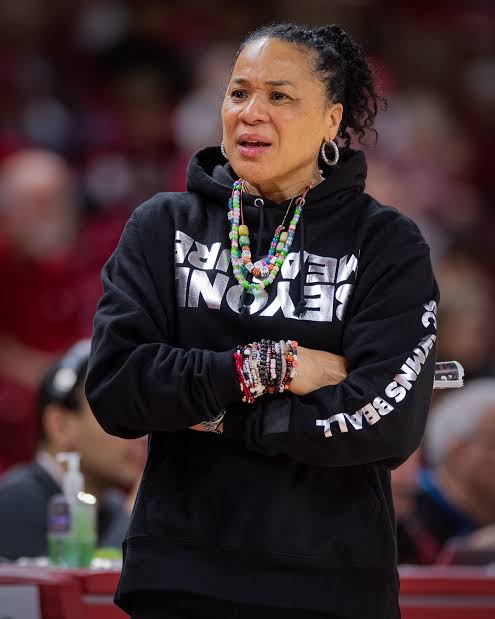
The final image of South Carolina women’s basketball’s 2025-26 season is a brutal one: a 79-51 shellacking at the hands of UCLA in the national championship game. But strip away that closing nightmare, and what you actually find is one of the most dominant offensive teams in program history — a paradox that raises more questions than answers heading into next season.
A Historic Season Buried Under One Catastrophic Night
Let’s be clear about what the Gamecocks actually accomplished this year. South Carolina averaged 85.6 points per game — the best offensive output in program history and fourth in the entire nation. They shot 50% from the field, ranked third in winning percentage at 90%, and dominated opponents by an average margin of 27.8 points. These aren’t just good numbers. These are program-defining numbers.
Yet none of that mattered when the lights burned brightest. Shooting a staggering 16.7% in the first quarter of the title game exposed a fragility beneath all those gaudy statistics — one that head coach Dawn Staley and her staff must now dissect with surgical precision.
The uncomfortable truth is this: South Carolina didn’t just lose a championship game. They lost the rebounding battle by 12 boards (49-37), missed layups they make in their sleep during the regular season, and watched their most dangerous offensive weapons go completely silent. One bad night, yes — but it was the third time this team lost a game by losing the rebounding battle by an average of 10.7 boards. Patterns don’t lie.
The Joyce Edwards Problem — and Opportunity
If there is a silver lining to losing Ta’Niya Latson and Raven Johnson to the WNBA, it is that South Carolina now knows exactly who its franchise player is. Sophomore Joyce Edwards shattered the program’s single-season scoring record with 768 points, elevating from 12.7 to 19.2 points per game in a single leap that announced her as one of the nation’s premier offensive threats.
But Edwards’ brilliance was amplified by what surrounded her. Latson and Raven Johnson weren’t just scorers — they were release valves. When defenses tightened around Edwards and 6-foot-6 center Madina Okot near the rim, those guards could punish opponents from the perimeter. That dynamic created the offensive balance that made opposing coaches openly admit they struggled to game-plan against South Carolina.
Those release valves are now gone.
What fills that void matters enormously. Texas transfer Jordan Lee is the most intriguing newcomer — a 6-foot guard with SEC experience who understands how to manufacture her own shot within the system. Her learning curve should be shorter than Latson’s adjustment was, and if she slides into the starting lineup, it pushes promising sophomore-to-be Agot Makeer into a bench role where she could thrive as a dynamic, attack-first scorer with three-point range. Makeer could mirror the kind of sophomore leap Edwards made this past season — and that possibility alone should excite Gamecocks fans.
The harder question marks are the veterans. Maddy McDaniel must evolve into a mid-range threat rather than relying exclusively on attacking downhill — predictability at point guard is a recipe for stagnation against elite defenses. And Tessa Johnson enters her senior year facing the same critiques she’s battled for two seasons: inconsistency. Her cold streaks have a way of arriving at the worst moments. As a senior, disappearing offensively is no longer acceptable. Drive, kick, create — but do not go invisible.
Rebounding: The Roster is Better, the Expectations are Higher
Losing Okot — who averaged an SEC-best 10.6 rebounds per game — stings. Her one-on-one battle against UCLA’s 6-foot-7 Lauren Betts in the title game was largely a mismatch that contributed to South Carolina being destroyed on the glass. But the returning roster is not without answers.
Ashlyn Watkins and Chloe Kitts both missed the entire 2025-26 season and return with high expectations as proven, physical rebounders. Their presence should fundamentally change South Carolina’s glass battle. But the Final Four win over UConn offered a cautionary reminder — in that game, it was Latson who led the team in rebounds with 11, because Okot and Edwards were locked in demanding individual matchups. Rebounding by committee isn’t just a philosophy; it has to be a culture that runs all the way into the bench rotation.
Which brings us to the uncomfortable underbelly of this team.
The Bench Problem Cannot Repeat Itself
There is no soft way to say this: South Carolina ranked 145th in the nation in bench scoring at just 18.5 points per game last season. One year after ranking first. That free-fall forced Staley to lean heavily on her starters — an arrangement that works until someone gets into foul trouble, fatigue sets in during deep tournament runs, or a matchup demands adjustment.
The posts off the bench averaged a combined 3.4 points. That figure is not a typo. It is a structural flaw that UCLA — and other elite teams — could and did exploit by simply wearing down South Carolina’s starters over the course of a game.
Adhel Tac is the variable with the highest ceiling and the most uncertainty. The 6-foot-5 forward missed 16 games with injury this season and had injury absences the year prior as well. When healthy, she is one of the team’s most vocal leaders and a potential frontcourt difference-maker. But “when healthy” is doing a lot of heavy lifting in that sentence. Staley needs Tac to be available — and the incoming freshman forwards must be ready to contribute meaningful minutes rather than simply logging time.
Missed Layups: The Mental Edge South Carolina Must Find
Perhaps nothing is more damning in the postmortem than this: in three of their four losses, the Gamecocks missed at least 12 layups, leaving between 24 and 32 points on the board on shots that aren’t supposed to be missed at this level.
These aren’t contested jumpers at the buzzer. These are wide-open looks around the rim — the bread-and-butter of what made South Carolina’s offense historically great this season. Missing them at the rate they did in losses points to something deeper than technique. It points to mental fragility under pressure.
There was a direct correlation between the layup misses and the rebounding collapses. When execution broke down, so did the physical effort. That connection — between mental composure and competitive intensity — is the hardest thing to coach and the most necessary thing to fix.
The Bottom Line
South Carolina does not need a teardown. The core is intact, the portal has taken nothing from them, and the program’s culture under Staley remains the gold standard in women’s college basketball. What they need is sharper execution, a reliable bench, and the mental toughness to sustain their regular-season dominance when tournament pressure arrives.
Two straight national championship losses have a way of focusing a team. The question is whether this group channels that pain — or lets it surface again at the worst possible moment.
About The Author