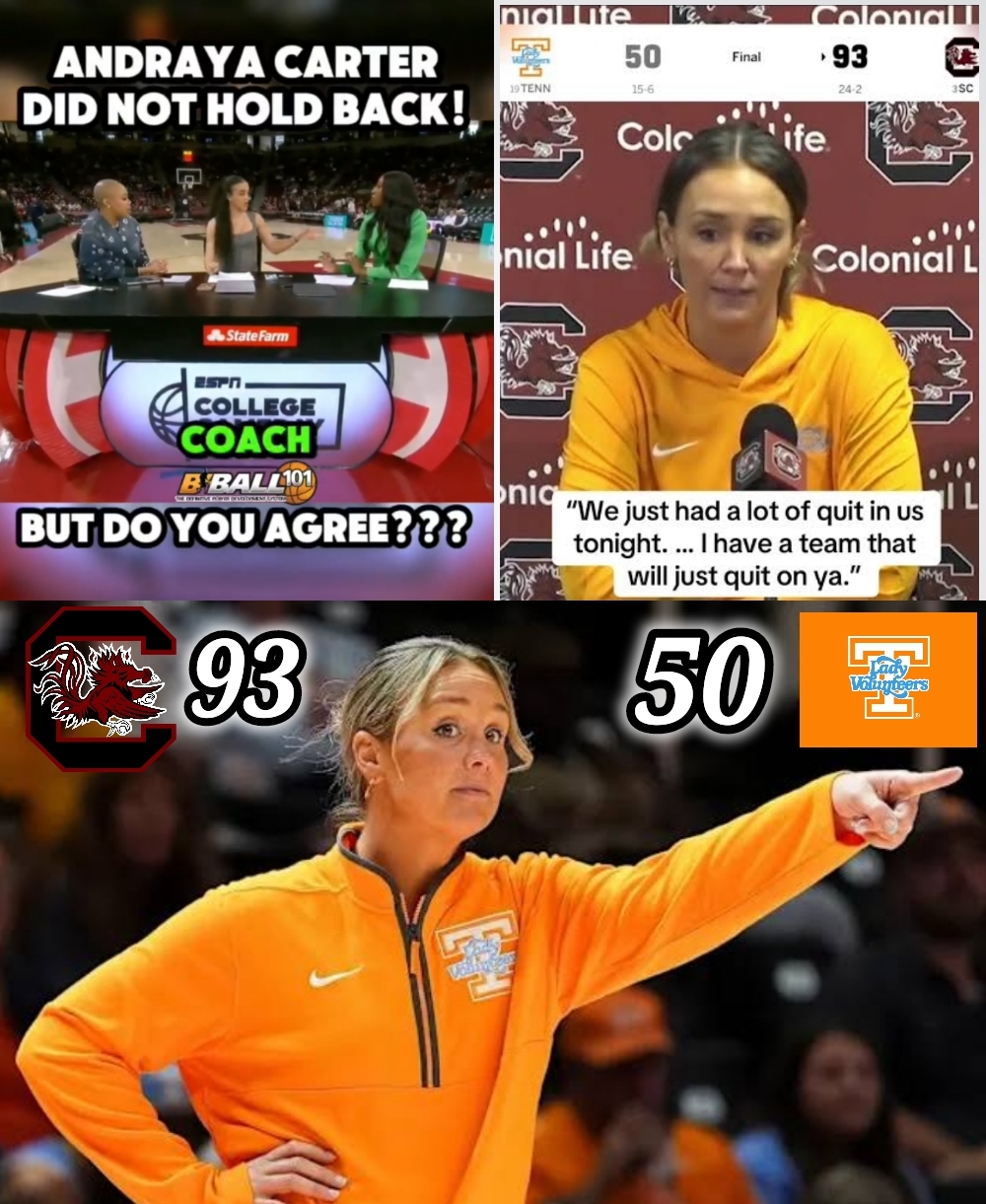
In a result that sent shockwaves through the SEC, handed a historic 93–50 defeat — the worst loss in Tennessee program history.
But as dominant as South Carolina’s performance was on the floor, the loudest conversation afterward centered on what was said off it.
Caldwell’s Brutally Honest Admission
Tennessee head coach did not mince words in her postgame assessment:
“A lot of quit in us tonight, and that’s been something consistent with our team, is we’re not comfortable and things don’t go our way. And I have a team that just quit on you, and you can’t do that in big games. You can’t do that anywhere, anytime in the SEC, but you certainly can’t do that at a program like this.”
It was a striking statement — not because coaches don’t criticize effort, but because of how direct and public it was.
In the SEC, where physicality and mental toughness define success, Caldwell’s words suggested a deeper issue than one bad night. She didn’t point to execution, shooting percentages, or defensive schemes. She pointed to mentality.
And that’s where the controversy began.
ESPN Debate: “Words Matter”
The comments sparked immediate reaction, including from ESPN analyst , who weighed in on the phrasing.
“Words matter,” Carter emphasized, igniting a broader discussion about modern coaching language, player psychology, and accountability in today’s game.
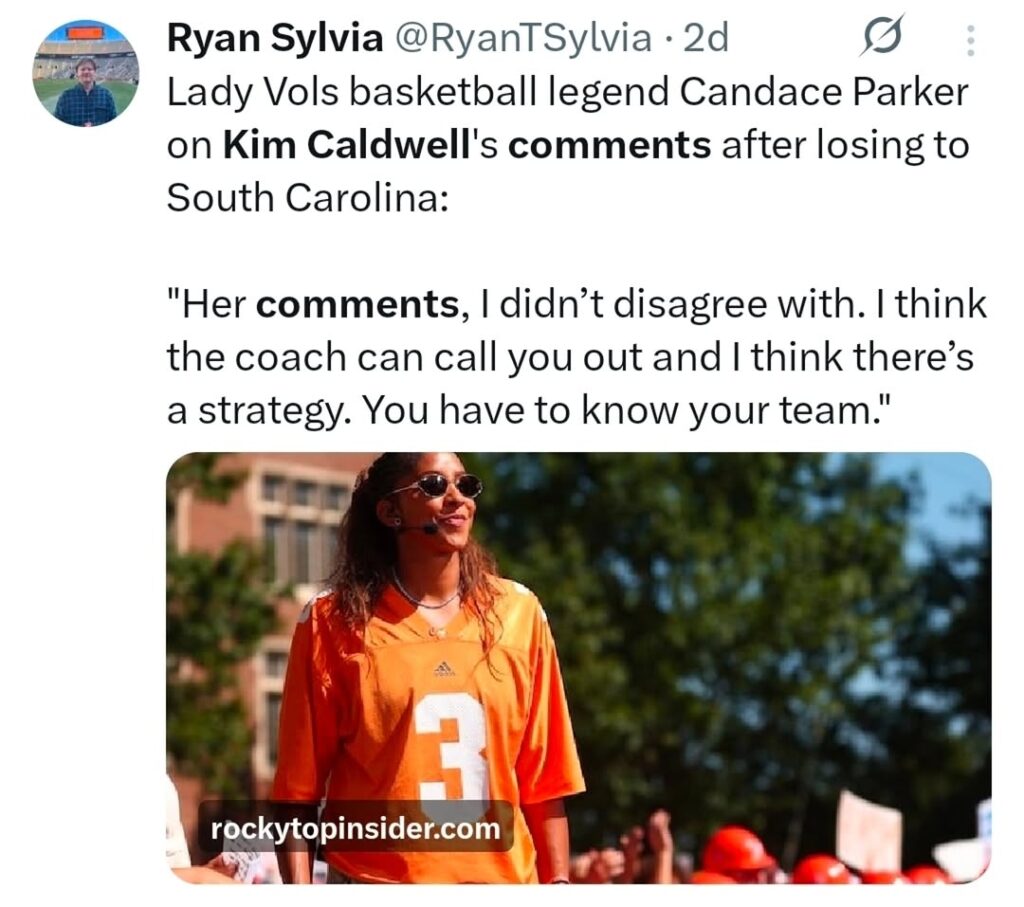
Interestingly, WNBA legend reportedly had no issue with Caldwell’s blunt approach — a response some have framed as reflective of a “tougher generation” mentality where public accountability was standard.
That generational contrast is central to the debate. Is calling out “quit” a necessary wake-up call? Or does it risk alienating players in an era that prioritizes empowerment and relationship-based leadership?
CLICK 👇HERE TO WATCH

Dawn Staley’s Measured Leadership Perspective
When asked about the situation, South Carolina head coach offered a nuanced response.
She admitted she “probably wouldn’t have used those exact words,” but also made it clear she respects Caldwell as a young coach. Staley added that with time, Caldwell would likely learn how to temper certain comments and choose language that better motivates her players.
That response spoke volumes.
Staley didn’t condemn Caldwell. She didn’t fully endorse the phrasing either. Instead, she acknowledged a core leadership truth: coaching lives in the tension between truth and timing.
Sometimes players need encouragement.
Sometimes they need correction.
And sometimes they need a mirror.
The key is knowing when — and how — to deliver each.
The Bigger Question: Message vs. Delivery
The real controversy isn’t just about wording. It’s about what the wording implies.
If a coach says her team “quit,” is the issue that she said it publicly?
Or is the real discomfort the possibility that it might be true?
Development isn’t comfortable. Accountability rarely is. Programs with championship aspirations — especially in the SEC — are built on confronting hard truths. But modern leadership increasingly demands emotional intelligence alongside toughness.
Caldwell’s statement may ultimately become a turning point — either as a rallying cry or as a lesson in messaging.
Because at elite programs, the margin between motivation and miscalculation is razor thin.
Final Thought
This wasn’t just about a 43-point loss. It became a case study in leadership philosophy.
Was it the wrong words?
Or the right message delivered the wrong way?
In a conference defined by standards, culture, and championships, that distinction may determine what happens next for Tennessee.
What do you think?