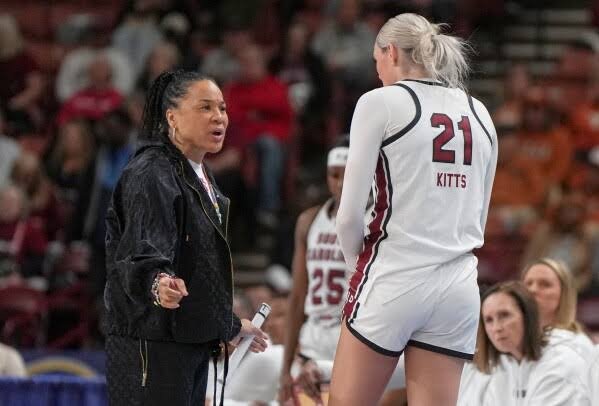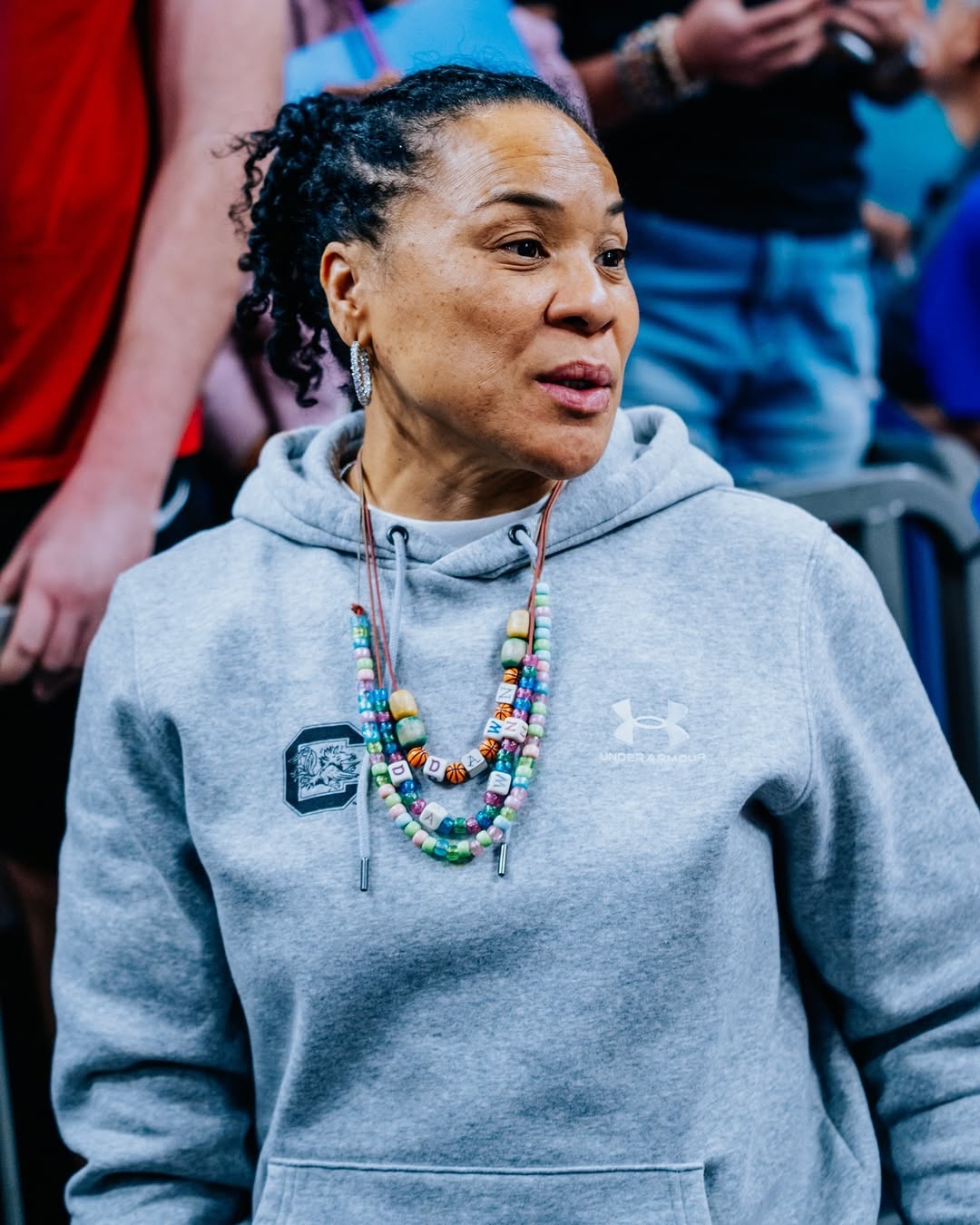
Dawn Staley wasted no time. With the national championship loss to UCLA barely in the rearview mirror, the work of reshaping next year’s roster has already begun in earnest. Four names have emerged as South Carolina’s primary transfer portal targets, and each one addresses a specific, identifiable need on a roster that came within one game of a title. Here is a detailed breakdown of who they are, what they bring, and why the Gamecocks are pursuing them.
Point Guard: Kymora Johnson (Virginia) or Jadyn Wooten (Oklahoma State)
The point guard position is the most urgent item on South Carolina’s offseason checklist, and Staley herself made that clear in the aftermath of the championship game.
“Obviously, we’ve got to add some guard play, definitely some lead guard play, some more athleticism in the guard department.”
Maddy McDaniel returns as the primary option at the one, and she has shown genuine promise — she can get to the rim, draws fouls, and rarely turns the ball over. But McDaniel has missed time with four separate injuries across two seasons, and entering next year with her as the only true point guard on the roster is a risk no coaching staff serious about a championship run would accept. Staley needs a backup plan that is capable of being a starting plan if circumstances demand it.
Kymora Johnson out of Virginia represents the higher-profile option. A proven lead guard who has operated as a full-time floor general at the ACC level, she brings exactly the kind of experience and durability profile that McDaniel’s injury history makes necessary. Her ability to push pace, manage the offense, and create for others within a structured system fits the South Carolina model. In Staley’s program, the point guard is not just a ball-handler — she is the defensive engine and the connective tissue of everything that happens on both ends. Johnson’s profile suggests she can handle that weight.
Jadyn Wooten from Oklahoma State offers a different but equally interesting proposition. The Big 12 produces physically demanding basketball, and guards who survive and thrive in that environment tend to translate well to the physicality of the SEC. Wooten’s athleticism — precisely the quality Staley identified as a need in the backcourt — could give South Carolina a dynamic option that opens up the offense in ways that a more traditional point guard cannot.
The fact that South Carolina is monitoring both players simultaneously suggests the staff has not closed the door on either, and the right answer may ultimately come down to who wants to be in Columbia the most. Either would represent a meaningful addition. Both would represent a solved problem.
Wing: Aaliyah Crump (Texas)
Crump’s name on this list is not a surprise — it is a recognition of a real gap in South Carolina’s current roster construction.
Coming off a season at Texas in the SEC, Crump has played against the highest level of competition the college game offers. She is a wing who can score, and more importantly, she is a wing who can create her own shot — a skill that becomes exponentially more valuable in tournament basketball when defenses tighten and half-court possessions require individuals capable of generating something out of nothing.
South Carolina’s wing position heading into next season is a work in progress. Agot Makeer had a breakout NCAA Tournament but is still developing into the complete player her tools suggest she can become. Ayla McDowell fell out of the rotation during SEC play and needs a strong offseason to reclaim meaningful minutes. The depth behind Joyce Edwards and Tessa Johnson at the wing and forward spots is thinner than a Final Four program wants it to be.
Crump changes that calculus. A player who can come off the bench and immediately provide scoring and shot creation takes pressure off Edwards, gives Johnson a complementary option on the perimeter, and makes South Carolina harder to defend by adding another legitimate threat. In the modern game, you cannot have too many players who can make shots when the game plan breaks down. Crump profiles as exactly that.
Her familiarity with SEC play also shortens the adjustment curve significantly. She does not need a semester to understand the physicality and pace of the conference — she has already lived it. That accelerated readiness is worth something on a team with championship aspirations that cannot afford a slow start.
Power Forward: Tilda Trygger (NC State)
Trygger is perhaps the most intriguing name on the list precisely because she represents the kind of player whose value is not immediately obvious from a stat line alone.
A power forward out of NC State, Trygger brings a skill set that is increasingly essential in the modern game — the ability to stretch the floor from the four position. A power forward who can shoot threes forces defenses to make uncomfortable choices. Do you send your shot-blocker or your big defender out to the three-point line, opening up the paint for drivers and cutters? Or do you leave Trygger open and accept the consequences? Neither answer is comfortable, and that discomfort is valuable.
South Carolina’s frontcourt returning core is built around Joyce Edwards, the returning Chloe Kitts, and the potential return of Ashlyn Watkins. Each of those players operates primarily in the paint or in mid-range territory. Adding a power forward who can function as a floor-spacer from the perimeter complements that interior orientation without creating redundancy. It also gives Staley lineup flexibility — the ability to go big and still maintain spacing, which is the offensive construction that elite defenses struggle most to scheme against.
Trygger’s ACC background means she arrives with a strong competitive foundation. NC State is not a program that produces passengers — players who come through that program have been tested. The transition to the SEC’s physicality will present challenges, but the skill set she brings is translatable and the role she would fill is clearly defined.
The Bigger Picture
Taken together, these four targets — or some combination of them — reflect a coherent and deliberate roster-building philosophy. Staley is not chasing names. She is filling positions, addressing documented weaknesses, and identifying players whose specific skills complement what is already in place.
The point guard search solves the depth and injury-risk problem at the most important position on the floor. Crump’s addition gives the offense another creation option and takes pressure off the returning starters. Trygger’s floor-spacing capability makes the entire frontcourt harder to defend. And in the background, the Audi Crooks conversation continues to simmer as the potential answer to the Okot-shaped void in the middle.
South Carolina reached three consecutive national championship games by building rosters with purpose and then developing players beyond their perceived ceilings. The 2025-26 roster is being assembled the same way — not by accident, but by design.
The nest is being built. Now comes the work of getting the right birds into it.