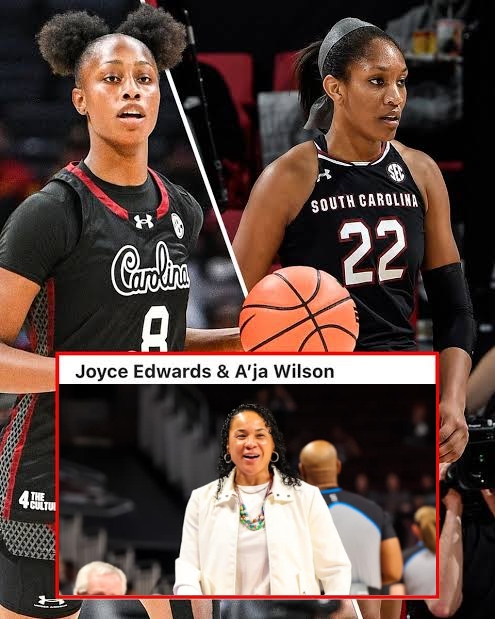
COLUMBIA — Joyce Edwards has never needed help scoring the basketball. Now, Dawn Staley wants more.
After a dominant December stretch in which Edwards poured in 143 points over six games, South Carolina’s sophomore star has been nudged into the next phase of her evolution — becoming a consistent playmaker, not just a prolific scorer.
That shift was hinted at following Edwards’ career-high 34-point explosion against USF on Dec. 18, when she shot an eye-popping 14-of-15 from the field. While the performance earned praise, Staley also made it clear there was another level Edwards could reach.
“Joyce isn’t just a scorer, she’s a play-maker,” Staley said. “She can make the play that’s suppose to be made and sometimes you got to force her to do those things because she’s so locked in to playing advantage basketball, meaning she can probably score against anyone guarding her. We’re challenging her to open up that part of her game.”
That challenge became more relevant once SEC play began.
Adjusting to SEC Defenses
Shooting better than 93% from the floor is unforgettable — but it isn’t sustainable, especially against the physical, scouting-heavy defenses of the SEC. And early conference play showed just how much tougher things can get.
Edwards averaged 23.8 points per game over her final six non-conference contests. Through her first six SEC games, that number dipped to 16.3, accompanied by 21 total turnovers. In five of those six conference games, she missed at least six shots, including two games with eight or more misses.
Then came Vanderbilt.
In South Carolina’s 103-74 blowout of then-No. 4 Vanderbilt, Edwards still scored efficiently — 16 points and seven rebounds — but it was her distribution that stood out. After totaling 10 assists across her first six SEC games, she matched her career high with six assists against the Commodores.
The performance was a response.
Just three days earlier, Edwards had struggled mightily in a 94-82 overtime loss to No. 16 Oklahoma, shooting 25% from the field, tied for the worst mark of her career. Against Vanderbilt, she bounced back by shooting 70%, one of her most efficient outings of the season.
One possession late in the second quarter captured the growth. With 4:13 remaining, Edwards caught the ball off a soft screen set for Ta’Niya Latson. Before taking a single dribble, she surveyed the floor, identifying three teammates on the opposite side. None of the passing lanes were clean. Instead of forcing the issue, Edwards attacked right, pulled back left, shifted her defender, and finished an easy layup.
The decision-making mattered as much as the basket. Scoring wasn’t her first instinct — reading the floor was.
South Carolina’s offense hums when Edwards plays that way. The best scorers, after all, tend to become the best playmakers.
A Familiar Trajectory
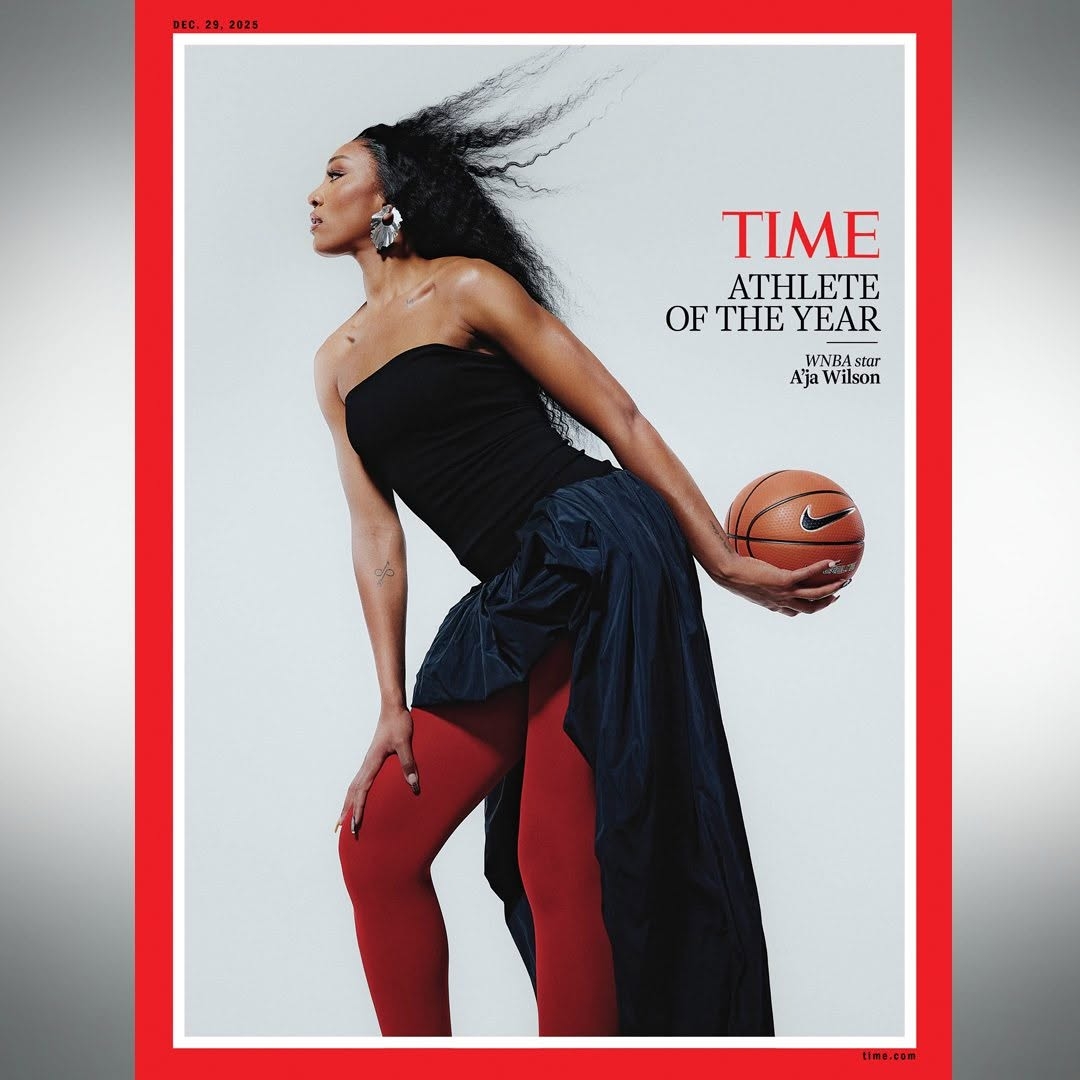
Edwards’ path has drawn inevitable comparisons to A’ja Wilson, the program icon who reshaped South Carolina basketball. The connection isn’t accidental.
Edwards, the No. 2 prospect in the 2024 class, committed to Staley’s program exactly 10 years after Wilson did. Wilson, a local star who chose to stay home, set a standard that still defines the program.
Before announcing her commitment, Edwards attended Tiffany Mitchell’s jersey retirement and spoke with former and current Gamecocks — but one conversation stood above the rest.
“I had a conversation with A’ja specifically, because we play the most similar. She gave me a lot of good advice,” Edwards said after her commitment.
Wilson has been watching ever since. When Edwards posted 13 points, 11 rebounds and six assists in her first Final Four appearance on April 4, 2025, Wilson sat just two rows behind the bench in Tampa.
“The reason why we’re here is because of her,” Edwards told ESPN after the win. “It’s crazy for her to see her full circle how her legacy is inspiring other girls like me to come out here and play.”
Their careers are tracking in remarkably similar ways.
Both came off the bench as freshmen. Wilson averaged 13.1 points, 6.6 rebounds and one assist in 19.8 minutes. Edwards posted 12.7 points, five rebounds and 1.2 assists in 21.4 minutes.
As sophomores, both saw expanded roles — and expanded responsibility.
Through 61 career games, Edwards is averaging 15.3 points, 5.4 rebounds and 1.7 assists, while Wilson averaged 14.5 points, 7.5 rebounds and 1.1 assists at the same stage. Wilson finished her sophomore season at 16.1 points and 8.7 rebounds; Edwards sits at 20 points, 6.2 rebounds and 2.5 assists as of Jan. 27.
Usage rates tell a similar story. Edwards currently owns a 28.2% usage rate, scoring 1.05 points per play. Wilson posted a 28.9% usage rate as a sophomore, averaging 0.99 points per play.
With 934 career points, Edwards is now chasing history. She’s on pace to become just the third player in program history to reach 1,000 points as a sophomore — a mark Wilson reached in her 69th career game.
Edwards would need to average just 9.4 points over the next seven games to reach the milestone faster.
Wilson sees it too.
“I do see a little bit of myself in Joyce and that’s,” Wilson said Feb. 2, 2025.
She paused, then smiled.
“That’s pretty good.”