Dawn Staley Pulls Back the Curtain: The Defensive Adjustments, the Raven Johnson Moment, and Why Calm Is South Carolina’s Secret Weapon
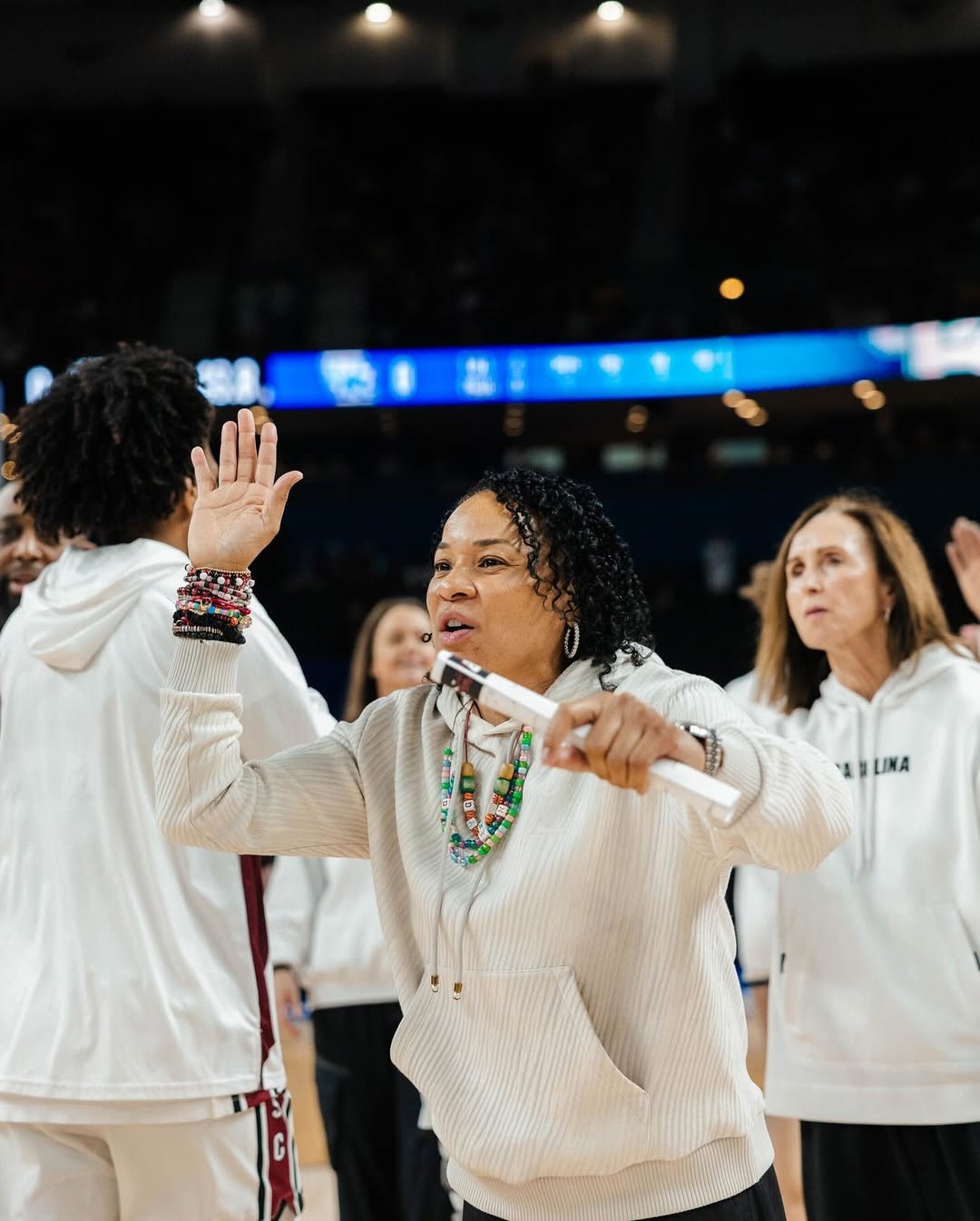
GREENVILLE, S.C. — The scoreboard read 87-64. But the most revealing moments of South Carolina’s SEC Tournament quarterfinal victory over Kentucky weren’t found in the box score. They were found in Dawn Staley’s postgame press conference — a masterclass in coaching transparency that illuminated exactly how the Gamecocks turned a close regular season win into a dominant tournament statement.
The Defensive Blueprint: Making Strack Work Harder for Everything
The central tactical question heading into Friday’s rematch was straightforward: how would South Carolina handle Clara Strack differently than it had six days earlier in Lexington, when the Kentucky star finished with 24 points and nine rebounds in a game that nearly produced an upset?
Staley’s answer revealed a defensive adjustment that was subtle in design but significant in execution.
“It was pretty much the same. We executed better today,” Staley said. “I thought we wanted Strack to put the ball on the floor and then bring the help, bring the digs from the other big. We didn’t have that the last time out, one, because we just were so locked into our guarding the player that we were guarding. And the only people that we wanted to guard like that were their shooters. So I thought we did a really good job at digging in and closing out to the shooters and just giving Strack a much different look than she got on Sunday.”
The adjustment is a textbook example of elite defensive coaching. In Lexington, South Carolina’s defenders were so individually locked in on their assignments that the team defense — the communication, the help rotations, the digs on the ball handler — broke down. Strack was able to operate in space that shouldn’t have existed.
On Friday, the Gamecocks corrected that breakdown. By identifying Strack as the primary target for help defense rather than a player to be guarded one-on-one, and by maintaining pressure on Kentucky’s perimeter shooters simultaneously, Staley’s staff presented a genuinely different defensive picture. Strack finished with 11 points in 23 minutes — a dramatic reduction from her Lexington performance, achieved not through personnel changes but through improved execution of an existing system.
Joyce Edwards: From Energy Drain to Defensive Architect
The most nuanced coaching insight of Staley’s press conference came when she was asked what impressed her about Joyce Edwards defensively. The answer revealed a level of individual player management that rarely gets discussed publicly.
“I saw Joyce just adjust,” Staley said. “I thought in Sunday’s game she expended a lot of energy, a lot. Probably too much, and I think she wanted to be more sure than not. And I thought we made her feel a lot more comfortable with knowing that, if you send her in a certain direction, we have your help. If you send her in another direction, we probably don’t have your help. So she was really good at just locking into where she knew her help spots were going to be and funneling Strack to those help spots. I mean, she wants to win. And she knew the best way for us to win the game is just kind of cut Strack’s production in half.”
This is sophisticated defensive communication at its finest. In Lexington, Edwards was essentially operating without a clear map — guarding Strack with intensity but without the structural clarity of knowing exactly where her help was coming from. The result was over-exertion, uncertainty, and a defensive performance that, while energetic, wasn’t as efficient as it needed to be.
Between Sunday and Friday, the coaching staff gave Edwards that map. They told her precisely which directions were covered and which weren’t. Armed with that information, she stopped trying to do everything herself and started funneling Strack toward the help — which is exactly how elite team defense is supposed to work. The outcome was a dominant individual defensive performance and, simultaneously, a more sustainable offensive night that produced 21 points on 8-of-12 shooting.
The Raven Johnson Moment: What Real Program Culture Looks Like
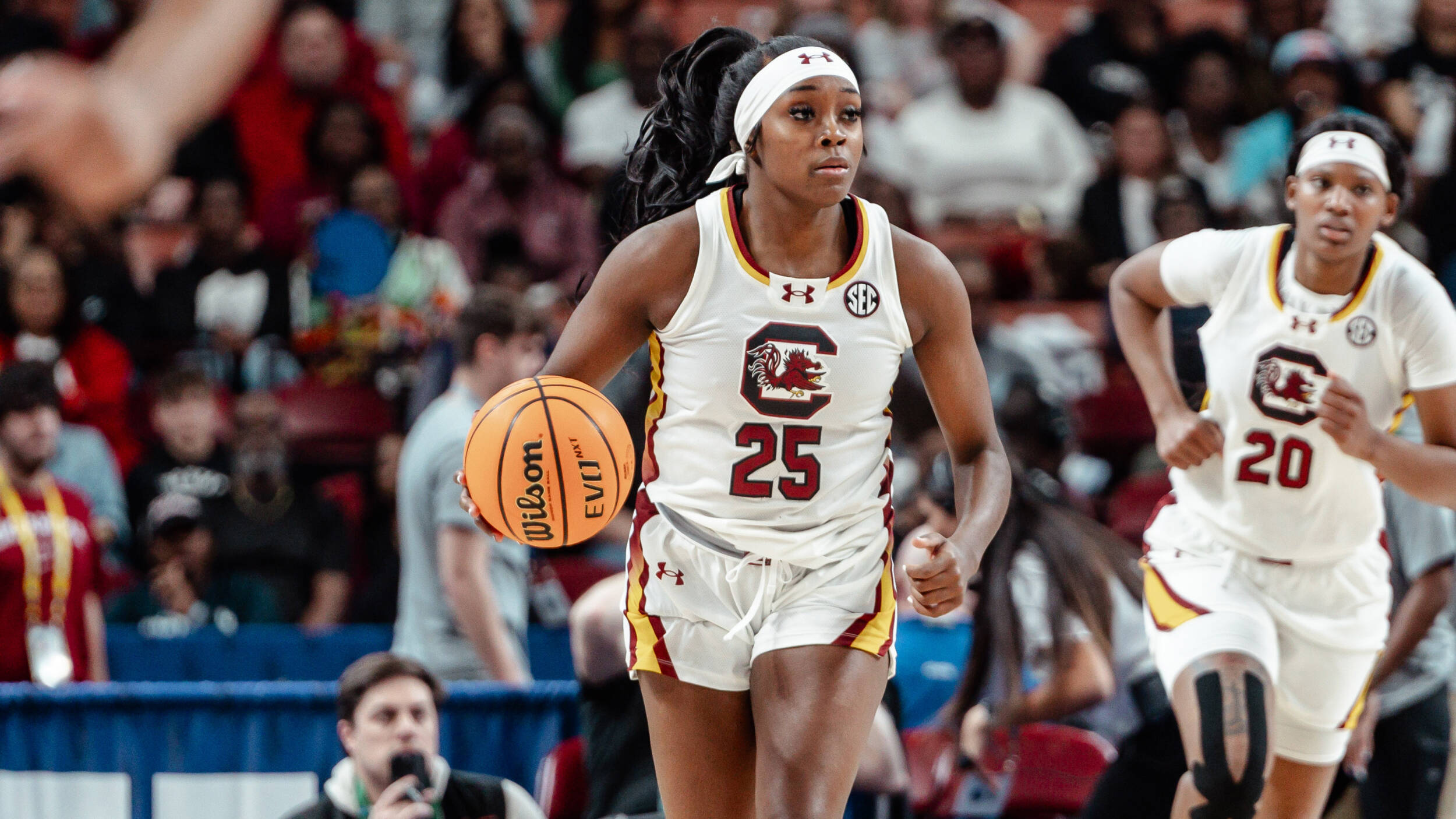
Among the many revealing exchanges in Staley’s press conference, one stood above the rest — a story about Raven Johnson that Staley said she needed to share with her team directly.
Asked about the value of getting everyone on the floor in a blowout victory, Staley’s answer turned into something more significant than a routine coaching response.
“Today, Raven was out of the game, and the five players on the floor had a good flow. So I wanted to insert her back in the game. She was like, No, they have a good flow going on, right? So it’s good to hear our most experienced player just wanting the five that were out there to continue to flow,” Staley said. “And that’s just messaging, right? She heard that before. I actually need to tell our team that. I do need to tell our team that she elected not to go back in the game because she thought they had a good flow.”
“And when your most experienced player that’s played in this tournament, has been in this tournament here five times, when she says that, it means she only wants to win.”
That moment — a five-year veteran, the SEC Defensive Player of the Year, voluntarily staying on the bench because she believed her teammates had a better rhythm going — is the kind of selflessness that cannot be coached into existence. It can only be cultivated over years of consistent messaging and reinforced standards. Johnson has absorbed everything Staley has built in Columbia and internalized it completely. Her choice in that moment was not a sacrifice. It was a natural expression of who she is and what this program values.
Staley recognized its significance immediately — not just as a coaching win, but as a teaching moment worth broadcasting to the entire roster.
Pace and Transition: Correcting Sunday’s Tactical Failure
Staley was direct in her assessment of what Kentucky had done well in Lexington — and what her team had failed to do as a result.
“I thought Kentucky, the first time we played them on Sunday, did a really good job of slowing the pace down and making us play in the half-court and kind of just took away some transition buckets,” Staley said. “Once we get transition buckets, we flow a lot differently in the half-court, where we don’t feel as much pressure to score in the half-court when we get some easy buckets. I thought we executed that. Joyce got out in front in transition.”
“Raven passed the ball. I thought we did a great job. Our guards were sprinting down the floor the way we like them to sprint down the floor, that they didn’t do too much the first time we played Kentucky. So that’s probably a difference maker in the amount of transition points that we got.”
The tactical correction here is significant. South Carolina is a fundamentally different offensive team when transition opportunities are available — the half-court game becomes less pressurized, the offense flows more naturally, and the defense has less time to set up. Kentucky had correctly identified that in Lexington and neutralized it. On Friday, South Carolina’s guards sprinted the floor the way they were supposed to, Edwards led the break, and the Gamecocks punished the Wildcats’ tired legs before they could organize defensively.
Calm as Competitive Advantage
One of the most philosophically rich exchanges of the press conference came when Staley was asked about the value of composure in tournament basketball. Her answer went beyond the standard coaching platitude.
“For us, it’s don’t get too high with the highs and too low with the lows. Just have to maintain,” Staley said. “When people go on scoring runs, is there a high alert? Yes. But that’s normal. It’s not anything extraordinary. It’s part of the game. I think when you are at your calmest is when you create options.”
“You could see options out there on the floor that you wouldn’t see if your nerves are up or if you’re ebbing and flowing on what’s out on the floor. We try to act like we were here before. We do. Even if it’s new or unfamiliar territory, if you’re calm about situations, you can see more. You can act more. You can do more.”
This is not a generic coaching philosophy. It is a precisely articulated competitive theory — the idea that emotional regulation directly expands the range of options a player can perceive and execute in real time. Anxious players see fewer options. Calm players see more. And players who see more can do more. For a program that has been to five consecutive Final Fours and won three national championships, that calmness is not natural — it is practiced, reinforced, and transmitted from the coaching staff to the roster every single day.
Tournament Tessa: A Nickname Earns Its Legitimacy
The final thread of Staley’s press conference brought a moment of levity wrapped around a genuinely important basketball development. Asked about Tessa Johnson’s 10-point run and the emerging “Tournament Tessa” nickname, Staley’s response captured both the tactical and the personal dimensions of the moment.
“I mean, Tessa has been in somewhat of a slump, as far as shooting the ball. So it’s good to see her actually see the ball go in, especially those 3s. I thought she did a great job at mixing it up, driving it at the basket, pulling up, getting to the free-throw line because her skill set speaks to all of those things,” Staley said.
“I know she’s known for shooting 3s. But, I mean, she’s really good at scoring the basketball. I mean, she scored a lot of points in the state of Minnesota. It was good to see her get back to doing a lot of things that she’s capable of doing.”
“And I actually like the name Tournament Tessa. And it is funny to hear her say she likes something that brings attention to her, because she doesn’t really like a lot of attention brought to her. So it’s cool that she embraced the nickname.”
The coaching insight buried inside the nickname conversation is worth extracting. Staley’s prescription for Johnson’s slump — mixing in drives, pull-ups, and free throw attempts alongside three-point attempts — wasn’t just about getting her confidence back. It was about reminding Johnson that she is a complete scorer, not merely a three-point specialist. When Johnson operates as a multi-dimensional offensive threat, she becomes exponentially harder to guard. Friday was the first full expression of that version of Tessa Johnson in weeks — and the timing, with the NCAA Tournament approaching, could not be better.
The Full Picture
What Staley’s postgame press conference revealed, more than anything, is a coaching staff that operates at a level of detail and intentionality that most programs cannot match. Defensive rotations adjusted between games. Individual player confidence managed through structural clarity. A veteran leader’s selfless moment transformed into a team-wide teaching opportunity. A pace-and-transition game plan corrected and executed to perfection.
South Carolina didn’t just beat Kentucky on Friday. They demonstrated, in granular detail, exactly why they are the most complete program in women’s college basketball — and exactly why, when the NCAA Tournament bracket opens, the rest of the field should be paying very close attention.
Source: on3