Outcoached and Outfought: How Siena Nearly Handed Duke the Most Embarrassing Loss in Modern Tournament History
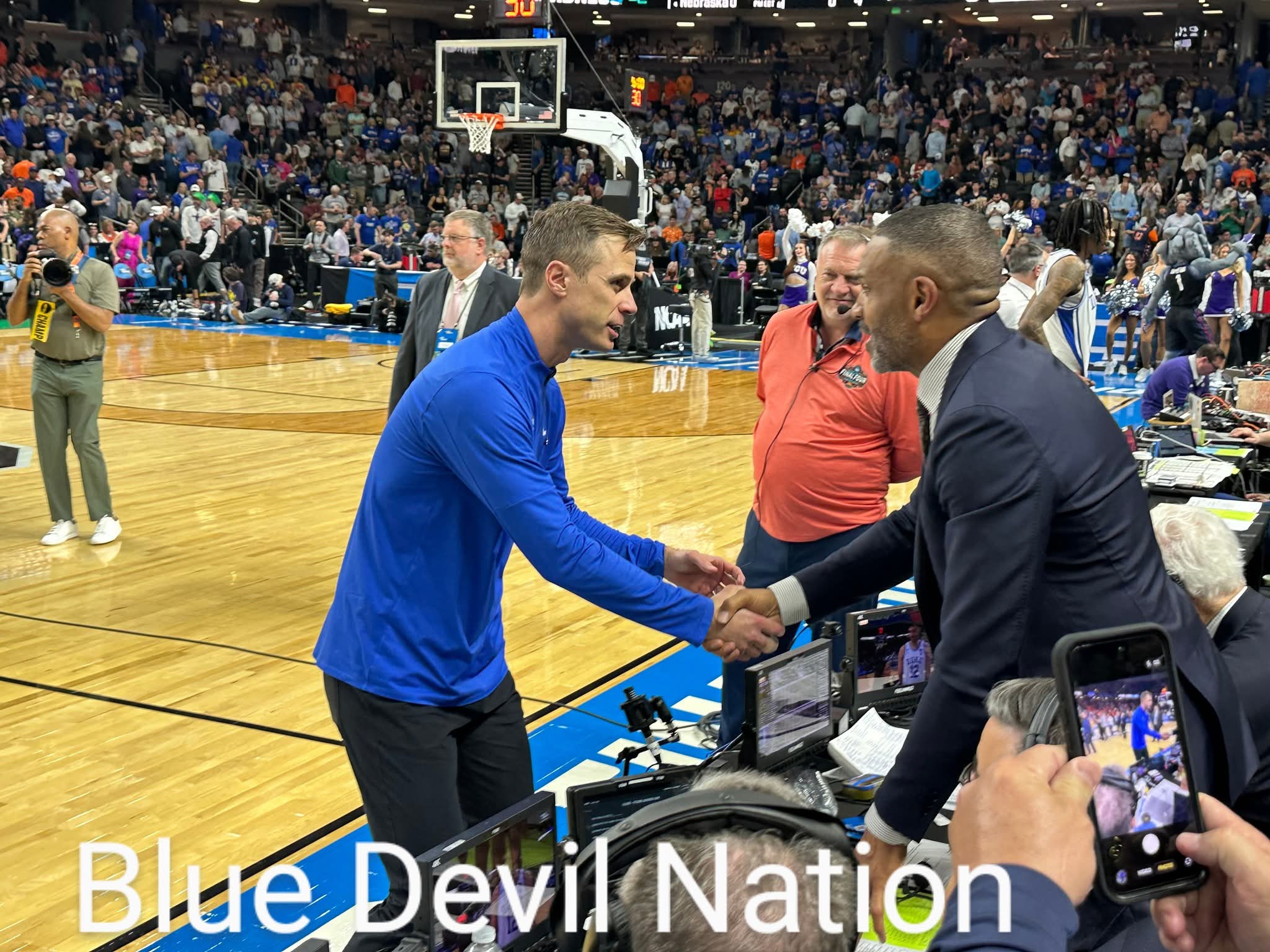
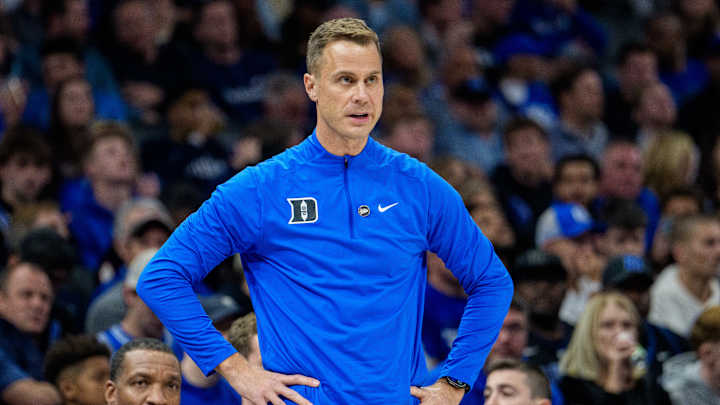
GREENVILLE, S.C. — Jon Scheyer walked off the floor with a win. He walked to the microphone and said something that coaches almost never say.
“G-Mac had his guys way more ready to play than I did. He outcoached me; he outcoached us. That’s one of the hardest moments for me in sport, period, to not have your best stuff.”
For a No. 1 seed that entered the 2026 NCAA Tournament as the favorite to cut down the nets, those words land with the full weight of what almost happened Thursday afternoon at Bon Secours Wellness Arena in Greenville, South Carolina. Duke survived Siena 71-65. But survive is exactly the right word — because for long stretches of this game, the Blue Devils weren’t just losing. They were being dominated.
What Siena Actually Did
Strip away the seeding, the pedigree, and the preseason expectations, and what unfolded Thursday was a masterclass in preparation meeting execution at the highest possible moment.
Siena shot 54 percent from the floor and 45 percent from three-point range in the first half alone — numbers that would be elite against any defense in the country, let alone the No. 1 seed in the tournament. The Saints didn’t just hang around. They built an 11-point lead and had Duke’s tournament survival genuinely in question before the break.
“I thought we did everything we needed to do to give ourselves a chance,” Siena coach Gerry McNamara said. “I think anybody that watched the game, we had a real chance. We controlled a lot of this game.”
That last sentence is not spin. It is an accurate description of what the scoreboard showed for the majority of 40 minutes. Siena held an 11-point halftime advantage — the largest deficit any No. 1 seed had ever faced at the half against a No. 16 in tournament history. The Saints played all five starters for all 40 minutes, ran their game plan with precision, and came within a handful of possessions of completing what would have been only the third No. 16-over-1 upset in men’s tournament history.
The Aggressor and the Reluctant
What made Siena’s performance so striking wasn’t just the shooting percentages. It was the posture. The Saints came to Greenville as the aggressor — physically, mentally, and tactically — and Duke spent most of the afternoon reacting rather than dictating.
Scheyer acknowledged it without hesitation.
“I think the thing that you can say about his guys today, they weren’t afraid at all,” he said. “We knew that going in. There is a reputation in the league — they were the aggressors, and that’s a reflection on him and their coaching staff. That’s who he’s been his entire life that I’ve known him as a competitor.”
That reference to McNamara as a lifelong competitor is meaningful context. Gerry McNamara — known to Syracuse fans as G-Mac — was one of the most fearless players of his generation during his time at Syracuse from 2002-06. A guard built entirely on competitiveness and composure, he brought those qualities to the coaching profession and clearly transferred them to his team. In just his second season leading the Saints, McNamara had Siena playing championship-quality basketball on the tournament’s biggest stage.
The players absorbed that identity completely.
“I wanted it to feel a certain way in that locker room,” McNamara said. “I wanted it to look a certain way on the court in terms of the fight and the grit, and these kids have done all of it. They’ve done all of it. When I got the job, I couldn’t have scripted a better group of young men, young student-athletes to put together that would represent the place as finely as they have.”
Cameron Boozer and the Rescue Act
Duke’s salvation came largely through Cameron Boozer, who finished with 22 points and 13 rebounds — a double-double performance that ultimately provided enough of a foundation for the Blue Devils to claw back into a game they had no business trailing for as long as they did.
But even Boozer’s heroics don’t fully explain how Duke escaped. The Blue Devils regained the lead for good only with 4:25 remaining, having trailed for nearly 30 minutes total across the game. It was, by any honest accounting, a performance that fell dramatically short of what a No. 1 seed and tournament favorite is supposed to produce.
The Blue Devils’ survival owed as much to Siena’s physical limitations — the Saints played their entire roster on the legs of five players for 40 minutes — as it did to any adjustment or spark from Duke’s side.
An Honest Reckoning
What makes Scheyer’s postgame comments so significant is precisely how unusual they are at this level. Coaches of No. 1 seeds who survive first-round scares don’t typically stand at a microphone and say they were outcoached. They talk about adversity, character, and finding ways to win.
Scheyer did none of that. He gave McNamara full credit, accepted personal responsibility for his team’s unreadiness, and was transparent about the emotional weight of the moment.
“That’s one of the hardest moments for me in sport, period, to not have your best stuff,” he said.
That honesty is admirable. It is also, looking ahead, the most important thing Scheyer said Thursday. Because Duke’s next opponent — No. 9 seed TCU — will not be coming off the same limitations that eventually caught up with Siena. A fresh, confident team that just knocked off Ohio State will have watched Duke’s performance closely and identified exactly the same vulnerabilities McNamara exploited.
What Siena Leaves Behind
Siena will not be remembered in the record books as a team that made tournament history. The win column will show Duke’s name. But what the Saints accomplished Thursday — in Albany, in Greenville, and in every program that watched a No. 16 seed nearly topple the nation’s top team — is something far more durable than a box score.
McNamara built a program in two seasons that played without fear on the biggest stage in college basketball. His players represented their school with a fight and identity that most programs spend decades trying to develop. They came within minutes of making history.
“When I got the job, I couldn’t have scripted a better group of young men,” McNamara said.
Duke survived. Siena made a statement. And Jon Scheyer has two days to figure out whether his No. 1 seed actually has the hunger to make a tournament run — or whether Thursday was a warning the Blue Devils are choosing not to fully hear.
TCU will be listening.