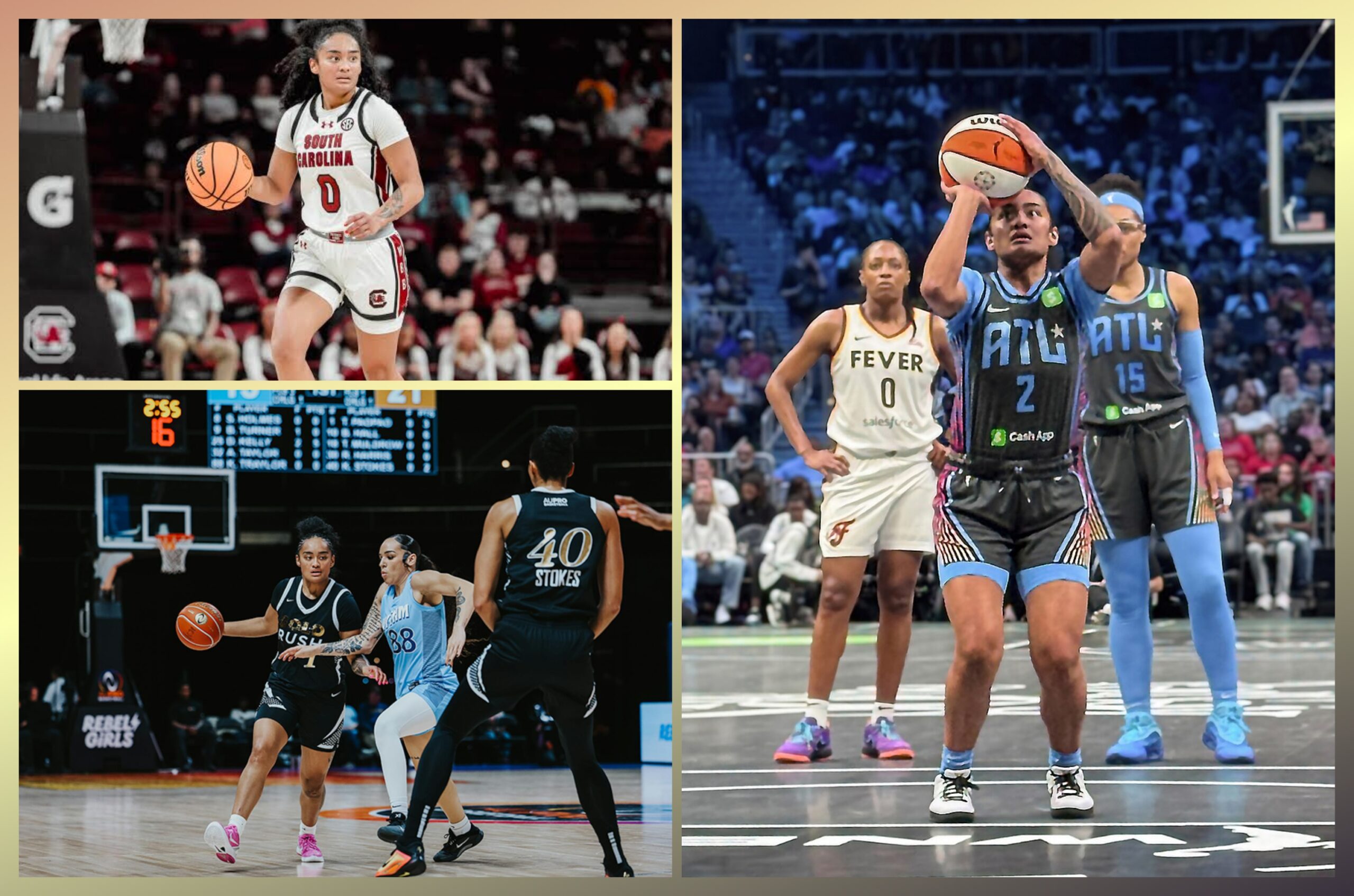
When the Atlanta Dream selected Te-Hina Paopao in the second round of the 2025 WNBA Draft, it was easy to overlook the pick amid the noise of a draft day filled with bigger names and higher expectations. Twelve months later, the former South Carolina Gamecock is not just surviving in the professional game — she is growing into it with the quiet, methodical intentionality of a player who understands exactly what kind of work the next level demands.
The Right Situation at the Right Time
Not every rookie lands in a situation that sets them up for success. The franchise, the coaching staff, the roster chemistry, the organizational culture — all of it matters enormously for a player still finding their professional footing. By almost every measure, Paopao landed well.
The Atlanta Dream she joined was a franchise in the middle of its own reinvention. After failing to record a winning record in any season from 2019 through 2024 — despite playoff appearances in 2023 and 2024 — Atlanta made the significant decision to appoint Karl Smesko as head coach. The gamble paid off in historically emphatic fashion. The Dream went 30-14 in 2025, the most wins in franchise history, and transformed overnight from a perennial underachiever into one of the WNBA’s genuine success stories.
For Paopao, arriving into that environment was not just fortunate — it was formative.
“I loved it,” she told The State. “A very ideal situation for a rookie. You had a whole new coaching staff, whole new squad coming in, so we all were able to learn on the fly with each other. I loved every part of it. I love Atlanta, the organization, the city, everything about it. They took really good care of me.”
The psychological significance of what Paopao is describing here should not be underestimated. A new coaching staff and a rebuilt roster meant that no one in the building had a deeply entrenched sense of hierarchy or an established pecking order that a rookie needed to navigate around. Everyone — veterans, mid-career players, and rookies alike — was learning a new system simultaneously. That levels the playing field in subtle but meaningful ways, creating an environment where a second-round pick from South Carolina can contribute, develop, and belong without the immediate pressure of performing against a pre-existing standard she had no part in building.
It is the kind of situation coaches and player agents dream of for developing talent — and Paopao recognized it for exactly what it was.
A Rookie Year Built on Learning, Not Just Playing
The raw numbers from Paopao’s rookie campaign tell the story of a player earning her minutes and her credibility through consistency rather than flash. Across 43 games with 15 starts, she averaged 16.7 minutes per contest, scoring 5.8 points per game while shooting an efficient 44% from the field and an impressive 38.6% from three-point range.
Those are not superstar numbers. They are not designed to be. They are the numbers of a player doing exactly what a second-round rookie is supposed to do in her first professional season — play within the system, hit her shots when they come, defend with purpose, and add value without disrupting the rhythm of a team that was, simultaneously, setting a franchise win record.
Her primary mentor in that environment was a familiar face — Allisha Gray, a fellow former Gamecock who delivered an All-WNBA season in 2025. The dynamic between Paopao and Gray is worth pausing on. Gray came up through the same South Carolina program, understands the standards that Dawn Staley instills, and served as a living example of what professional excellence looks like for a Gamecock. For Paopao, watching Gray up close every day — not on film, not from the stands, but in practice, in games, on the bench — was an education money cannot buy.
The South Carolina pipeline, once again, proved its value not just at the college level but in the direct mentorship it enables between generations of professional players.
“The Hardest Adjustment Was the Physicality”
Paopao is clear and generous in her assessment of how South Carolina prepared her for the WNBA. The crowds, the pace, the competitive environment — all of it, she says, translated.
“The transition was very smooth because South Carolina really prepared me for that. For the crowd, the fans, the play of the game, the pace of play,” she said. “But I probably say the hardest adjustment for me was the physicality of the game in the league. You’re coming in as a 22-, 23-year-old playing against grown women who’ve been in the league for years. Their bodies are already matured and [you’re a] 23-year-old just now getting out of college…”
“I knew coming in my offseason I had to be in the weight room, I had to lift, I had to do a lot of things that could prepare me for the physicality of playing against grown women.”
This is one of the most honest and analytically important things any young professional athlete can say about the jump from college to the pros — and Paopao says it without hedging or self-pity. The physicality gap between even the best college programs and the WNBA is real, documented, and often the primary reason technically gifted players struggle in their first professional seasons. Bodies that looked ready at 22 in the SEC meet bodies at the professional level that have been trained, refined, and hardened for a decade of professional competition. The margin for physical error essentially disappears.
Paopao’s self-awareness about this is significant. She did not wait for a coach to tell her she needed to get stronger. She identified the problem herself, named it clearly, and walked into her offseason with a specific plan to address it. That is not just athletic maturity — it is the kind of professional self-management that separates players who stick in the league from players who wash out after one or two seasons.
Her credit to South Carolina for the rest of the transition — the mental readiness, the pace, the crowd management — also says something important about what Dawn Staley’s program actually produces. It does not just develop scorers and defenders. It develops players who are emotionally and mentally equipped to compete at the next level without being overwhelmed by the environment. That is a coaching achievement that deserves recognition beyond wins and championship banners.
Choosing Nashville Over the World: The Athletes Unlimited Decision
The end of the WNBA season typically sends most players on a global journey — overseas leagues in Europe, Asia, Australia, and New Zealand offer both income and competitive reps during the American off-season. Paopao’s former South Carolina teammates made those choices: Bree Hall played in New Zealand, Sania Feagin is currently in Australia.
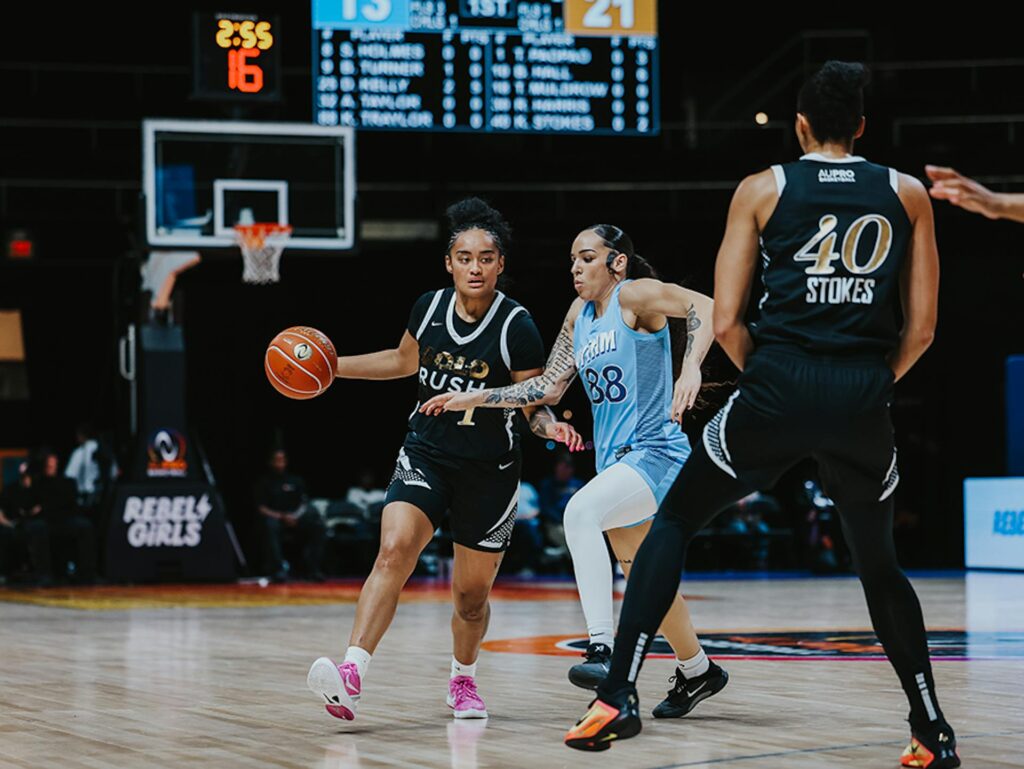
Paopao chose a different path entirely. She stayed stateside, opting for the Athletes Unlimited league in Nashville, Tennessee — and her reasoning for that decision is both practical and philosophically grounded.
“What drew me was being able to stay in the States,” she said. “I know a lot of people before me, generations before me, had to go overseas to play basketball but I’m fortunate enough to have the opportunity to play in the States. So that was a really big part of why I chose AU. And just a five-on-five setting. I thought that really could help my game as well, going into my second year into the league.”
The gratitude embedded in that quote — the acknowledgment that playing stateside in the offseason is a privilege that previous generations of WNBA players did not have — reflects a maturity and historical awareness that speaks well of Paopao as a person. She is not taking the opportunity for granted. She understands that AU represents progress for the sport, for the players, and specifically for her own ability to develop without the logistical, cultural, and personal disruptions that overseas play inevitably brings.
The five-on-five point is also strategically sharp. Overseas leagues, while competitive, can sometimes place American players in roles that do not reflect how they will be used in the WNBA. AU, by contrast, keeps Paopao in a system and a style of play that maps directly onto her professional development goals — particularly her stated ambition to sharpen her point guard play heading into year two.
The Gamecock Connection: Playing Alongside Zia Cooke
Among the most meaningful threads running through Paopao’s Athletes Unlimited experience is the presence of other former Gamecocks. She is one of four former South Carolina players in the league, joined by Bree Hall, Zia Cooke, and Alaina Coates. AU re-drafts teams on a weekly basis, so Paopao’s connections with her former program have manifested in real, on-court collaboration — including time as Cooke’s teammate.
Her words about Cooke carry the genuine warmth of a player who grew up watching someone and now gets to play alongside them.
“She’s such a great person,” Paopao said. “She really knows ball. Just watching her excel at such a high level, it’s really nice to see, because I remember watching her at South Carolina. So being able to play with her, it’s been really fun. She’s really a great person, very personable. To be able to have those South Carolina connections, it’s very important…it’s just a special connection with South Carolina Gamecocks, and it’s just something that you can’t really replicate. So it’s really a blessing.”
This is not simply sentimental nostalgia dressed in basketball language. The South Carolina network at the professional level is a genuine, tangible asset that the program has built over years of producing WNBA-caliber talent. When former Gamecocks share a locker room, a practice floor, or a team bench in any professional setting, they carry with them a shared vocabulary — a shared understanding of standards, preparation, defensive principles, and competitive expectations — that makes collaboration more natural and more effective than it would be between players who built their games in different systems.
Paopao is living that reality in Nashville, and she is wise enough to name it for exactly what it is: a blessing that is not accidental, and a connection that cannot be replicated because it was forged under one of the most demanding and successful programs in the history of women’s college basketball.
The Road Map for Year Two: Point Guard IQ and Defensive Growth
Through six games with Athletes Unlimited, Paopao is averaging 6.2 points and 2.7 assists per game across roughly 20 minutes of play, shooting 35% from the field. The assist numbers are particularly telling — they suggest a player who is actively leaning into the playmaking and facilitation role she has identified as her primary area of development.
Paopao’s self-prescribed growth agenda heading into her second WNBA season is specific, detailed, and reflects a player who paid close attention during her end-of-season meetings in Atlanta.
“I played a little bit of point guard, last year, my rookie year, so just being able to hone in on that and just be able to make tough passes or just make easy reads, making simple reads,” she said. “So it’s really the IQ of the game that I’m looking to improve on, and just getting reps in. And I worked on a lot of pace coming off ball screens. So that’s definitely something I’ve been working on. Defensively as well, I feel like that was a big thing that we talked about at my end of season meeting with my coaches in Atlanta.”
The specificity here matters. Paopao is not talking about vague self-improvement or generic off-season goals. She is targeting discrete, coachable skills — decision-making pace off ball screens, read simplification at the point guard position, defensive consistency — that directly address the areas her coaching staff identified as the next frontier of her development. That is the language of a player who listens, absorbs feedback, and translates it into a concrete action plan.
The point guard development thread is particularly worth watching as her career progresses. A player who can score efficiently off the bench — as she demonstrated in year one — and who is simultaneously building the playmaking IQ to operate as a legitimate backup point guard becomes significantly more valuable to a professional roster. She stops being a scorer who can play alongside a point guard and starts being a player who gives her team genuine lineup flexibility. That is a meaningful step up in professional utility, and Paopao is clearly working toward it with full intention.
What It All Means: A Career Quietly Trending in the Right Direction
Te-Hina Paopao’s story at this stage is not a headline-grabbing one. She is not the most famous former Gamecock in the WNBA, not the highest-paid, not the one making All-Star rosters. She is something arguably more valuable at this stage of a professional career: a player who made a smart landing, worked through her first-year challenges with honesty and discipline, chose her offseason deliberately, and is heading into year two with a clear-eyed understanding of what she needs to become.
South Carolina gave her the foundation. Atlanta gave her the opportunity. Athletes Unlimited is giving her the reps. And Paopao herself is doing the one thing no program or franchise can do for a player — showing up every day with the intention to be better than she was the day before.
That is not a small thing. In a league as competitive and as physically demanding as the WNBA, the players who survive and thrive are not always the most naturally gifted. They are the ones who keep growing when growing is hard. They are the ones who, when asked about the hardest adjustment they faced, name it without excuses and explain exactly what they did about it.
Te-Hina Paopao is that kind of player. And year two, if the trajectory holds, is going to be worth watching.