There is a moment in every athlete’s story where the narrative could go either way. For Raven Johnson, that moment came when she locked herself in her dorm room, stopped attending classes, and refused to face the world after a viral clip reduced her identity to a single humiliating frame. What happened next is not just a redemption story — it is a case study in how elite competitors are actually built.
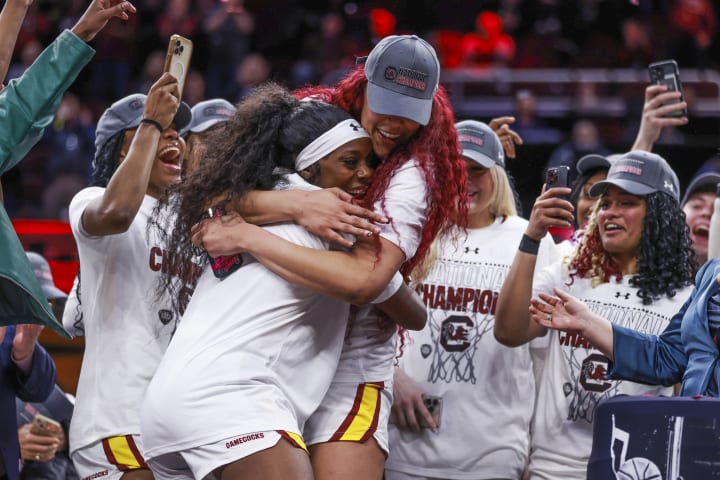
The public rarely sees this part. They see the steal, the confetti, the championship. They do not see the teammate knocking on the door.
That teammate was Laeticia Amihere, who didn’t just show up — she coordinated with Johnson’s mother, staged an intervention, and arrived with a Bible and a dinner reservation with Pastor Travis Greene. It was, by any measure, an extraordinary act of community. Greene’s message that night cut through the noise with the kind of clarity that crisis demands.
“This is probably going to be the best thing that ever happened to you,” Greene told her. “God gives his toughest battles to his strongest soldiers, so you will bounce back from this.”
What followed was a structured recovery that deserves analytical attention. Amihere created a daily scripture card system, maintained daily accountability check-ins, and kept Johnson connected to a support framework when isolation was pulling her under. This wasn’t passive comfort — it was deliberate intervention architecture. The kind that actually works.
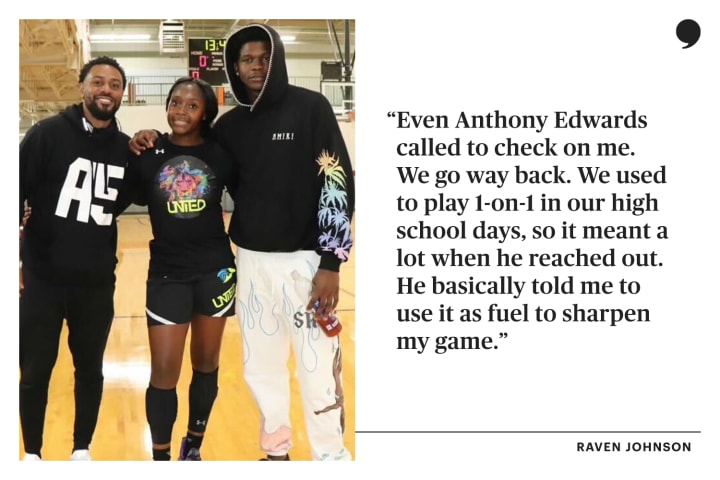
Anthony Edwards added another dimension. A childhood training partner who once backed Johnson down in 1-on-1 sessions and told her to “get your weight up,” Edwards called with a competitor’s prescription: log off social media, get in the gym, and treat the humiliation as fuel. Johnson admits she couldn’t fully follow the first instruction — she kept returning to the video, rewatching it compulsively. But that honesty matters. Recovery is rarely linear, and pretending otherwise would undermine the credibility of everything that followed.
The foundation beneath all of this runs deeper than one viral moment. Johnson’s resilience was constructed over years — by a grandfather who refused to let his grandchildren be idle, by being the only girl on a boys’ rec team who refused to quit when they tried to push her out, by tearing her ACL in her second college game ever and having to relearn how to walk. She gained nearly 200 pounds during that recovery. She screamed at her trainer that she’d never walk again. She came back anyway.
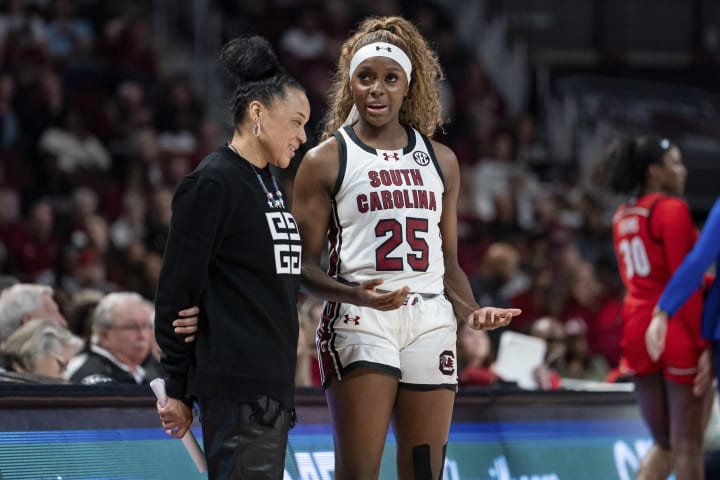
That pattern — setback, isolation, intervention, return — repeats throughout her story with enough consistency to suggest it isn’t luck. It’s temperament, reinforced by environment. Dawn Staley’s program didn’t just develop Johnson’s basketball skills; it surrounded her with people who knew how to hold someone together when they were falling apart.
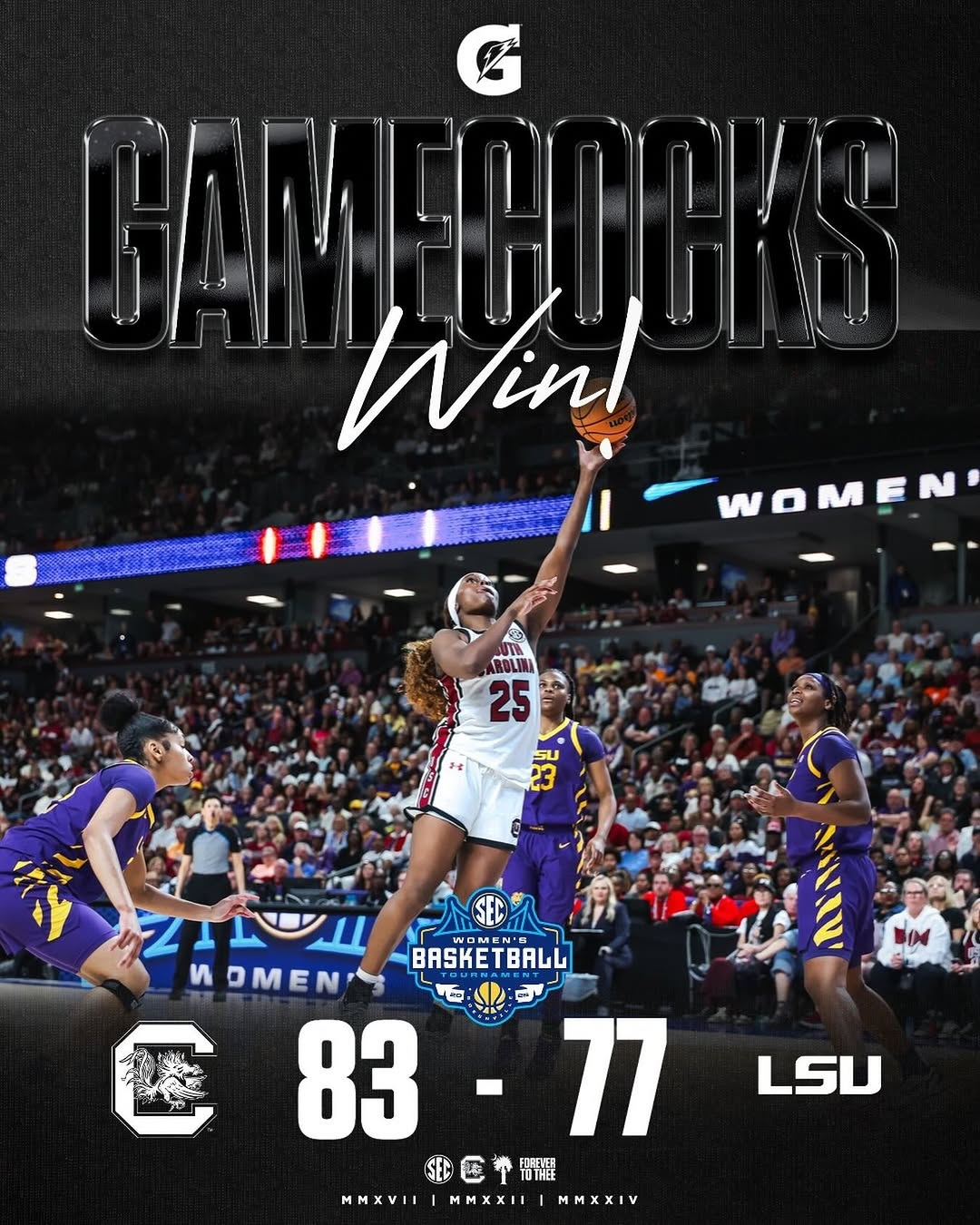
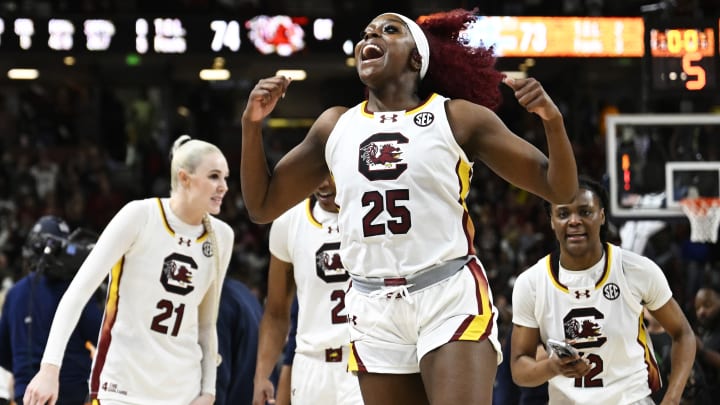
The championship itself reframes everything. Johnson’s steal against Caitlin Clark — a matchup she had to lobby her own coaches to give her — shifted the momentum of the national title game at its most critical juncture. The player who couldn’t leave her dorm room became the player who demanded the biggest defensive assignment on the biggest stage.
“Don’t let this bring you down. You know who you are,” Edwards had told her. She listened, eventually.
What Johnson’s account ultimately reveals is something the sports world undervalues: the infrastructure of resilience. Talent gets players to the door. But the teammate with the Bible, the pastor with the dinner table, the grandfather with the impossible standards, the training partner who bullied you into getting better — these are the actual mechanisms of championship-level recovery. They don’t show up in recruiting rankings or efficiency metrics. They show up when the door is locked and someone knocks anyway.
Johnson went from being publicly reduced to a single moment of failure to delivering one of the defining plays of the 2024 national championship. The throughline isn’t inspiration — it’s accountability, community, and a competitor’s refusal to let someone else write her story.
She has a name. She made sure you’d remember it.