South Carolina wrapped up Sunday’s matchup with only seven players available, and while the limited bench didn’t cause trouble against NC Central, it did force several Gamecocks to shoulder heavy minutes yet again.
The team’s depth issues stretch all the way back to July, when Ashlyn Watkins announced she would miss the season. Her absence trimmed the roster to 11 players. A month before the season tipped off, the Gamecocks were dealt another blow: Chloe Kitts tore her ACL and was ruled out for the year. That left just 10 players — a razor-thin rotation for a program accustomed to having nine or ten contributors.
Ten games into the season, South Carolina has started a game with all 10 players healthy only four times — and finished with all 10 just three times.
The setbacks started early. Freshman Ayla McDowell missed the preseason contest vs. North Carolina because of illness.
In the season opener, Maddy McDaniel collided knees with an opponent and sat out the next four games due to the injury and a suspension.
Agot Makeer exited the Bowling Green game after someone stepped on her foot, limiting the Gamecocks to eight players. She returned for Clemson but has missed the last two games while in concussion protocol.
The toughest situation arrived Sunday against NC Central. Makeer remained unavailable, and Tessa Johnson was ruled out that morning with an illness. Then, shortly before halftime, Madina Okot became sick and left the game. Although she returned to the bench after halftime, she never re-entered, leaving South Carolina with only seven active players.
“It sucks, dealing with that,” Ta’Niya Latson said. “It hits us as a team, but we’ve got to keep going. That’s Coach’s mentality, next man up, and we’ve just got to keep on.”
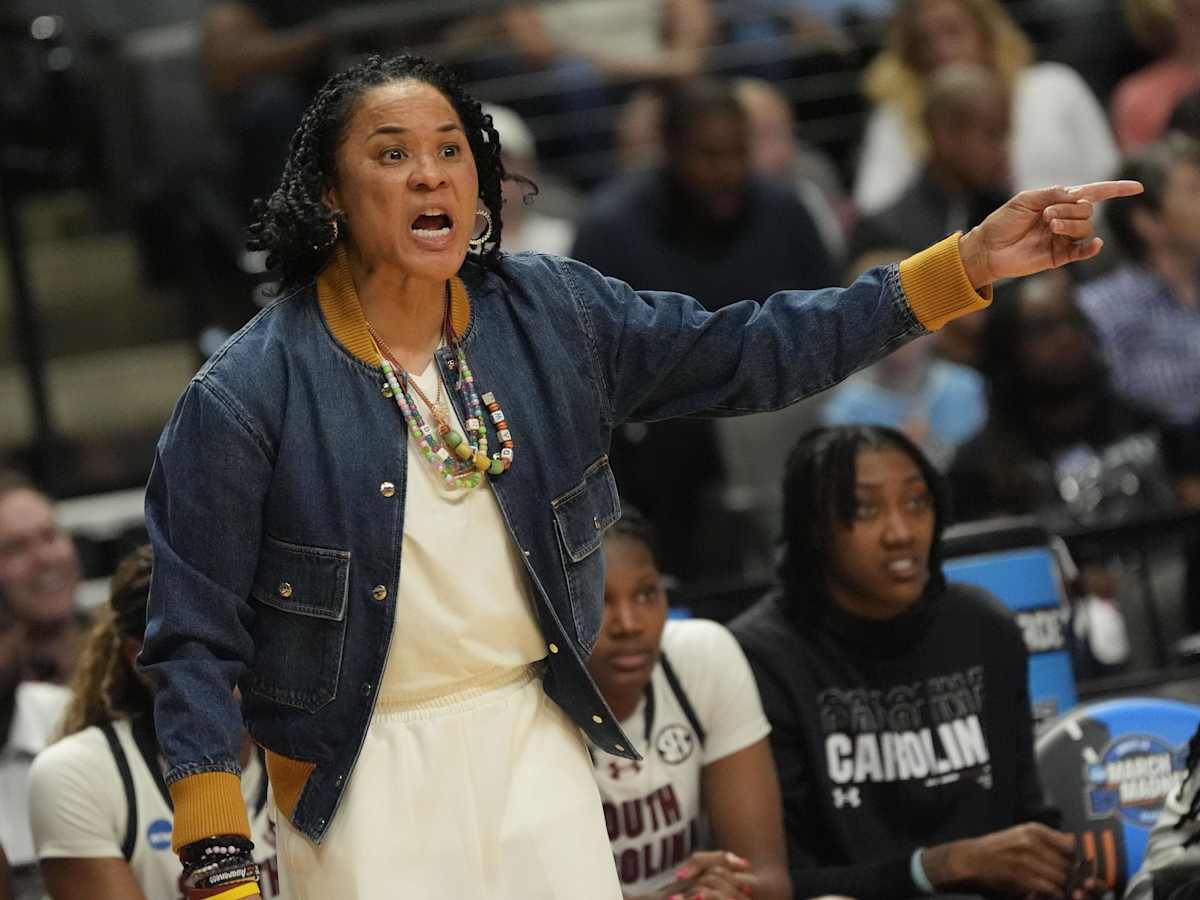
Coach Dawn Staley emphasized that her mindset is always centered on who can play, not who can’t. During a timeout, Raven Johnson told her she missed having Tessa Johnson out there as a passing option.
“Well, we’ve got Ayla,” Staley responded. “Pass the ball to Ayla.”
Staley said she aims to instill that same perspective in the team.
“I only see what’s in front of us. So we had eight today. I only see eight,” Staley said. “We got reduced to seven, I only see seven. We’re going to play the hand that we’re dealt to the best of our ability. We can worry about whatever, whenever. But for me, whoever’s healthy, let us know who’s healthy, and then we can take it from there.”
Roster shortages aren’t entirely new to college basketball. Earlier this year, Auburn held walk-on tryouts just to fill roster gaps. Two seasons ago, TCU faced so many injuries that it forfeited games and conducted open tryouts so it could finish the season.
South Carolina hasn’t reached that level — but they’re not far from it. Staley even admitted she has considered the possibilities. Notre Dame famously brought in Cassandre Prosper early during the 2022–23 season because of injury shortages. (Kitts similarly enrolled early that same winter, though not for roster depth purposes.)
“I pray for that,” Staley joked. “Who knows?”
But for South Carolina, it’s not a realistic solution.
“Not the ones that we signed,” Staley said. “No, they’re all committed to their high school.”
Incoming signees Kaeli Wynn and Kelsi Andrews are still recovering from injuries themselves, meaning they wouldn’t be able to contribute anyway. For now, the Gamecocks must rely on the 10 players on their roster — whenever all 10 are available.
“It’s just a different challenge, and we are at our very best when we’re challenged,” Staley said. “We are at our very best. It may not look like it or feel like it, but hopefully we can get the same result, and that’s what we strive for.”
And as Staley noted, with teams like West Virginia winning games with just five available players earlier this season, nobody is offering sympathy for a roster that still has eight or nine.