PHOENIX, ARIZONA — They came from across the country. By plane, by car, and by sheer determination, South Carolina’s faithful descended on Phoenix for the NCAA Final Four and made sure the desert knew exactly whose fans had arrived.
Garnet and black was everywhere — in the fan zones, on the streets, outside the arena, and in every corner of the city where basketball lived for that unforgettable weekend. What the Gamecocks’ supporters created in Arizona was not just a show of numbers. It was a statement about what this program means to the people who have watched it grow into the standard by which every other program in women’s college basketball now measures itself.
From Every Corner of the Country
The commitment required to be in Phoenix was not trivial. Flights, hotels, and tickets for a Final Four weekend carry a price tag that reflects the magnitude of the occasion. And yet, families, alumni, and longtime supporters made the trip without hesitation. Some had followed this program through the lean years before Dawn Staley rebuilt it into a dynasty. Others had been drawn in more recently, caught up in the cultural wave that women’s basketball has been riding for the past two seasons.
All of them arrived with the same purpose — to be present for a moment that mattered, wearing the colors that told the city exactly who they were.
The sight of garnet and black moving through Phoenix’s streets and gathering spaces was impossible to miss. South Carolina fans did not simply attend the Final Four. They occupied it. They created an atmosphere that reminded anyone watching that this program’s support base has grown into something that rivals, and in many settings surpasses, what any other program in the sport can mobilize.
Fan Zones and Streets Alive With Gamecock Energy
The energy that South Carolina’s supporters brought to Phoenix extended well beyond the arena itself. Fan spaces throughout the city became informal gathering points where the garnet and black faithful found each other, took photos, and marked the occasion with the kind of shared joy that only comes from traveling far from home in pursuit of something you genuinely love.
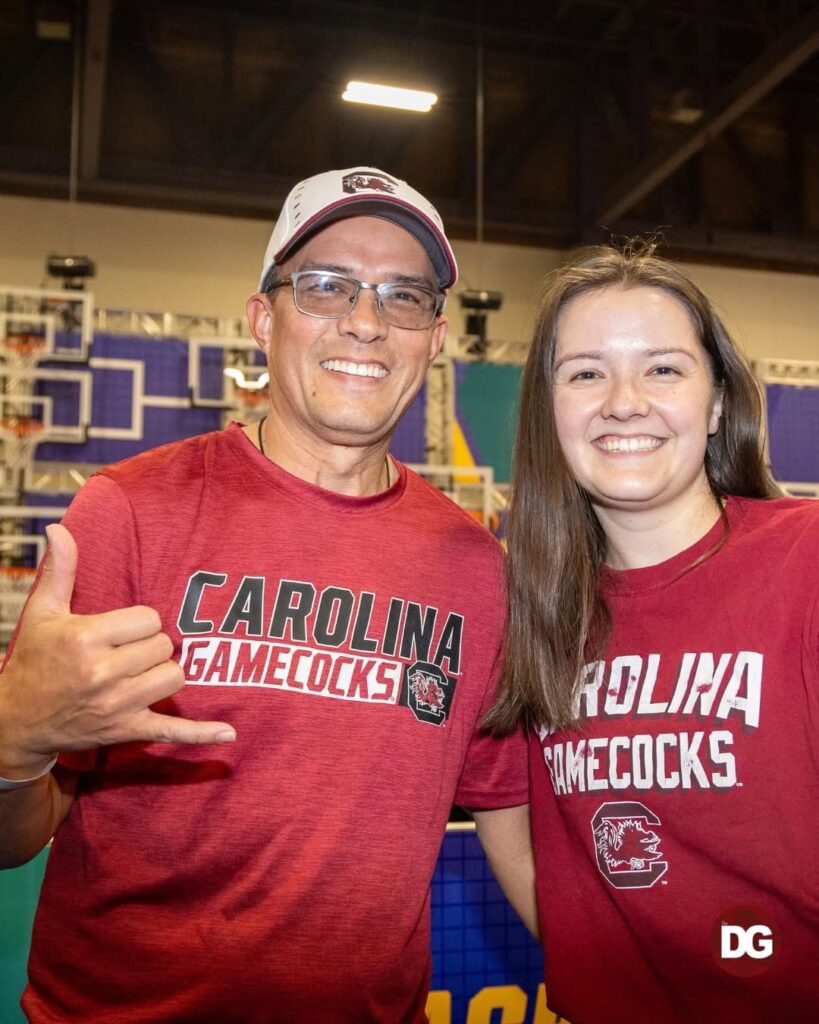
Basketball-themed games drew crowds. Displays celebrating the sport and the tournament stopped fans in their tracks. Jerseys bearing the names of players — Johnson, Edwards, Makeer, Tessa Johnson, and others — moved through the streets as walking testaments to how deeply this roster had connected with the people who followed them all season.
There is something specific about seeing a fan wearing a player’s name on their back in a city a thousand miles from Columbia. It means the connection was strong enough to justify the journey. It means the player became real to someone in a way that transcended the television screen. South Carolina’s fans showed up in Phoenix wearing those names with obvious pride, and the players they honored had earned every moment of it.
Families, Alumni, and the Bonds That Basketball Builds
What stood out in the crowds that filled Phoenix’s fan spaces was the range of people who made the trip. This was not a monolithic supporter base of college students and recent graduates. This was multigenerational — grandparents and grandchildren in matching garnet, families who had made South Carolina women’s basketball an annual tradition, alumni who had carried the program in their hearts through decades of rooting before the dynasty years arrived.

The sight of families posing for photos in front of tournament displays, of longtime supporters lingering outside the arena taking in the atmosphere, of groups of alumni finding each other in the crowd and reuniting around a shared passion — all of it spoke to something that the win-loss record only partially explains.
Dawn Staley has built more than a basketball program. She has built a community. The people who showed up in Phoenix were the living evidence of that — drawn together not just by a winning team, but by an identity that gives them something to belong to.
What the Presence Meant for the Players
The relationship between South Carolina’s fan base and its players is not a one-way transaction. The players feel it. They have spoken about it throughout the season — the energy in Colonial Life Arena, the support that travels with them on the road, the sense that they are playing for something larger than a trophy.
Bringing that support to Phoenix, in visible, vocal, garnet-and-black numbers, was the fan base’s way of completing the circle. The players sacrificed through a long season, through injuries, through the weight of championship expectations, and through the final heartbreak of a national title game loss. The fans who traveled to Phoenix were saying, in the most direct way available to them, that the sacrifice was seen and the season was worth celebrating regardless of the final score.
That matters more than it sometimes gets credit for. Players remember who showed up. They remember what it felt like to look into a crowd in a neutral-site city and see the colors they play for staring back at them. South Carolina’s supporters gave their team that feeling in Phoenix, and they did it with the kind of authentic, unforced enthusiasm that no marketing campaign can manufacture.
A Dynasty’s Fan Base, Fully Formed
There is a version of South Carolina women’s basketball fandom that existed before Dawn Staley, and it was real and loyal. But what has developed over the past decade — accelerated by the championship years, the Final Four runs, the cultural moment that women’s basketball is currently living through — is something qualitatively different.
The fan base that arrived in Phoenix represents a program that has crossed over from regional passion to national identity. South Carolina women’s basketball has fans in every state, followers who have never set foot in Columbia but feel genuine ownership over what this team represents. The people who made the trip to Arizona were the most committed expression of that broader community — the ones who, when the moment came, got on a plane.
The Gamecocks fell to UCLA in the national championship game. The scoreboard at Mortgage Matchup Center told that part of the story. But the garnet and black that filled Phoenix’s streets and fan zones that weekend told a different and equally important one — about a program so deeply embedded in its supporters’ lives that a loss doesn’t diminish the love, and a trip to Phoenix isn’t a cost.
It’s an investment. And South Carolina’s fans have clearly decided the returns are worth every penny.