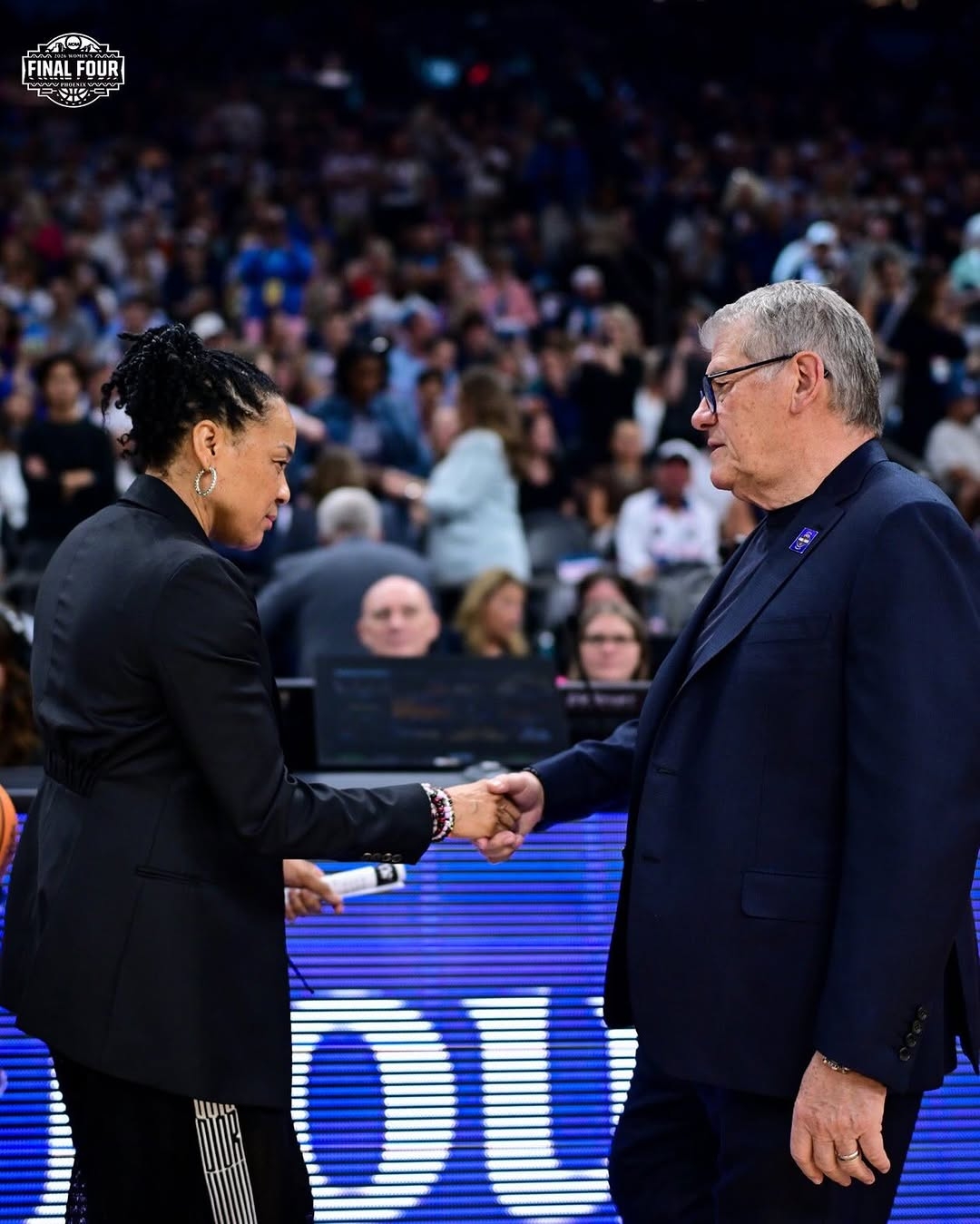
PHOENIX — The words were right on Saturday. The execution on Sunday was not.
South Carolina had said everything a championship-caliber team is supposed to say before the biggest game of the season. Joyce Edwards told the locker room on Friday night to stop celebrating the UConn win because there was another game to play. The players referenced the Oklahoma game — their one regular season loss, which they had avenged in the Sweet 16 — as proof they knew how to respond to adversity. The preparation, on the surface, appeared sound.
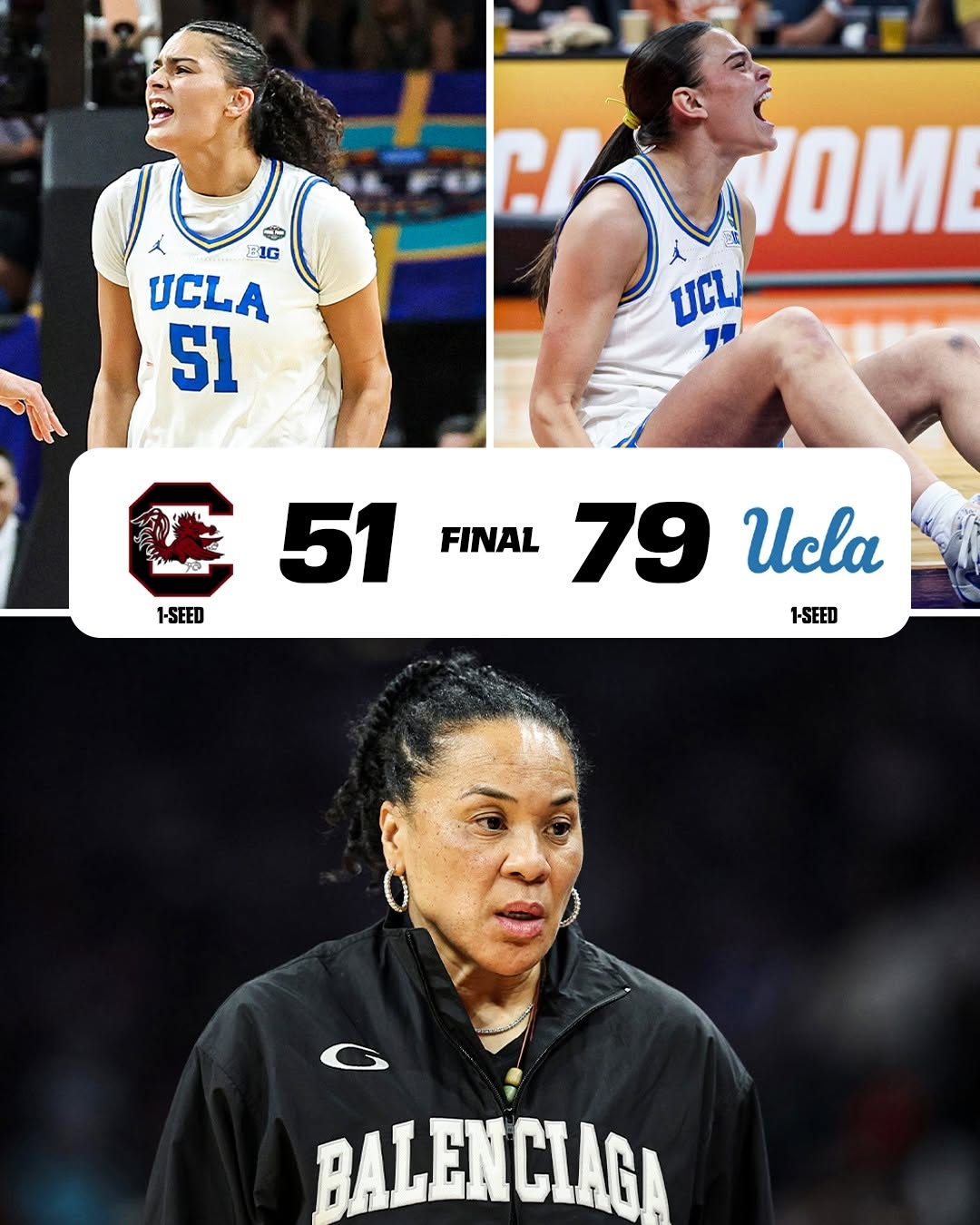
Then the ball went up. And South Carolina came out flat, unfocused, and behind from the opening quarter in a 79-51 loss to UCLA that was never close.
The question that will linger through the offseason is why.
The Flatness Nobody Expected
Whether the energy expenditure of the small lineup against UConn left the Gamecocks physically depleted, or whether the magnitude of the moment created a psychological weight that proved too heavy, South Carolina simply did not bring the intensity that had defined every meaningful game of their tournament run. They scored 10 points in the first quarter. They scored 9 in the third. Against a team Staley had specifically identified as an inside-out threat that required disciplined rotation and sustained defensive effort, the Gamecocks gave neither consistently enough.
Edwards’s leadership message — we have another game — had been delivered. It just was not translated onto the floor in the way it needed to be.
The Betts-Okot Failure at the Worst Possible Moment
After last season’s championship game loss to UConn, Dawn Staley had been explicit about what South Carolina needed. To beat teams with elite interior players, the Gamecocks needed a dominant post presence. That was the entire rationale for bringing Madina Okot to Columbia.
For most of the season, Okot delivered beyond expectations. Her 13.0 points, 10.8 rebounds, and 22 double-doubles represented one of the most productive seasons a post player has had in this program’s history. She was the piece that made the roster construction make sense — the reason Staley believed this team was specifically built to beat UCLA.
Sunday, against Lauren Betts in the most important game of the season, Okot had her worst performance of the year. Six points. Three rebounds. Three fouls. Thirteen minutes.
The numbers are almost too painful to process. The player who had been Staley’s answer to the interior problem — the player whose eligibility battle had been fought and publicized precisely because she mattered so much — could not stay on the floor in the championship game. Three fouls limited her minutes. When she was there, she could not impose herself on Betts the way the game plan required.
Betts finished with 14 points and 12 rebounds. Those are not video game numbers — they are the output of a player who was consistently effective, not dominant. But against a South Carolina team that could not keep its primary interior defender on the floor, consistently effective was more than enough.
It was the worst possible time to have a bad game. And it fundamentally changed what the rest of the Gamecocks could do defensively.
The Rebounding Disaster
When Okot was on the bench with foul trouble, South Carolina turned to Maryam Dauda and Alicia Tournebize in the post. Both are useful players in the right context. Neither is equipped to bang physically with a 6-foot-7 All-American for extended stretches. The Gamecocks were undersized without Okot, and UCLA punished them on the glass repeatedly — Betts alone finished with 12 rebounds, and Gabriela Jaquez added 10.
The pattern of the game mirrored almost exactly what happened when South Carolina lost at UCLA earlier in the season. Selling out to slow Betts created open space for the perimeter players. Jaquez’s 21 points came in a game where South Carolina’s attention was divided by a post threat they could not contain. Kneepkens hit three threes. The inside-out attack Staley had spent the week preparing for materialized precisely as advertised, and the Gamecocks did not have the answers.
The Adhel Tac Variable
The absence of Adhel Tac, who had not played since February 5, became more significant as the game unfolded. During the stretch of the season when Tac was unavailable, South Carolina had compensated effectively — Dauda and Tournebize stepped up, and the small lineup became increasingly central to Staley’s rotation.
But the small lineup has limits, and Lauren Betts revealed them. Tac is a more physical presence than either Dauda or Tournebize. She is a better rebounder. She could not have solved the Betts problem — nobody on South Carolina’s roster could have, given how Sunday went — but she might have made things difficult for long enough to keep the game competitive.
Instead, Dauda and Tournebize absorbed the post minutes that Okot could not play, and UCLA dominated those possessions.
What It All Adds Up To
South Carolina’s season ends at 36-4 — a record that includes a historic 28-point demolition of UConn in the Final Four and a tournament run that produced some of the most compelling basketball of Dawn Staley’s tenure. The journey was extraordinary. The ending was not.
The flatness of the performance will be the thing that stings most. Not the talent gap — because South Carolina has the talent to compete with anyone in the country. Not the game plan — because Staley’s preparation has rarely been legitimately criticized. But the execution gap between a team that said the right things on Saturday and a team that did not bring those words onto the floor on Sunday is a question that will require honest answers.
The answer likely involves some combination of physical depletion after the UConn game, the psychological weight of back-to-back championship game appearances, Okot’s foul trouble arriving at the worst possible moment, and a UCLA team that was simply ready — a veteran group with nothing left to lose, playing their final college game with freedom and clarity that South Carolina could not match.
Cori Close gets her first national championship. Lauren Betts gets hers. And South Carolina — which has been to back-to-back championship games and won one of them — begins the offseason carrying a loss that will inform everything about how Staley rebuilds for 2026-27.
She has done it before. She will do it again.
But first, the honest accounting of what went wrong on Sunday. That is where every rebuild begins.