March Madness brought basketball — but Dawn Staley brought something deeper.
When reporters gathered around South Carolina women’s basketball head coach Dawn Staley following the Gamecocks’ first-round NCAA Tournament victory over the No. 16-seeded Southern Jaguars, the conversation took a turn that had nothing to do with box scores or bracket projections. It had everything to do with something far more personal: the bodies of women athletes, and the cruel words society has long felt entitled to say about them.
Asked about her partnership with Dove and their movement “The Game Is Ours,” Staley didn’t offer a polished brand statement. She offered herself — her story, her insecurities, and the scars that never fully healed but shaped the coach and champion she became.
“I Was a Recipient of Body Shaming”
“I’ll say that I usually get behind things that I’m passionate about,” Staley told reporters. “I was a recipient of body shaming when I was growing up. Obviously, I’m short. I’ve got big shoulders. I got a big head. I got big hands. I got big feet.”
She paused — then continued with the kind of raw candor that makes Staley unlike almost any other coach in American sports.
“When you’re growing up as a girl, you’re called many different names, and you have to be stronger in situations.”
It’s a truth that resonates far beyond basketball courts. Girls across the country grow up hearing the whispers — about their height, their weight, their muscle, their softness — and too often, those whispers follow them into adulthood. For Staley, they followed her into an elite athletic career. But instead of silencing her, they gave her a language for the pain her own players carry today.
Raven Johnson’s Arms — And Why They Matter
Staley didn’t speak in abstractions. She brought it home to her locker room, naming her players by name and defending them with the precision and fire of a woman who has been exactly where they stand.
“Raven [Johnson] doesn’t like her arms,” she said. “She’s got great arms. Are they muscular? Yes. But in order for her to play at the level she has to play, she has to have them. And I got the most compliments when I did have arms.”
It’s a profound parallel. The same arms that get criticized by the outside world are the tools that make these women extraordinary. The strength that makes someone a target for ridicule is the very same strength that makes them champions. Staley sees this with complete clarity — because she lived it.
“So you have to combat some of the things that are being said about women athletes who have to do certain things in order for them to compete at a high level,” she said.
In a culture that has long been confused about what a woman’s body is “for,” Staley’s words land like a statement of philosophy: a woman athlete’s body is for competing, and it deserves celebration — not correction.
“The More Young Girls Hear It, the More We Have to Combat It”
Staley made clear that body shaming isn’t just a personal wound — it is a systemic problem that demands a systemic response. And that is precisely why she joined Dove’s Body Confident Sport Collective as a new ambassador for their “The Game Is Ours” campaign.
“The more young girls hear the body-shaming names, the more we have to combat that with the direct opposite,” she said.
The statistics behind her words are sobering. Dove research shows that one in two girls who quit sports have been criticized for their body type. As appearance-based scrutiny becomes normalized, joy erodes, and girls are pushed out of athletic activities proven to build self-esteem and body confidence.
Staley knows this pipeline of shame intimately. She sees it in the girls who never make it to a college program because by age 14, someone already convinced them their body didn’t belong on a court. She sees it in the players who do make it — but still flinch when they look in the mirror.
As part of Dove’s expanded Body Confident Sport Collective, Staley joins partners including tennis icon Billie Jean King, Kylie Kelce, soccer star Alyssa Thompson, and Odessa Jenkins — a coalition of women who understand, in their bones, what it costs a girl to be told her body is wrong.
“I’m Not Only a Client, I’m the Player’s President”
In true Staley fashion, she brought both gravity and humor to the moment. Reaching for a Biggie Smalls reference to describe her unique position — not just an ally to these athletes, but a fellow survivor of the same cruelty — she stumbled slightly on the exact quote, then owned it completely.
“Being a part of the Dove campaign is something that’s near and dear to me because, as Biggie Smalls would say — and I’m gonna probably get this wrong — I’m not only a player, but I’m a player’s president, or something like that. Y’all understand what I’m saying when it comes to me being a recipient of the name calling.”
When a reporter corrected her, she laughed and leaned in: “There you go. Yes. Thank you for correcting me. Hey, I need y’all to edit. I’m not only a client, I’m the player’s president.”
The room laughed. But the message underneath it was serious. Staley isn’t a coach who lectures from a place of removed authority. She is, in the most literal sense, one of them — a woman who was picked apart for her appearance and kept going anyway, and who now makes it her mission to ensure every young woman in her orbit knows that their body is not the enemy.
The Coach Behind the Movement
What makes Staley’s voice on this issue so powerful isn’t just her platform — it’s her consistency. This is not a talking point she rehearses for cameras. It is woven into the culture she has built at South Carolina, a program that has become one of the most dominant forces in women’s college basketball precisely because its players feel seen, valued, and whole.
Dove’s “The Game Is Ours” campaign is built around the belief that girls deserve environments and support systems that celebrate who they are and what they can do — not what they look like. That sentence could double as a description of Staley’s coaching philosophy.
She has created a program where a player like Raven Johnson can be celebrated for her powerful arms rather than shamed for them. Where a player from overseas fighting homesickness is held through the hard nights. Where joy — real, unguarded, contagious joy — is encouraged, on the court and off of it.
“I want our players to play with joy,” Staley said during the same press conference. “I want our players to play the game that they love with joy.”
That joy, she knows, is only possible when a young woman feels safe in her own skin.
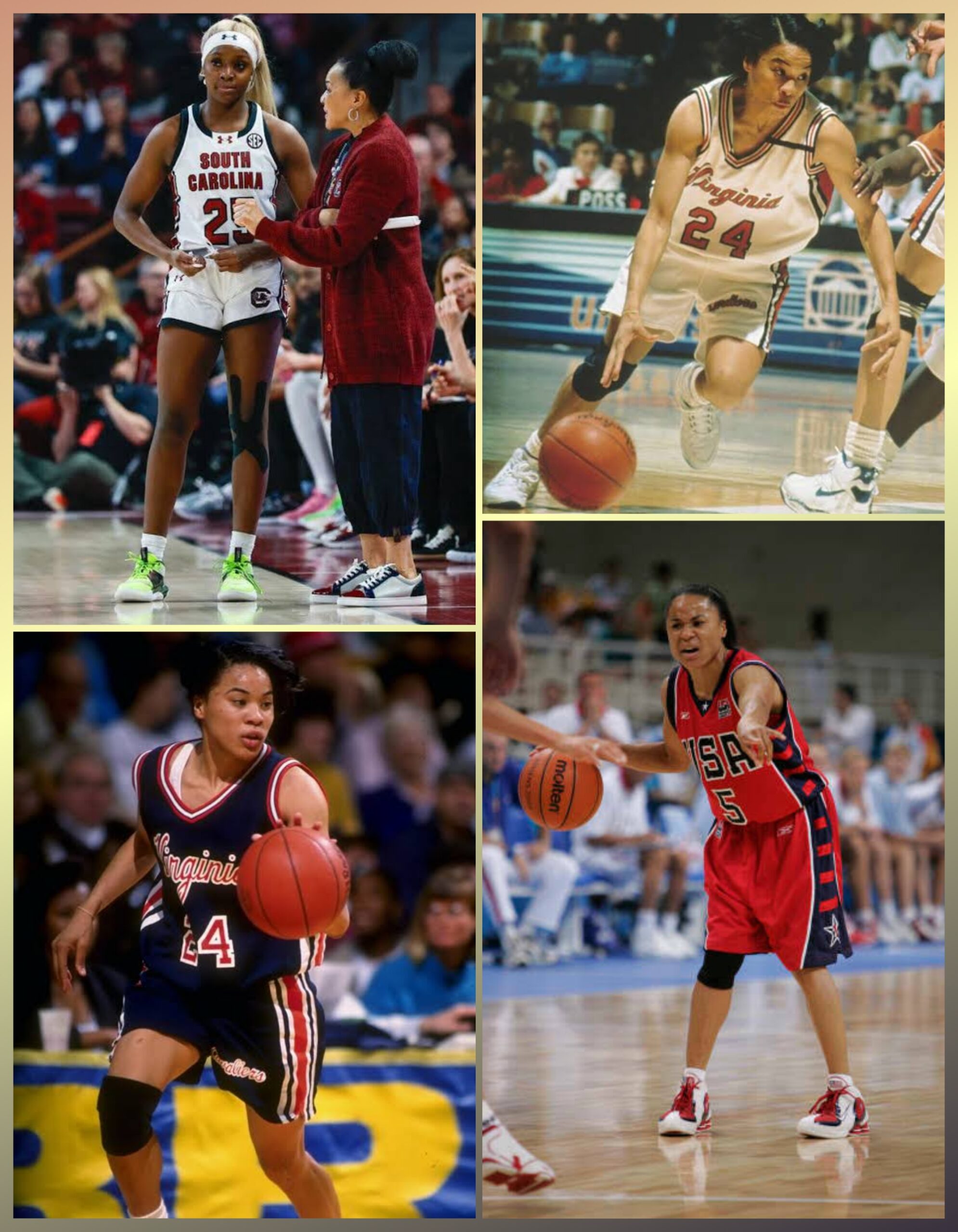
Dawn Staley was once a girl who was told her shoulders were too wide, her hands too big, her frame too much. That girl became a three-time Olympic gold medalist, a Hall of Famer, and one of the most respected coaches in American sports history. Now she stands in front of cameras and says plainly: it happened to me, it happens to your daughters, and we are not going to stay quiet about it anymore.
The game is theirs. The body is theirs. And thanks to coaches like Dawn Staley, more girls are starting to believe it.