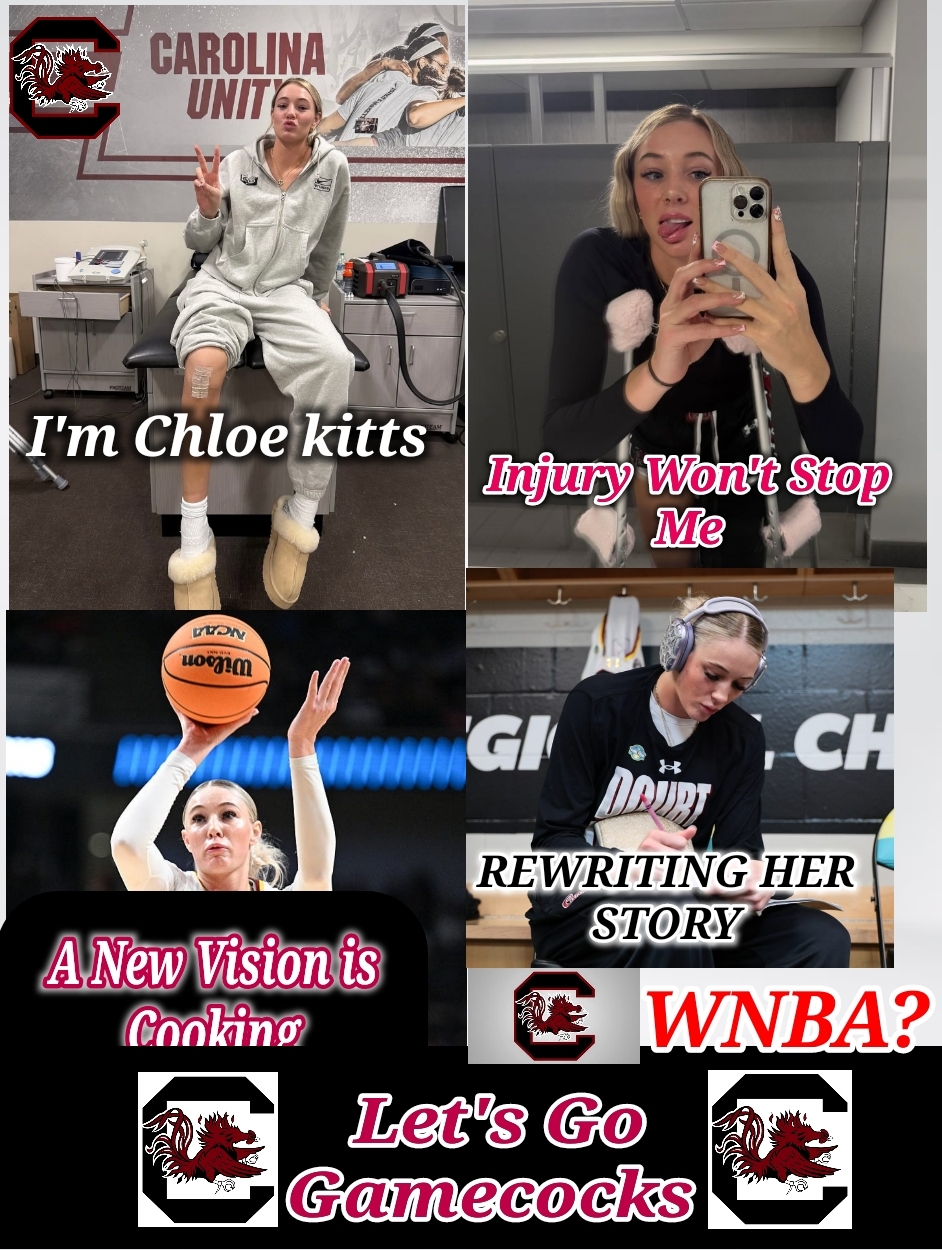
COLUMBIA, S.C. — In October 2025, Chloe Kitts had a plan. It was a good one — the kind that five-star recruits and two-time national champions are entitled to make. She would lead South Carolina on one final March Madness run, declare for the WNBA Draft, and begin a professional career that had been the destination on her internal compass since childhood. Then she jumped for a rebound in a preseason scrimmage, heard a pop, and landed somewhere entirely different.
“Immediately, I already knew what happened,” Kitts tells Women’s Health. “I was like, ‘Dang.'”
A torn ACL with no one around her. No contact, no collision — just a body that betrayed a plan in a single moment. The injury ruled her out for the 2025-26 season and, as she quickly understood, forced a fundamental recalculation of everything she had mapped out for her future.
That recalculation is now complete. And the answer it produced is one that speaks as much to who Chloe Kitts is becoming as it does to where she is going.
“I’m going to stay in college for another year,” she says. “I have more I need to prove.”
The Hardest Month
The weeks immediately following the injury were, by Kitts’ own account, among the most difficult of her life. The surgery came quickly. The helplessness came with it. “I couldn’t walk. I couldn’t do anything,” she says.
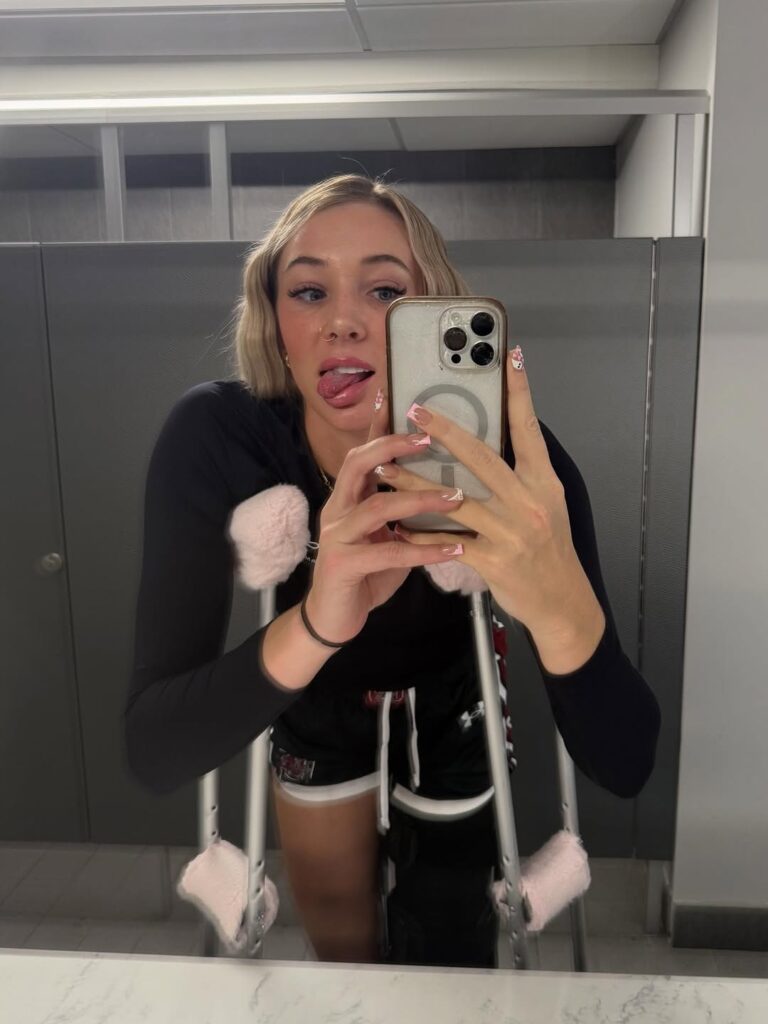
What followed was a month-long process of acceptance — not the performed kind, but the slow, grinding kind that athletes rarely talk about publicly. She was heartbroken knowing she would not recover in time for WNBA training camp in the spring. “It sucked,” she says plainly. “But all my teammates were here.”
That detail matters more than it might initially appear. South Carolina’s culture under Dawn Staley is often discussed in terms of its competitiveness, its defensive standards, and its championship pedigree. Less visible from the outside is what it looks like when one of those competitors goes down. Kitts’ teammates showed up in the specific, unglamorous ways that genuine care requires. They brought her a gift basket filled with Lego flowers, junk food, candles, and a handwritten card. Her roommate, junior guard Tessa Johnson, helped her shower and drove her wherever she needed to go. Sophomore forward Adhel Tac — who would later sustain her own injury — cleaned Kitts’ apartment. “We’re really close as a team,” Kitts says.
The community that surrounded her gave her the platform to pivot from grief toward something more constructive. She began marking smaller milestones — the first walk without crutches, the first jump, the anticipation of the first run. “Now I’m jumping a little bit,” she says. “The day I can run, that’s super exciting. I’m looking forward to all those little things.”
It is the “turn the page” philosophy that Staley has long preached — the idea that you cannot un-injure yourself, so you make the most of the page you are currently on.
A New Vantage Point
Unable to play, Kitts found something she had never had before: a seat with a clear view of the whole court.
She has continued to travel to every away game, stepping into a leadership role that does not require a uniform. And sitting on the sideline — watching the game she has played her entire life from a perspective she has never occupied — has quietly changed how she understands it.
“The pace of the game has slowed down in my head,” she says. “I see so much more than when I’m on the floor — maybe the open person or the next rotation. I see it differently.”
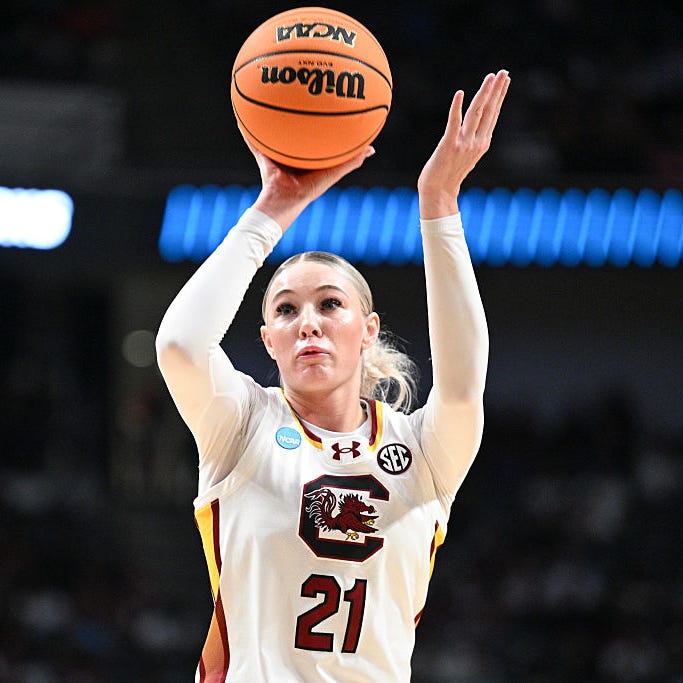
This is not an uncommon experience for injured athletes, but Kitts’ description of it carries particular weight given the player she was becoming before the injury. She was coming off the best stretch of her career — setting SEC Tournament scoring records and leading South Carolina through March Madness last season — and had clearly turned a corner as a competitor. The idea that the version of her who returns next season will see the game with this newly developed intelligence, layered on top of that physical improvement, is the central argument for why staying another year is not merely the safe choice, but the right one.
Dawn Staley and the Mental Game Nobody Talks About
Kitts chose South Carolina as a five-star recruit in the 2023 class, turning down Duke, Louisville, and N.C. State to enroll early and forgo her senior year of high school. Her reasoning was direct: “She produces pros, and I want to be a pro,” Kitts says of Staley. “She’s not just my coach, she’s a mentor — not just for me, but for everybody. All of the girls, we can go to her about our personal life, we go to her for basketball. And she’s accomplished everything that I want to accomplish. There’s no better place I would rather be.”
What makes that relationship particularly revealing is what Staley saw in Kitts that needed developing beyond the physical. In her first years at South Carolina, Kitts struggled with pre-game anxiety in ways she had not anticipated. Her palms would sweat. The nerves would overwhelm the preparation. It took time for her to settle once games began. “I needed to relax, I just couldn’t,” she says. “I didn’t know how.”
Staley did not simply tell her to focus. She connected Kitts with a sports psychiatrist, a resource Kitts accessed weekly and found genuinely transformative. She gathered tools — writing down her thoughts, counting ten breaths, coloring — and she began building a life that existed alongside basketball rather than entirely within it. “I learned you can’t just have your life revolve around basketball,” she says. “Because if it’s just basketball, basketball, basketball, and you just think about basketball — if you don’t play good, then you’re just sad.”
She started Pilates. She went on walks. She began asking herself who she was beyond an athlete. The mental work paid off in performance. Halfway through her junior year, the improvement was visible. By the end of the season, she was the player Dawn Staley had always believed she could be.
The moment that crystallized the transformation came in the Elite Eight against Duke. Staley drew up a play that put Kitts at the free-throw line in a critical moment — a call that surprised even Kitts herself. “I don’t know why, because I felt like Te-Hina and Tess were better free throw shooters than me,” she says. “But then I was at the free throw line telling myself, ‘Coach chose me for a reason. I’m good at basketball.’ And then I made both of my free throws and we won.”
A coach chose her for a reason. She chose to believe it. South Carolina won. That sequence is not merely a basketball memory — it is a roadmap for how mental work translates into high-pressure performance.
Now, without a game to play, Kitts also sees a therapist. She credits both professionals with giving her a clearer understanding of how she feels day to day and a vocabulary for communicating those feelings to the people around her. “You can be physically strong, but that means nothing if your mental isn’t strong,” she says. “It really takes all of you.”
Ahead of Schedule and Eyes Forward
The physical news is encouraging. Kitts says she is already three months ahead of her recovery timeline — a development she attributes in part to adding Pilates four times per week and extra strength sessions before the injury even occurred. She says she will “for sure” be ready to play at the start of next season.
That season, whenever it arrives, will find a different Chloe Kitts than the one who tore her ACL in October. A better-prepared one. A mentally stronger one. A player who has spent an entire year watching the game she loves from a new angle, absorbing details that cannot be taught from inside a rotation.
The WNBA dream that sparked all of this — the one that began watching the Seattle Storm from the sidelines as a child, that made her tell people she was going to be “the first woman in the NBA” — has not been abandoned. It has simply been deferred one more year, with purpose. “I want to be a professional basketball player. I want to play in the WNBA. So of course that’s what motivates me,” she says. “I want to play so bad that I know when I play again, I’m not going to take it for granted.”
More Than a Player
The article of faith that runs through everything Chloe Kitts has said and done this season is one that feels almost countercultural in an era of maximum-exposure, always-on athletic identity. She has used an injury — an experience that could have diminished her sense of self — to expand it instead.
She still wants a national championship. She still wants the WNBA. She still wants everything she planned before that October scrimmage changed the timeline. But the version of her that pursues those things next season will carry something the previous version did not: the knowledge, earned through the hardest kind of experience, of who she is when basketball is temporarily taken away.
“I’m more than a basketball player,” she says. “I’m Chloe.”
For now, that is enough. And next season, when she steps back onto the court for Dawn Staley and the Gamecocks with a full year of recovery, perspective, and growth behind her, it will make her a more complete player than she has ever been.
The plan changed in October 2025. What it changed into may ultimately be better.