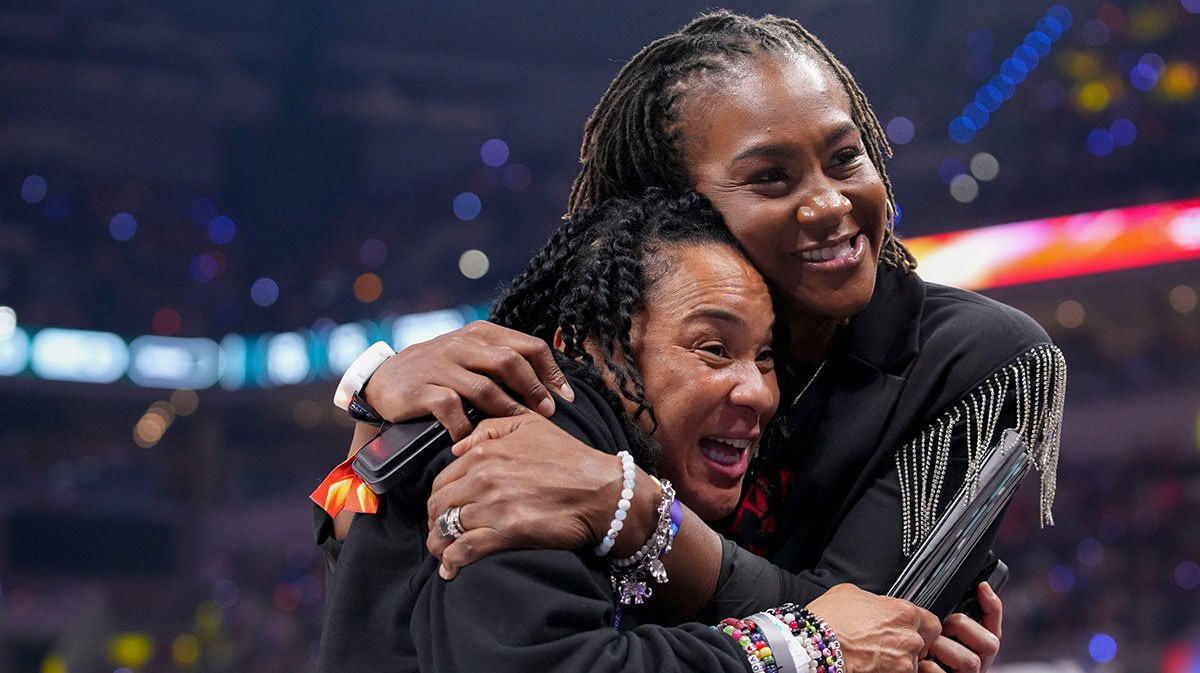
When Rebecca Lobo told ESPN’s national championship audience that Geno Auriemma had apologized to Dawn Staley, it sounded like a clean resolution to one of the messiest sideline moments of the college basketball season. There was just one problem — Staley hadn’t heard a word from him.
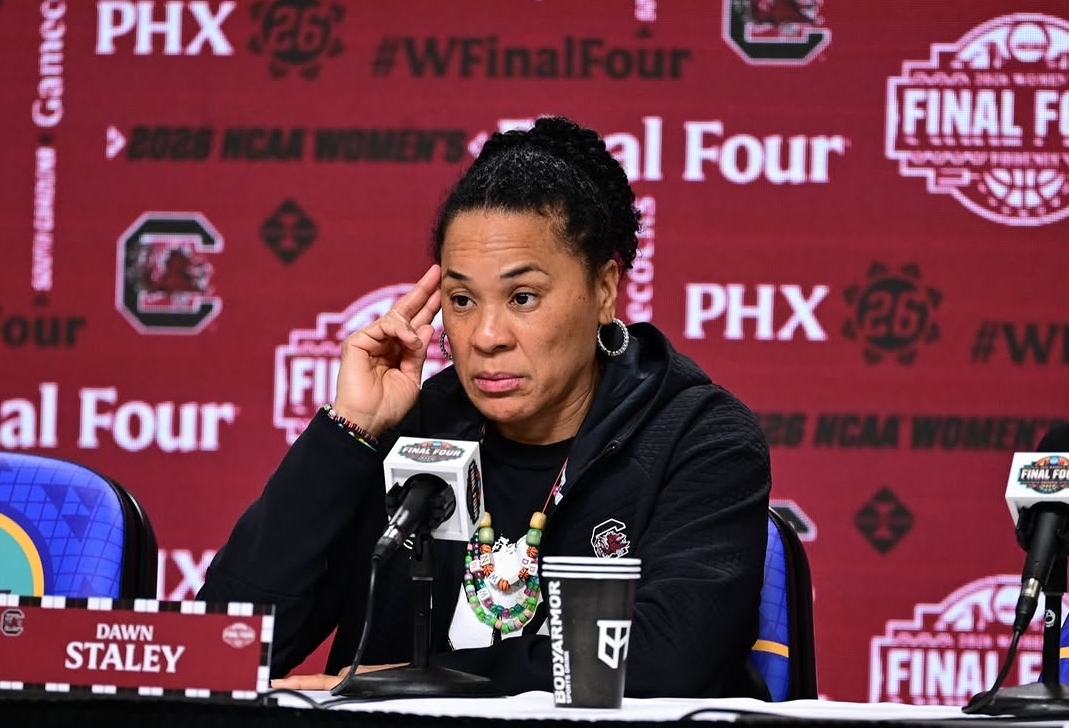
“That’s a Geno question, right? It really is a Geno question,” Staley said after the title game loss to UCLA. “I haven’t heard from Geno, so … I have not. I got 800 text messages. I don’t know if he texted or not.”
The response was measured, even a little wry, but it cut through the noise with precision. A public apology that the supposed recipient hasn’t received isn’t really an apology — it’s a press release.
What Actually Happened in the Final Four
To understand why this matters, the sequence of events from the Final Four needs to be laid out clearly. South Carolina eliminated UConn 62-48, and as the final seconds expired, Auriemma walked toward Staley for the postgame handshake. What followed was not a handshake. The exchange escalated into a visible altercation that required assistant coaches from both sidelines to physically intervene.
Auriemma’s explanation afterward only deepened the controversy. He claimed the argument stemmed from Staley refusing to shake his hand before the game — a claim that ESPN’s own broadcast footage directly contradicted, showing the two coaches shaking hands during pregame pleasantries. The facts were not on his side, and the footage made that impossible to dispute.
On April 4th, one day before the national championship game, Auriemma issued a public statement of apology. He did not mention Staley by name.
That detail matters. A public apology issued to no one in particular, published while the wronged party is preparing to play the biggest game of the season, and apparently never delivered directly — that is its own kind of statement.
Staley Refuses to Let the Story Consume the Moment
What is perhaps most revealing about Staley’s handling of the situation is what she chose not to do. With a platform, a national audience, and every reason to respond forcefully, she declined to make the story about herself or Auriemma.
“This is UCLA’s day, right? Let’s keep it UCLA, them winning the national championship,” she said.
She went further, drawing a deliberate line around the conversation:
“Again, I will address all of that at another time, just not this weekend. We’re not going to dampen UCLA’s day with it. We talk about South Carolina, us losing, talk about UCLA winning the national championship, and what’s great about our game today.”
South Carolina had just lost to the Bruins 79-51 in Phoenix — their second consecutive national championship game defeat — and Staley was still more concerned with preserving UCLA’s moment than settling a personal score. That kind of discipline is worth noting. The easiest thing in the world after a painful loss would have been to redirect attention elsewhere. She didn’t.
The Bigger Picture
The Lobo-Auriemma-Staley triangle exposes something worth examining more broadly. Lobo’s on-air characterization of an apology that Staley confirms she never received raises questions about how that information entered the broadcast. Whether it was miscommunication, an assumption about what Auriemma’s public statement constituted, or something else entirely, the effect was to prematurely close a chapter that isn’t closed.
Staley has promised to address it — on her own terms, in her own time. Given how deliberately she has handled every public aspect of this situation, it would be a mistake to assume that means the matter is simply fading away. When she does speak, it will be worth listening closely.
For now, she gave UCLA their day. The reckoning, if there is one, comes later.