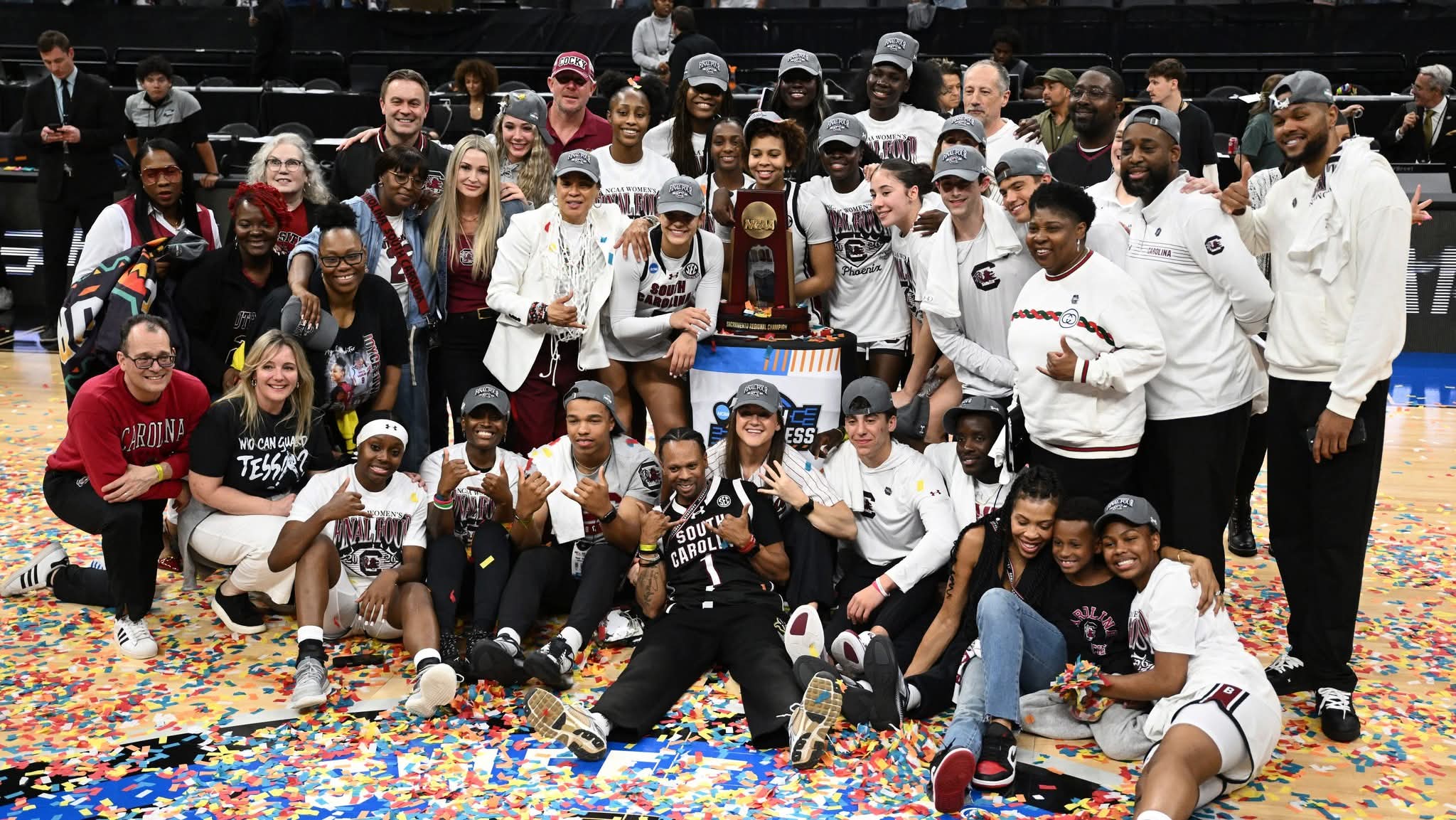
COLUMBIA, S.C. — Two days in December changed the trajectory of South Carolina’s season in ways that are still unfolding. On consecutive days, the Gamecocks secured commitments from two players who represent entirely different pathways to Columbia — high school star Jerzy Robinson through the traditional recruiting pipeline, and Alicia Tournebize, a French professional player, through a route that would have been almost unimaginable for a program of South Carolina’s stature a decade ago.
Together, they tell a story about how women’s college basketball is changing — and why Dawn Staley’s program is uniquely positioned to benefit from that change.
A Shifting Pipeline
International players in NCAA basketball are not new. But the nature of their arrival has changed fundamentally over the past two decades, and the distinction matters.
Twenty years ago, programs leaning heavily on international recruiting were often doing so out of necessity — because they could not compete for American players. It was frequently a signal of institutional weakness rather than strategic sophistication. South Carolina itself had a notable international presence in the mid-2000s, right before the program bottomed out and Staley was hired to rebuild it from scratch.
The middle era brought players like Kamilla Cardoso, who relocated to the United States during high school to prepare for the college game. But the current wave is different again. Players are increasingly staying home until college age, developing within their domestic systems before crossing the Atlantic — or the Pacific — to pursue NCAA opportunities.
Tournebize was the first player Staley signed directly from overseas, but the international dimension of South Carolina’s current roster runs deeper than one player. Madina Okot is from Kenya. Agot Makeer is from Canada. Maryam Dauda, Adhel Tac, and Makeer are each of African descent. Ayla McDowell’s mother is Brazilian. The program that once used international players as a stopgap now uses them as a deliberate part of a championship roster.
Why NIL Changed the Equation
The force accelerating this shift is financial. NIL and revenue sharing have fundamentally altered how international prospects evaluate the American college game, making it competitive with professional development pathways in ways it simply was not before.
Southern Cal coach Lindsay Gottlieb, who has built her own international pipeline with four foreign-born players, offered a clear-eyed assessment of what has changed.
“Basketball is such a global game, and it’s really fun to watch different styles of play and our game grow across the world,” Gottlieb said. “I do think it’s always been when you recruit internationally some players grew up wanting to come to the U.S. and go to college, and some never had that notion. Maybe there’s some additional incentives to come because the NIL rules now, but for us, we always go to the FIBA International tournaments.”
The Australian calendar quirk further illustrates how programs are getting creative. Sitaya Fagin — who was also recruited by South Carolina — finished her Australian school year in the winter, enrolled at USC midseason, and redshirted to absorb the basketball program’s structure without burning eligibility. It is exactly the kind of unconventional pathway that modern roster management now accommodates.
What Drew Tournebize to Columbia
For Tournebize specifically, the appeal of American college basketball was not primarily financial — it was structural. In France, elite young players sign developmental contracts with professional clubs. The money is modest, the playing time is not guaranteed, and the educational component is essentially nonexistent.
“The fact that here you can be in good programs and still continue to study and stuff, because when you’re professional in France, it’s really hard to continue to study and go to school,” Tournebize said. “Here, everything is managed for us. They have good structure, good facilities, good staff like the athletic trainers. Everything is just managed for us to perform, and I think that is the thing that changes a little bit for young people in France.”
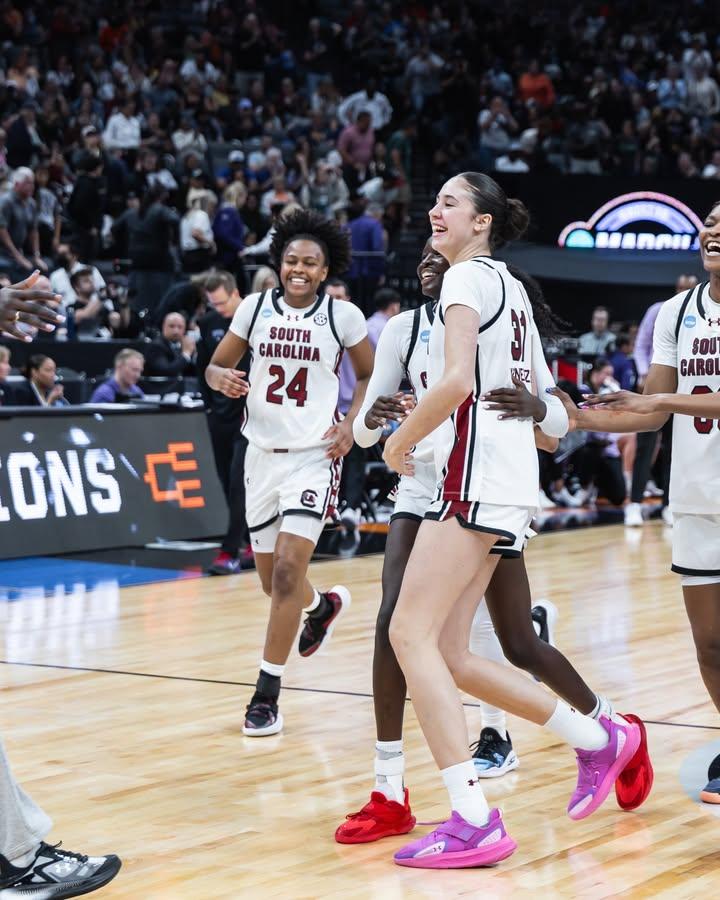
She was signed with Tango Bourges Basket but was barely playing and not receiving an education. The American model offered both simultaneously — and South Carolina offered the highest level of both.
Her background made the leap more plausible than it might have been for another French teenager. Her mother, Isabelle Fijalkowski, played NCAA basketball at Colorado, later played in the WNBA, and will be inducted into the Women’s Basketball Hall of Fame this summer. The American college experience was not abstract for the Tournebize family — it was part of their story.
Staley traced the recruitment back through those family connections, describing a process built on mutual trust and gradually deepening communication.
“When we recruited Ali, we had some small introductions with her mom, and then we just have mutual people that we know,” Staley said. “And then the communication started. I’m talking to them. You know, it’s you talk to these people and you just kind of talk to all the people that have an ‘in’ with the family, and then you take it from there.”
The decisive moment, Staley explained, was not a visit to France — it was the possibility of immediate enrollment.
“It escalated when there was talk of her possibly being able to play right away,” Staley said. “And that is the thing that really intrigued them as a family, because she wasn’t playing as much on her pro team as she wanted to play. And that’s when things sped up.”
Tournebize confirmed that the timeline compressed once that option emerged.
“At first it wasn’t for this year, but then I had the opportunity to come in the middle of this year,” she said. “I just kept talking with coach and then coming here to visit, I just felt really comfortable with her and with the team.”
Adjusting in Real Time
The results on the court have been predictably uneven. Tournebize is averaging 4.2 points and 3.3 rebounds — numbers that do not announce themselves until you consider what it took to produce them. She arrived mid-season, learned a new system in a new country, absorbed the physical demands of SEC competition, and did all of it at 18 years old, thousands of miles from her family.
There are moments when she looks lost. There are other moments when you understand precisely why South Carolina wanted her.
Staley has been patient and measured in her assessment.
“We’re very fortunate she did choose us,” Staley said. “She has a really bright future. I think she’s doing great coming into the middle of the season and having to deal with the competitiveness and physicality of the SEC, to now, just being able to contribute and help us.”
The players who have helped her most are Maryam Dauda and Adhel Tac, who has designated herself the team’s unofficial mother figure. Dauda described mentoring Tournebize as something that has brought her genuine joy.
“I feel like she’s a generational player because it’s hard as an 18-year-old to move and leave your family, move across the ocean and come here to play,” Dauda said. “I feel like from the beginning, she picked up stuff so quickly. Having her as my teammate is exciting. I’m just excited that she’s on the team. She’s just an amazing player but also an amazing person.”
Phoenix, and a Mother Watching From Afar
There is one more layer to Tournebize’s Final Four story, and it is the most personal one. Her mother has been unable to travel back to the United States to watch her play this season. The only way Isabelle Fijalkowski gets to see her daughter compete in person is if South Carolina makes it to Phoenix.
They made it to Phoenix.
The story of Alicia Tournebize — the French teenager who didn’t know when to pose during a net-cutting ceremony, who left a professional contract for a college education, who is learning the American game in real time alongside a group of players who have embraced her completely — is still being written.
But the next chapter happens in the desert. And her mother will be watching.