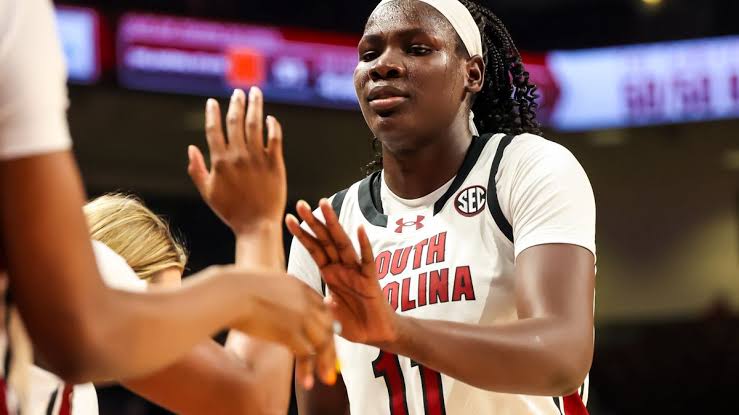
Madina Okot wanted one more year. The NCAA said no. And in doing so, the governing body has reignited one of the most uncomfortable conversations in college sports — the glaring, persistent inconsistency in how it applies its own eligibility rules.
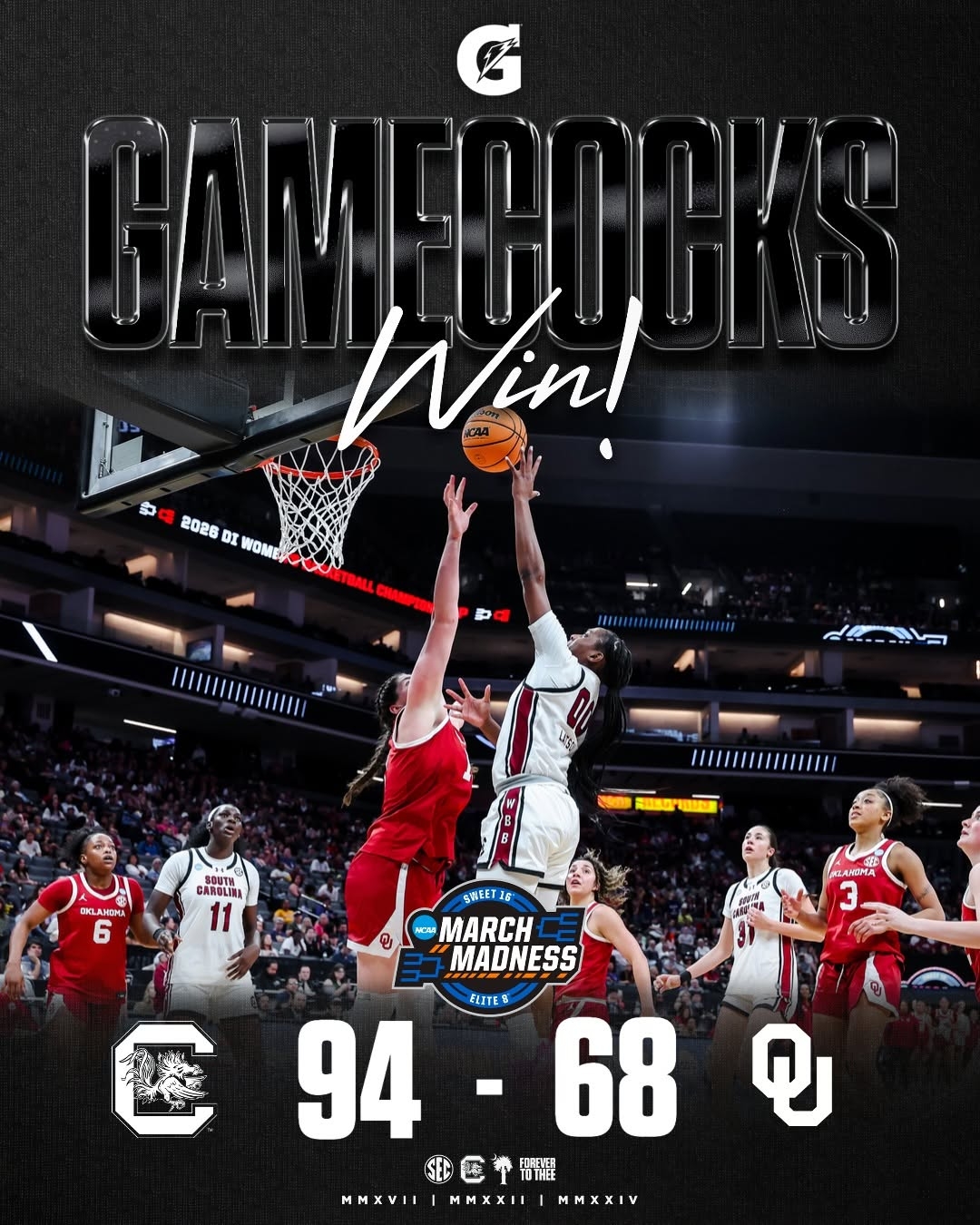
The season-of-competition waiver that South Carolina submitted to the NCAA for Madina Okot was officially denied on April 8, confirming that the Gamecock senior had exhausted her collegiate eligibility. The decision ended her college career just days after she helped South Carolina reach the national championship game, where the Gamecocks fell to the UCLA Bruins 79-51.
The timing made it sting even more. Okot had been one of the most productive big women in the country this season. She ranked third in the nation with 22 double-doubles, 16th in rebounding average at 10.6 per game, and 19th in field goal percentage at .575. She was an All-SEC Second Team selection and led the Gamecocks in rebounding in 29 of her 39 games, turning in one of the best rebounding seasons in program history.
South Carolina head coach Dawn Staley, who had advocated fiercely for Okot throughout the process, did not hide her respect for what her center had sacrificed to get here.
“Early in her basketball career, Madina made courageous choices not just to pursue the sport, but also to better her life,” Staley said. “Her path included just a short time with us in Columbia, but we are grateful to be part of her story. She made our team and our sport better.”
The argument South Carolina put forward was straightforward: Staley had argued multiple times that Okot’s two years at a university in her native Kenya shouldn’t apply to NCAA eligibility rules, since it was a completely different level of competition. Okot only started playing organized basketball in 2020 and moved to the United States in 2024. Her path to this stage has been extraordinary — and brief. The NCAA, however, disagreed.
The Double Standard That Fans Won’t Let Go Of
The backlash on social media was immediate and pointed. Fans didn’t just express disappointment — they expressed something sharper: the sense that this decision exposed something broken at the core of how the NCAA polices eligibility. The comparisons came fast.
“Sedona Prince got how many years?” one fan wrote, referencing how Prince — who dealt with a broken leg, a torn elbow ligament, a COVID year, and two redshirt seasons — accumulated seven years of eligible seasons through a combination of injuries, transfers, and the pandemic exception before finishing her college career at TCU. The contrast with Okot, who competed for barely two NCAA seasons, was impossible to ignore.
“This is garbage!! But dudes can get 6 and 7 years of eligibility. Dudes can play pro ball and can RETURN to college ball!!!” one fan wrote.
“NCAA needs to take a hard look at themselves,” another wrote.
“NCAA = the most consistent inconsistent organization ever!!!” a fan commented.
“The system broken! Juco players can play additional 4 years without losing eligibility and be close 26-28 years of age. NBA prospects can return to NCAA but they denied her smh,” one fan wrote.
“When was Kenya apart of the NCAA,” another fan said, pointing to what many see as the absurdity of holding Okot’s time in the Kenyan university system to the same standard as U.S. NCAA competition.
Each of these comments, taken separately, might sound like fan frustration. Taken together, they form a coherent indictment. The NCAA has historically extended leniency for injuries, COVID disruptions, and even professional flirtations in men’s basketball — but a young woman from Kenya, who began playing organized basketball just six years ago, was denied a waiver after two seasons of college play. The inconsistency is not subtle.
What Comes Next for Okot
South Carolina and Okot could have appealed the decision, but if the governing body declined again, she likely would have had to wait a full year for the 2027 WNBA Draft. That risk made the path forward clear. She will enter the 2026 WNBA Draft, which takes place April 13 — and she is not entering as a consolation prize.
Both CBS Sports and USA Today project Okot as a late first-round pick, with both outlets projecting the Atlanta Dream selecting her at No. 13. The appeal is obvious. Her combination of interior presence, elite rebounding and emerging perimeter shooting represent exactly the kind of versatile post player teams covet. At just a few years removed from first picking up a basketball in Kenya, her development trajectory alone is a compelling draft-night story.
The irony is not lost on anyone paying attention. The NCAA deemed Okot ineligible to play another college season. The WNBA is about to welcome her with a first-round selection. She was good enough for the sport’s highest professional stage — just apparently not good enough for the NCAA’s eligibility framework.
Okot’s story is ultimately one of resilience and rapid growth. But the NCAA’s decision ensures that the conversation around her departure will be defined not just by what she accomplished, but by what was taken from her before she was done.