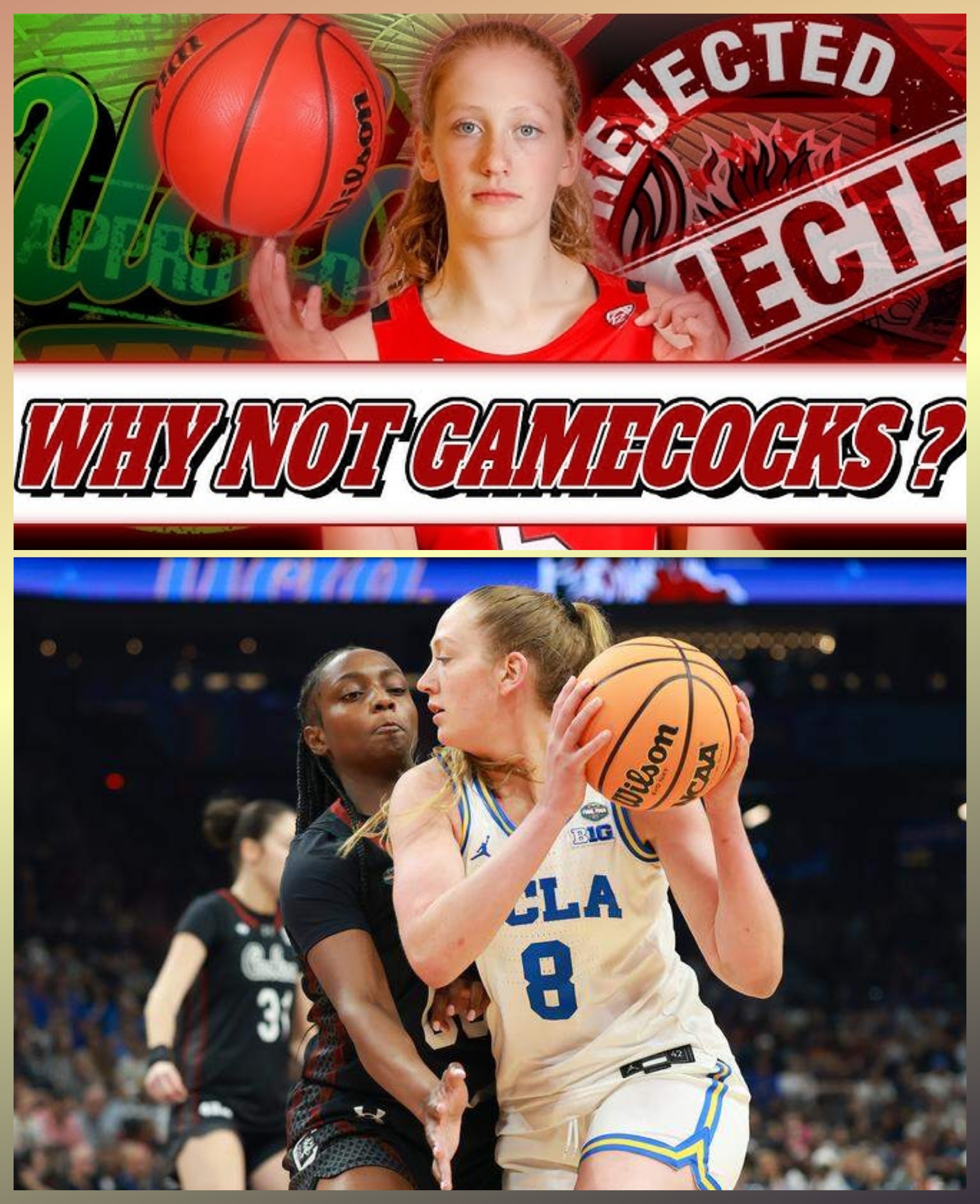
There is a particular kind of irony that follows transfer portal decisions when championship weekend arrives. Gianna Kneepkens considered Dawn Staley’s program, visited Columbia, and ultimately chose elsewhere. On Sunday in Phoenix, she scored 15 points, made three three-pointers, and was on the floor for a 41-point UCLA swing as the Bruins routed South Carolina 79-51 to win the program’s first national championship.
The what-if question writes itself. But the more honest and analytically interesting story is why the fit never materialized — and what Kneepkens’ performance says about how both programs built their rosters.
Why South Carolina and Kneepkens Made Sense — and Then Didn’t
On paper, Kneepkens was exactly the kind of transfer that reshapes a program’s ceiling. Coming off a season at Utah where she averaged 19.3 points per game and shot 44.8% from three, she was a plug-and-play perimeter scorer with demonstrated production at a high level. Dawn Staley recruiting her was not a reach — it was the obvious move.
But South Carolina’s roster construction at the time told a different story. The Gamecocks had already secured commitments from Ta’Niya Latson and Madina Okot, both of whom addressed specific and pressing needs. Latson — one of the nation’s top scorers at Florida State and, notably, a high school teammate and close friend of point guard Raven Johnson — gave South Carolina a perimeter threat who came with built-in chemistry. Okot addressed the post void left by Kamilla Cardoso’s departure. With most of the returning roster intact, the pieces were already in place.
Adding Kneepkens would have created a different kind of problem: too many wings needing the ball, not enough possessions to sustain everyone’s development and draft positioning. The separation was logical on both ends.
Kneepkens herself reflected on the process with notable grace:
“Yeah, I did (talk to South Carolina). They recruited me, and I have so much respect for that program and Coach Staley, but I just had to see what was the best fit for me. I’m just grateful to be here at UCLA.”
What she described as fit, the numbers ultimately validated. After narrowing her choices to Oklahoma and UCLA, she committed to Cori Close and the Bruins on May 1.
What Made UCLA the Right Answer
Kneepkens was direct about what tipped the scales toward Westwood:
“Just (UCLA’s) ability and their vision they had for me and how I could have growth as a person and as a player.”
That language — vision, growth, fit — can sometimes be diplomatic filler in the transfer portal era. In Kneepkens’ case, it was descriptive. UCLA gave her a defined role alongside Lauren Betts, Kiki Rice, and Gabriela Jaquez, a core that was already complete enough that Kneepkens didn’t need to be the answer to everything. Her points per game dropped by roughly seven from her Utah peak, but she averaged 12.8, shot a team-best 42.9% from three, and was arguably more impactful as a complementary player than she ever was carrying the load.
Rice’s assessment of the transition captured something important:
“Her transition has been so seamless because of how she’s been willing to dive right into the culture of our program, add to it, make us better.”
The willingness to subordinate individual production to collective purpose — and do it genuinely rather than reluctantly — is what separates good transfers from transformative ones. Kneepkens was the latter.
The Championship Game Performance in Context
Against South Carolina on Sunday, Kneepkens was the Bruins’ second-leading scorer behind Jaquez’s 21 points. She finished 5 of 15 from the field, but her second-quarter burst — seven points on perfect 3-for-3 shooting as UCLA built a 13-point halftime lead — was the kind of damage that compounds. By the time the Gamecocks were trying to claw back into the game, the margin had become a rout.
The most telling statistic isn’t her point total. In the 26 minutes Kneepkens was on the floor, UCLA outscored South Carolina by 41 points. That is not a number that reflects individual performance alone — it reflects how a team’s spacing, flow, and defensive coverage changes when a shooter of her caliber is on the court and must be accounted for on every possession.
She was pointedly asked whether she had something to prove against the program that had recruited her. The answer was unambiguous:
“Oh no, not at all. There’s respect all around.”
And on UCLA’s approach regardless of opponent:
“Honestly, if it was any team, we would have come in with the same mindset because we just wanted it for each other so bad.”
The Parallel Stories the Transfer Portal Told
One of the more underappreciated dimensions of Sunday’s championship game was that both finalists built their rosters significantly through the transfer portal — and both did it well.
South Carolina’s Latson transformed from a one-dimensional scorer into a versatile two-way contributor. Okot provided the frontcourt dominance the program needed and drew legitimate WNBA Draft attention. UCLA’s Kneepkens sacrificed volume for efficiency and slid into a role that made the Bruins harder to guard without disrupting what was already working.
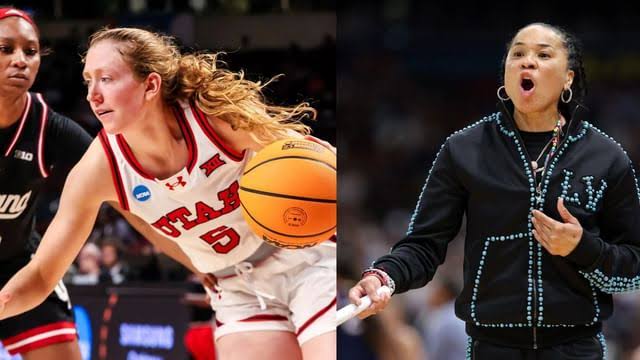
The championship game was, among other things, a case study in how to integrate transfers without losing program identity. UCLA executed it slightly better on the night that mattered most.
What South Carolina Takes From This
For the Gamecocks, the loss to a team partly built by a player they recruited is not an indictment. It is a reminder that the transfer portal, now the defining mechanism of roster construction in college basketball, produces outcomes that no program can fully control. South Carolina made the right decisions given what they needed. Kneepkens made the right decision for what she needed. The paths diverged, and on Sunday, hers led to a championship ring.
Kneepkens’ closing words about South Carolina were as generous as they were genuine:
“They’re an incredible program. They’re coached well and have fantastic players, so all the respect to them.”
Coming from someone who just helped end their season, that reads as something more than courtesy. It reads as someone who knows exactly what she was up against — and knows how close the margin between those two programs actually is.