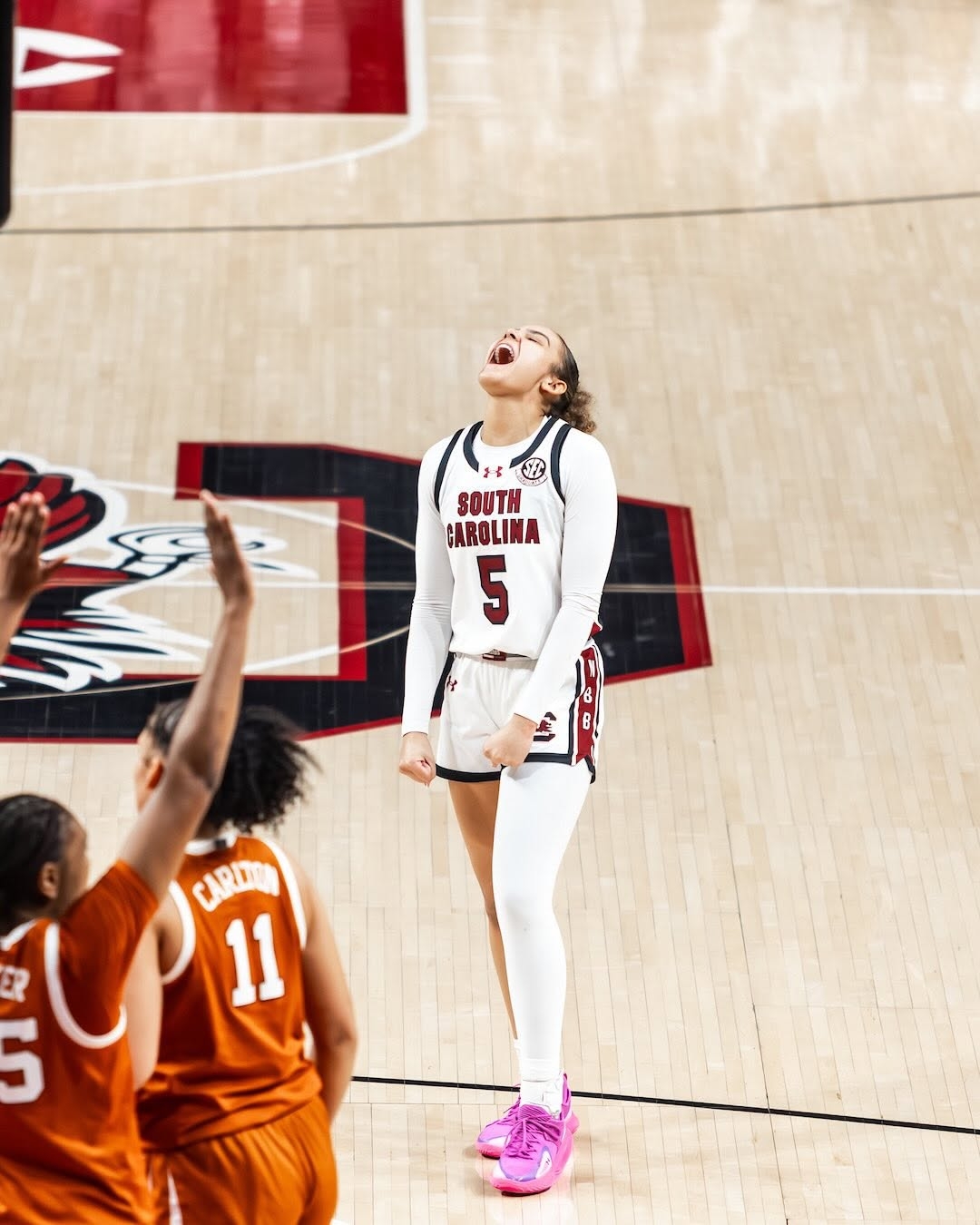
South Carolina’s decision to hold Tessa Johnson out of Thursday night’s game against Mississippi State raised immediate questions, especially with the postseason approaching and rotation minutes tightening. Was it an injury concern? Fatigue? Something more serious?
According to head coach Dawn Staley, the answer was far more precautionary than alarming.
“No, I mean she’s just banged up,” Staley said after the game. “We afforded ourselves a big lead. Not putting her in a situation where she could hurt herself more, she’s just a little sore. So we just opted to keep her out and get her ready to play for the Tennessee game.”
That explanation offers clarity—and reassurance—for Gamecock fans. Johnson’s absence wasn’t tied to stress, discipline, or a significant injury. Instead, it was a calculated move rooted in roster management and long-term health.
A Strategic Sit, Not a Red Flag
With South Carolina building a comfortable lead against Mississippi State, Staley had the luxury of thinking beyond one night. Johnson, who has logged meaningful minutes this season and continues to grow into her role, didn’t need to be pushed through soreness in a game already under control.
Staley’s wording—“banged up” and “a little sore”—suggests the normal wear and tear that comes with the grind of an SEC season, not a lingering or structural injury. In a program that prioritizes availability in March over box-score padding in February, the choice to sit Johnson fits a familiar pattern.
Eyes on Tennessee
Perhaps the most telling part of Staley’s explanation was the forward-looking mindset.
“So we just opted to keep her out and get her ready to play for the Tennessee game.”
That line underscores the real priority. Tennessee represents a far greater physical and emotional test, and having Johnson healthy matters more than squeezing extra minutes out of her against Mississippi State. It also signals confidence that this is a short-term issue—one rest and treatment can resolve.
Depth Allows Discipline
South Carolina’s depth continues to be one of its biggest advantages, and games like this highlight why. The Gamecocks didn’t need to rush Johnson back onto the floor, and Staley didn’t feel pressure to force the issue. Instead, she leaned on her roster, protected a key piece, and kept the bigger picture in focus.
The Bottom Line
There’s no indication that Tessa Johnson’s absence was related to stress or anything long-term. By Staley’s own words, it was about soreness, opportunity, and smart decision-making.
In other words, it was classic Dawn Staley—protect the player, trust the process, and stay ready for what’s next.