BANGKOK, Thailand — The 2026 FIBA 3×3 Champions Cup at CentralWorld Square in Bangkok was supposed to be a showcase of the world’s best 3×3 women’s basketball. And for the most part, it was — until a moment between Canada’s Katherine Plouffe and Team USA’s Allisha Gray threatened to overshadow everything else. What unfolded was not just a controversial foul. It was a window into the physical, uncompromising nature of a USA-Canada rivalry that has been building in intensity across multiple international competitions — and a reminder that in the abbreviated, high-stakes world of 3×3 basketball, the line between competitive physicality and dangerous play can disappear in an instant.
The Incident: A Hip Check That Changed the Conversation
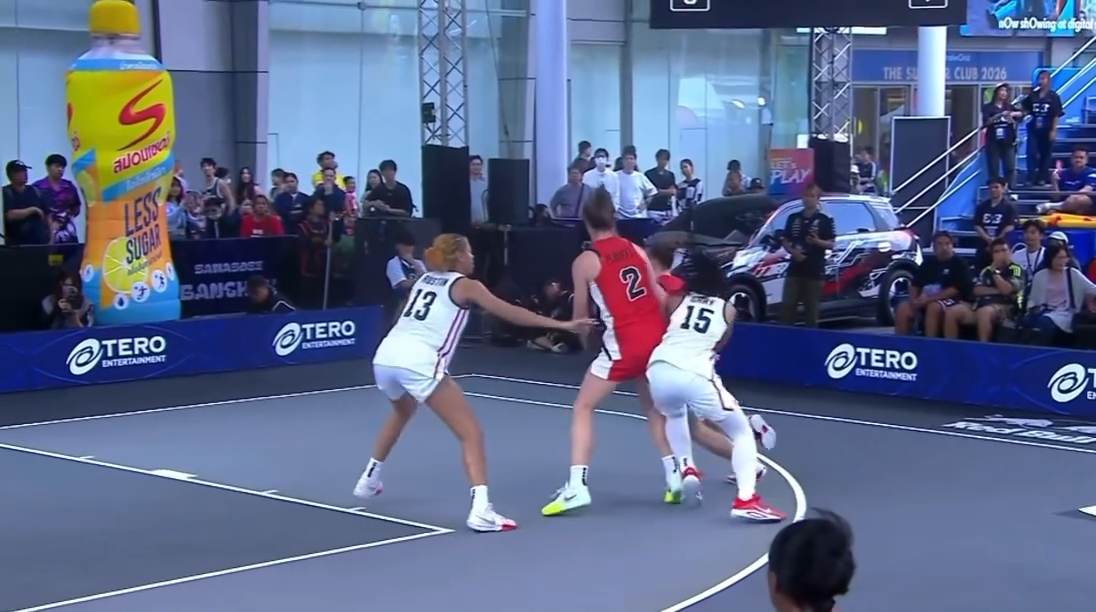
During the bronze medal contest between the United States and Canada — a rematch that carried the weight of two programs with recent history and unresolved competitive tension — Plouffe was seen deliberately hip-checking Gray in what witnesses and viewers immediately characterized as an intentional act of physical aggression far beyond the scope of a normal defensive play. The hit connected on Gray’s hip, sending the Atlanta Dream star to the bench to stretch out and assess the damage.
What made the moment particularly alarming was its apparent deliberateness. Gray was not involved in a contested drive to the basket or a physical post-up when contact occurred. The hip check appeared calculated — the kind of play that, in longer-format basketball, typically draws technical fouls, ejections, and postgame commentary from officials and league administrators. In 3×3’s compressed, referee-light environment, it sparked immediate outrage from observers watching in real time.
CLICK 👇HERE TO WATCH.
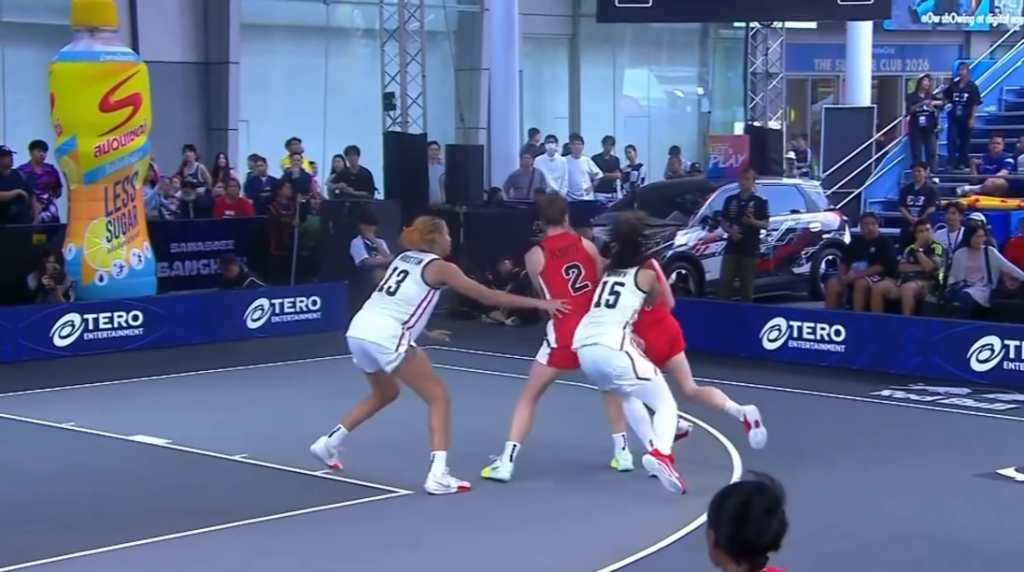
“Allisha Gray just got hip-checked by the same woman! Plouffe is a dirty player. Gray is back on the bench stretching out her hip. They tried to take out Allisha Gray!” The reaction was immediate and visceral — and not unwarranted.
The most concerning element was not that contact was made, but that it allegedly occurred more than once. The phrase “the same woman” in eyewitness commentary implies a pattern of physical targeting during the game, not an isolated incident. When a player with Plouffe’s experience and physicality makes repeated contact with the same opponent outside the natural flow of the game, the conversation moves from competitive basketball into something more troubling.
Remarkably, Gray returned to the court. That detail — she came back and competed — says everything about her character as a player and as a competitor. Hurt, visibly impacted, and forced to the bench to assess an injury that could have ended her tournament, she got back up and finished the game.
The Backdrop: A Rivalry With a Physical Edge
To understand why this moment generated the reaction it did, the USA-Canada 3×3 rivalry requires context. These two programs have been trading blows — literally and figuratively — across multiple major competitions.
Both teams were members of the 2025 FIBA 3×3 AmeriCup squad that won the gold medal with a perfect 5-0 record, and defeated Canada in the final 21-19.That final was a physical contest in its own right. Team USA’s athletic advantages proved too much for Canada, as the US succeeded by scoring inside, whether via drives from Gray or cuts and post-ups from Hillmon and Shakira Austin. Trying to deter the Americans’ attacks at the basket, the Canadians accumulated too many fouls, sending the US to the line for 11 free throw attempts.
The pattern is consistent and revealing: Canada’s approach against the United States has consistently leaned on physicality as its primary equalizer. When the athleticism gap becomes too wide to close with skill alone, the Canadians have repeatedly chosen to make the game physical — a strategy that is legitimate in basketball up to a defined boundary, and deeply problematic when it crosses that line.
Katherine Plouffe served as the hub of Canada’s offense at the AmeriCup, and despite tying things up 19-19 late in the final, a foul on Allisha Gray sent her to the line where she put things to bed 21-19 in favor of Team USA. The parallel to Bangkok is hard to ignore. In both competitions, physical contact involving Plouffe and Gray emerged as a defining storyline.
Who Gray Is — and Why This Matters
The significance of targeting Allisha Gray cannot be separated from who she is as a player and what she means to Team USA’s 3×3 program. Gray brings extensive international experience and was an Olympic gold medalist at the Tokyo 2020 Games with Team USA in the traditional 5×5 format. She also had one of the best seasons of her career in the 2025 WNBA season with the Atlanta Dream, earning a place on the First Team All-WNBA and finishing among the top four players in MVP voting.
In the 3×3 format specifically, Gray is a dynamic scorer and one of the premier shot creators in all of women’s basketball, capable of defeating anyone and often leaving defenders on their own island. She is, in the plainest terms, the player Canada most needs to neutralize — and the player for whom physical targeting carries the most strategic logic from an opposing standpoint.
In USA’s thrilling 21-18 pool play victory over the Netherlands, Gray took over down the stretch, finishing with 11 points and scoring the decisive basket late in the game. University of Missouri Athletics Her ability to perform in the highest-pressure moments makes her simultaneously the most dangerous player on the court and the most obvious target for a team that cannot stop her cleanly.
How the Bronze Medal Game Played Out
Despite the physical controversy, Team USA refused to be denied. Backed by stout defense and a relentless pursuit of offensive rebounds, the United States built a 5-2 advantage during the first four minutes of play. Hillmon, Gray, and Burton stretched the gap to seven, 10-3, with a layup, rainbow 2-pointer, and pair of free throws by the 3:55-minute mark. A Sea Of Blue
Canada put together a 3-0 spurt over the next 60 seconds, but Burton answered with four straight points on her own to make it a 14-6 affair. Austin added three consecutive points to Burton’s barrage, and in the blink of an eye, the United States held a 10-point lead. Burton netted one more 2-pointer, and her group dribbled out the clock en route to the 20-10 win. A Sea Of Blue
The final margin was emphatic. Whatever Canada’s physical strategy was intended to accomplish, it did not work. Gray was named to the all-tournament team for her contributions across the full tournament, showcasing her scoring ability and leadership as the team secured third place. Sports Illustrated The player Canada tried to take out ended up on the all-tournament team. The irony is difficult to miss.
The Larger Question: What 3×3 Owes Its Players
The incident raises a question that the 3×3 format has not yet fully grappled with: what protection do its elite players receive when competitive physicality crosses into targeted injury attempts? The compressed format — fewer officials, faster pace, smaller court — creates an environment where certain types of physical play are harder to monitor and penalize in real time.
The FIBA 3×3 Champions Cup carries significant stakes beyond the tournament itself, with champions earning direct qualification to the 2027 FIBA 3×3 World Cup and the Cups-based Olympic Qualification Tournament for the Los Angeles 2028 Olympic Games. NCAA As the pathway to the Olympics becomes more clearly defined through 3×3 competition, the investment of top players in this format increases — and with it, the responsibility of governing bodies to ensure those players are protected from physical targeting that has no legitimate place in the sport.
Gray returned to the court after the hip check. Team USA won the bronze medal. The rivalry continues. But the image of one of the most decorated players in women’s basketball being forced to the bench by a play that had nothing to do with basketball should not simply be absorbed and moved past.
The game is better than that. Its best players deserve to be treated accordingly.