“Dawn Staley Didn’t Hold Back After South Carolina’s Win Over Coppin State – Inside Dawn Staley’s Postgame Message”
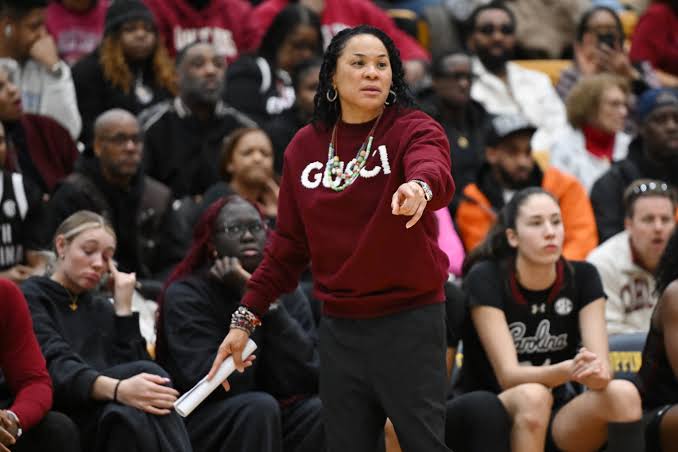
Dawn Staley Finds Familiar Ground in Baltimore as Coppin State Visit Highlights Women’s Basketball’s Expanding Reach
Source: On3
When South Carolina women’s basketball head coach Dawn Staley arrived in Baltimore for the Gamecocks’ matchup against Coppin State, the trip stirred something deeper than a typical road game. The sights, sounds, and energy of the city instantly reminded her of home — Philadelphia — and offered a powerful backdrop for a broader conversation about community, opportunity, and the growth of women’s basketball.
Baltimore and Philadelphia: Different Cities, Shared Spirit
Staley, who now visits her hometown only once or twice a year, was struck by how familiar Baltimore felt almost immediately.
“Flying in and just going through the city — very, very similar. The row homes, the people, people out carrying their sneakers, they probably just came from the gym,” Staley said.
The parallels triggered a wave of nostalgia as she traveled through the city, describing the experience as a ride down “memory lane.” While she joked that living “up north” isn’t appealing anymore because of the cold, Staley emphasized that both cities share something far more meaningful: diverse communities united by pride and a desire to be represented positively.
She also praised Baltimore’s leadership, crediting the city’s mayor for innovative thinking and engagement — a theme that mirrored her broader emphasis on institutional support throughout the visit.
A Charged Atmosphere and Mutual Respect in the Arena
The environment inside Coppin State’s arena exceeded expectations. Tickets moved quickly, so much so that additional purchases were required for South Carolina’s traveling party.
“Great. We knew the amount of tickets that we got went quickly,” Staley said. “I thought there was a great mix of Coppin State fans and a great mix of South Carolina fans.”
Rather than a hostile road setting, the crowd reflected an appreciation for quality basketball. Big plays were met with applause regardless of jersey color, creating an atmosphere rooted in respect for the game itself — a rarity that stood out to Staley.
Respect for Darrell Mosely and the Coppin State Challenge
Staley reserved special praise for Coppin State head coach Darrell Mosely, who is navigating his first season at the helm of a demanding program.
“Darrell is doing a great job. It’s a hard job. It’s a thankless job,” she said.
She pointed to strong backing from Coppin State’s president and athletic director, noting that such support is essential when building a program willing to test itself against elite opponents. According to Staley, Mosely’s tough scheduling philosophy — including games against teams like South Carolina — will ultimately raise his team’s competitive ceiling.
HBCU Legacy and Standing on the Shoulders of Pioneers
Staley’s connection to HBCUs runs deep, shaped by the trailblazing Cheyney teams of the early 1980s and icons who paved the way for today’s success.
“We are being carried on their shoulders,” Staley said, referencing pioneers like Yolanda Laney, Marilyn Stephens-Franklyn, and C. Vivian Stringer. “When it wasn’t as popular as it is today… they were in the trenches doing historical things.”
For Staley, honoring that history isn’t symbolic — it’s a responsibility that informs how she schedules games, speaks about equity, and uses her platform.
Why Games Like This Matter for Women’s Basketball
High-profile programs rarely travel to HBCU campuses, let alone do so as part of guaranteed games. Staley believes those opportunities can be transformative.
“It’s an experience for them, too,” she said. “Darrell gets to measure his team.”
She recalled her own coaching days at Temple, when such opportunities were scarce. The Coppin State game produced the second-largest women’s basketball crowd in program history — a tangible step toward sustained growth, increased ticket sales, and broader community engagement.
One word summed up the scene for Staley: “Overwhelming.”
Even South Carolina players felt it, stopping for selfies and autographs in a road environment that resembled a home game in Columbia.
Carrying the Responsibility of Growth
With women’s basketball experiencing unprecedented demand, Staley believes the sport is entering a new phase — one that goes beyond survival.
“We’re in a position to take us now because we know we’re in high demand,” she said.
Drawing from mentors like C. Vivian Stringer, John Chaney, Debbie Ryan, and Tara VanDerveer, Staley framed the current moment as an opportunity to push for equity, visibility, and lasting structural change.
She also noted how many South Carolina supporters in Baltimore were former Northeasterners who relocated south, not just for better weather, but for a sense of belonging within the Gamecock community.
“The people that support you… If someone wrongs any one of our players or myself, I don’t have to say one word,” Staley said, emphasizing the loyalty she’s built over nearly two decades at USC.
Analysis
This On3-sourced interview captures Dawn Staley operating on multiple levels — as a Hall of Fame coach, a proud Philadelphian, and one of women’s basketball’s most influential advocates.
Key Themes:
- Urban Identity and Nostalgia: By linking Baltimore and Philadelphia through vivid, human details, Staley grounds the story emotionally and culturally.
- Community and Institutional Support: From city leadership to athletic departments and fan bases, Staley consistently frames success as collective.
- Equity and Opportunity: The Coppin State game becomes a case study in how elite programs can help elevate HBCUs without condescension — through access, exposure, and respect.
- Leadership Voice: Staley’s conversational yet purposeful quotes balance warmth with authority, making systemic issues relatable.
Strengths:
The piece effectively highlights women’s basketball’s momentum while honoring its roots. It subtly advocates for guaranteed games on HBCU campuses as a mutually beneficial model.
Areas for Expansion:
Including game context or score details could strengthen the competitive frame, while deeper exploration of Staley’s Cheyney connection would add historical depth.
Broader Context:
In early 2026, as women’s basketball continues its post-boom expansion, Staley’s perspective reflects both progress and responsibility — signaling that the sport’s next leap forward must be intentional, inclusive, and community-driven.
If you’d like this adapted into a Facebook post, clickbait headline, or a shorter news-style version, I can do that next.
About The Author