From Garnet to Gold: Allisha Gray’s Historic Dream Contract Is the Payoff for a Career Built the Right Way
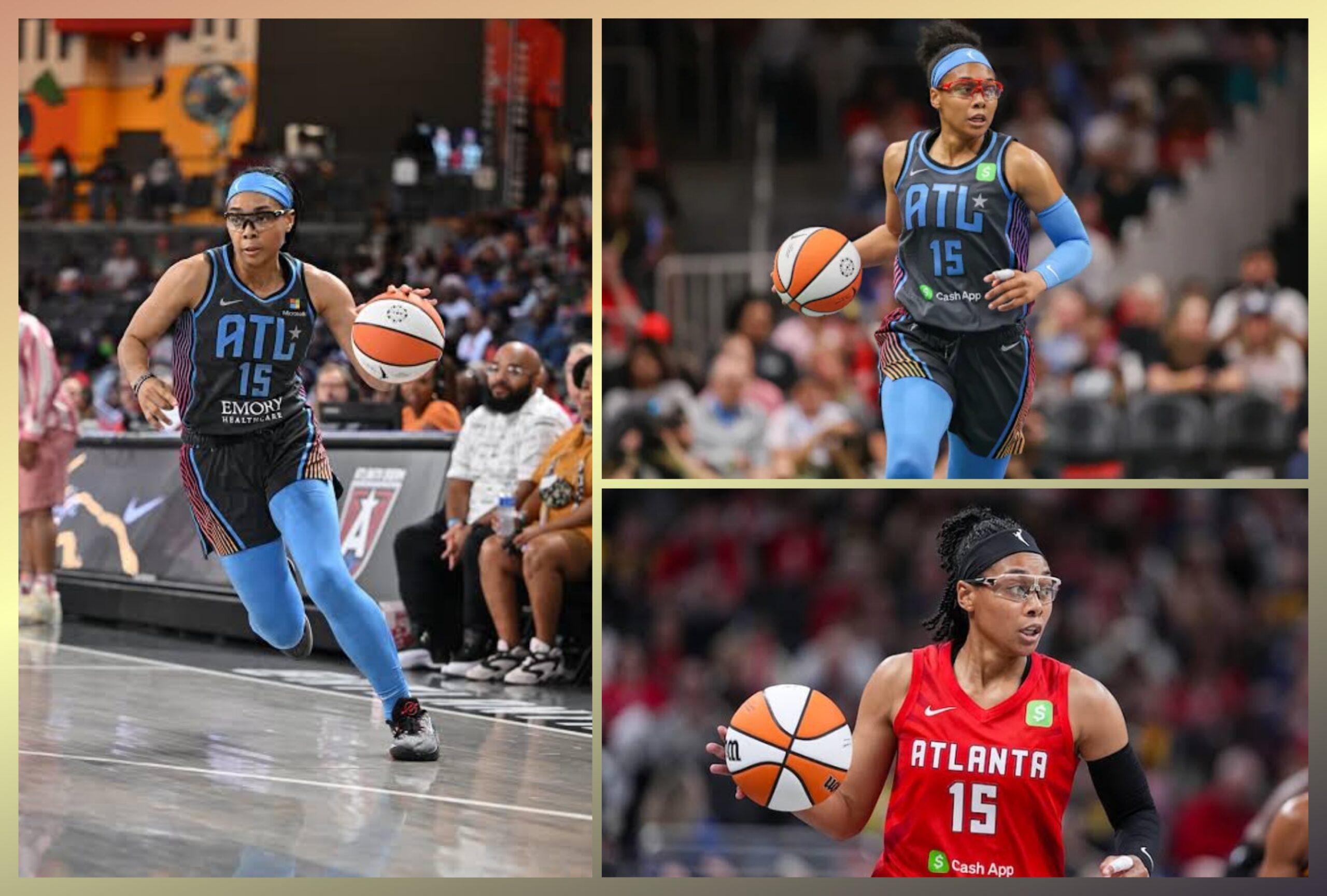
When Allisha Gray left South Carolina in 2017 with a national championship ring, a fourth-overall draft pick designation, and a newly earned WNBA Rookie of the Year award, she was already one of the most decorated young players in the sport. Nearly a decade later, she has rewarded Atlanta’s belief in her with a contract that reflects a kind of patient, earned ascent that the WNBA has rarely had the financial architecture to properly reward — until now.
Gray is finalizing a three-year “max-plus” contract to stay with the Atlanta Dream, per ESPN’s Sean Hurd. The deal comes on the heels of Gray’s best professional season and a franchise-best campaign for Atlanta, which posted 30 wins last season under first-year head coach Karl Smesko. Gray is expected to earn well over $1 million per season — a figure made possible by the WNBA’s landmark new Collective Bargaining Agreement, which raised the salary cap to a starting point of $7 million and set the supermax salary at $1.4 million.
This is not just a contract. It is a landmark — one of the first of its kind under the new CBA, and a direct statement about what Gray has become in Atlanta and what the WNBA is becoming as an economic enterprise.
A Career Built on Reinvention
Gray’s path to this moment is not one of overnight stardom. It is a story of reinvention, resilience, and a player who found the right system at the right time after years of being underutilized.
Gray transferred to South Carolina from North Carolina in May 2015, reportedly due to the academic-athletic scandal at UNC. Once in Columbia, she found a program that fit her perfectly. Under Dawn Staley’s system, she thrived. She was named to the NCAA Final Four and Stockton Regional All-Tournament teams, averaging 16.5 points on 56.8 percent shooting during the national championship run, becoming one of the most efficient offensive players in that postseason.
“Coming into South Carolina, it definitely felt like home to me and that played a big part of me choosing to come here and transferring from UNC,” Gray said at the time. “The fans are great, Gamecock Nation, best fan base in the nation. So I felt real at home here.”
That comfort — and that championship — launched her professional career. She was drafted fourth overall by the Dallas Wings in 2017, the same draft class that included fellow Gamecock Kaela Davis. In her rookie season, she averaged 13.1 points per game and won Rookie of the Year.
But the next five seasons in Dallas were a mixed story. Despite her talent, Gray never quite became the centerpiece player her draft position suggested she could be. A trade to the Atlanta Dream in January 2023 changed the trajectory of her career.
The Atlanta Chapter: A Star Finally Emerges
The numbers from Gray’s 2025 season are not the numbers of a late-career renaissance — they are the numbers of a player who finally had the right environment to show what she was always capable of. She averaged 18.4 points, 5.3 rebounds, 3.5 assists, and 1.1 steals, shot 45.1 percent from the field and 38.4 percent from three, and earned a spot on the All-WNBA First Team for the first time in her career.
Part of her emergence could be attributed to the way new Atlanta coach Karl Smesko maximized her scoring. Gray attempted more 3-pointers than ever before — 6.1 per game — and her shooting percentage from the field and from three ranked in the top three of her career. Smesko’s offensive system, renowned in the college game at Florida Gulf Coast University for its emphasis on spacing and ball movement, was tailor-made for a player of Gray’s versatility.
She finished fourth in MVP voting and third in Most Improved Player voting — a notable placement for a nine-year veteran — and helped lead the Dream to a franchise-record 30 wins and the Eastern Conference’s second-best record.
For a franchise long defined more by its struggles than its success, this Dream team felt like a turning point. And for Gray, it was validation that the best chapter of her career was still being written.
The New Deal in Context
What makes Gray’s contract particularly significant is not just the dollar figure — it is what that dollar figure signals about the direction of the sport. The new WNBA CBA has fundamentally altered what’s economically possible for players who have spent years earning a fraction of their market value. Gray is among the first beneficiaries.
The nine-year veteran has been an All-Star the last three seasons and earned her first All-WNBA First Team selection last season — rewards that, under the old structure, would have translated into a fraction of what other professional leagues would have paid a player of comparable stature. Under the new deal, that gap narrows meaningfully for the first time.
Gray, who is also a three-time All-Star, an Olympic gold medalist in 5-on-5 basketball at the 2020 Games, a FIBA 3×3 AmeriCup gold medalist, and the USA Basketball 3×3 Athlete of the Year (2020) , brings a résumé that extends well beyond the box score. She is one of the most accomplished all-around players in the sport, and her contract finally begins to reflect that.
Atlanta has also moved to re-sign Naz Hillmon to a three-year deal alongside Gray, and earlier acquired All-Star Angel Reese from the Chicago Sky in a blockbuster trade. The picture taking shape in Atlanta is one of genuine championship ambition — a team built to compete now, not merely rebuild.
The Gamecock Connection
For South Carolina fans, Gray’s contract carries a particular resonance. She is a product of the Staley system, one who left Columbia after just one season but carried its lessons with her through a decade in the pros. Before she declared for the draft, she made a promise to her parents that she would return to get her degree — and she kept it, coming back to Columbia after her rookie WNBA season to graduate from the University of South Carolina.
The Gamecocks’ pipeline to the WNBA runs long and deep, and Gray is among its most decorated products. Her arc — from UNC transfer to South Carolina champion to WNBA Rookie of the Year to All-WNBA first-team selection and now one of the league’s highest-paid players — is a testament to what the right program and the right coach can unlock in a player.
“Before I declared for the draft, I made a promise to my parents that I would come back and get my degree following the season,” Gray said. “And here I am now, fulfilling that promise.”
That promise told you everything about the kind of player — and the kind of person — Allisha Gray is. Now, after nine seasons and a career that has steadily climbed toward its peak, the WNBA is finally making a promise of its own: that players who build something as rare and sustained as what Gray has built deserve to be paid accordingly.
About The Author