
Dawn Staley Didn’t Lose A Single Player — Here is The Staley Philosophy and Why Players Stay
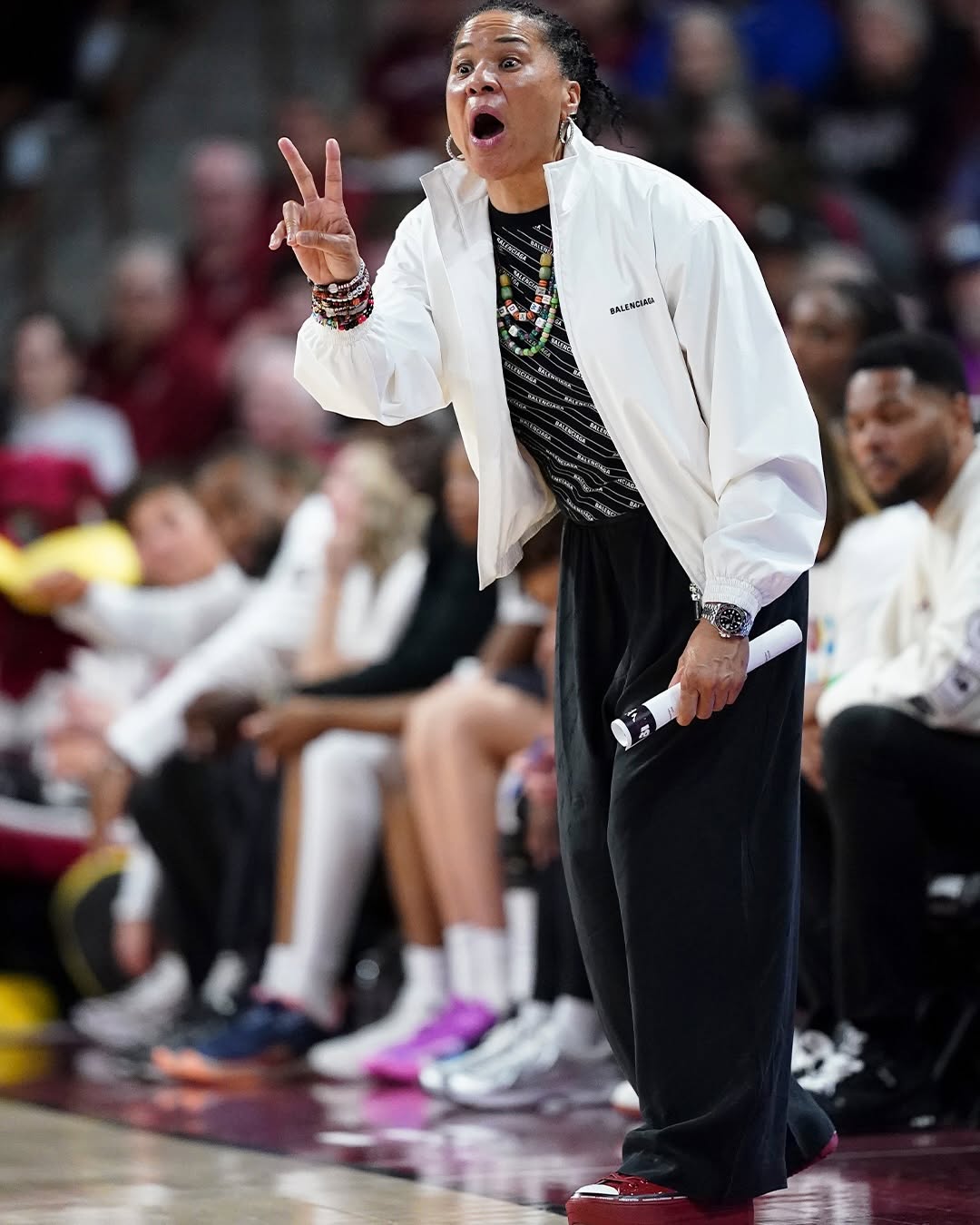
In a transfer portal era defined by roster chaos, program instability, and the kind of year-to-year turnover that makes building a sustained dynasty feel virtually impossible, Dawn Staley just did something that no other coach in the SEC managed to pull off.
She lost nobody.
Not one player. Not a single Gamecock entered the transfer portal during a cycle that saw approximately 1,545 players across women’s college basketball make the decision to seek a new home. While programs across the country — including several of South Carolina’s closest competitors — watched their rosters fracture and rebuild, Staley held everything together, added one of the best players in the entire portal, and emerged from the cycle with a roster that is arguably more dangerous than the one that reached the national championship game just weeks ago.
The rest of the SEC should be very concerned.
A Complete 180 From One Year Ago
The contrast with last year’s portal cycle is almost jarring in its completeness. Twelve months ago, South Carolina was at the center of the biggest transfer portal story in all of women’s college basketball — MiLaysia Fulwiley, one of the most electric players in the sport, departed Columbia for LSU in a move that dominated headlines and raised genuine questions about the program’s retention ability. That was compounded by the simultaneous arrival of Ta’Niya Latson from Florida State, a signing that generated enormous excitement but also acknowledged the reality that Staley was operating in a portal landscape that could take as much as it gave.
One year later, the narrative has flipped entirely. While other SEC programs navigated the familiar turbulence of player departures and roster reconstruction, South Carolina stood alone as the only women’s SEC team to not lose a single player to the portal — and one of just 14 NCAA women’s basketball programs nationally to achieve that distinction.
That is not an accident. That is a culture.
The Staley Philosophy — Why Players Stay
The most important question is the one that gets to the heart of what makes South Carolina different: why do players choose to stay?
Staley has been remarkably transparent about her approach, and it is built on a foundation that deliberately rejects the transactional elements that have come to define portal recruiting at many programs.
“It really is somewhat of a sacrifice coming to South Carolina because you’re going to play basketball for all the right reasons,” Staley said during the Sweet 16. “It doesn’t mean that it’s ‘My way or the highway.’ It’s not. It’s a collaborative thing. Our players are very comfortable with communicating the things that they like and don’t like.”
She doesn’t overpromise financially. She doesn’t guarantee starting roles. She doesn’t offer the kind of transactional incentives that can attract players quickly but create resentment and instability when reality doesn’t match the promise. Instead, she offers something that has proven to be far more durable — a genuine program culture built on communication, accountability, shared sacrifice, and the kind of winning environment that develops players into professionals.
The results validate the philosophy completely. South Carolina won its 10th SEC regular-season title this season, advanced to a sixth straight Final Four, and reached a third consecutive national championship game. Players who come to Columbia understand they are entering a program that sustains excellence at a level that no other program in the country has matched over the same period. That sustained excellence is itself the most powerful recruiting tool Staley possesses — and no financial package from any competing program can fully replicate what a South Carolina degree and a national championship appearance does for a player’s development and professional prospects.
Adding Without Losing — The Jordan Lee Masterstroke
The zero-loss portal cycle would be a remarkable story on its own. Staley made it a dominant one by simultaneously landing Jordan Lee — the No. 2 ranked transfer in the entire country according to ESPN and, in the words of ESPN’s Charlie Creme, “the best two-way player in the portal.”
The 6-foot guard from Texas brings elite perimeter defense, legitimate three-point shooting, and a basketball IQ that Staley’s system will immediately maximize. She committed on April 17th, and her arrival means South Carolina accomplished what every program in the country dreams of in a portal cycle — zero subtractions, elite addition.
For context: the Gamecocks enter next season having retained their entire returning roster while adding a top-two national transfer. That is the kind of roster construction that programs spend entire offseasons chasing and rarely achieve.
The Roster Rebuild — Natural Losses, Strong Foundation
It is worth being precise about the turnover South Carolina is actually navigating, because the zero-portal-losses story does not mean the roster is unchanged. The Gamecocks lost four players after the season concluded — but all four departures were of the best possible kind.
Ta’Niya Latson, Madina Okot, and Raven Johnson all moved on to the WNBA — the ultimate validation of what South Carolina’s development program produces. Maryam Dauda exhausted her eligibility. These are not portal losses born from dissatisfaction or broken promises. These are the natural, inevitable departures of players who came to Columbia, developed into professionals, and left for the next stage of their careers.
What remains is a core of seven returning players, six of whom played in the national championship game against UCLA. That is a foundation of proven, championship-experienced talent that most programs would build an entire program around.
And Staley knew coming into the offseason that she was adding three freshmen to that base, while also anticipating the return of Chloe Kitts and Ashlyn Watkins — two players whose health situations had limited their availability last season and whose returns represent significant upgrades to a frontcourt that was navigating those absences all year.
The Oliviyah Edwards Variable — The Decision That Could Define Everything
With the portal now closed to new entries, Staley’s remaining work centers on one recruitment that carries enormous weight for the program’s frontcourt construction.
Oliviyah Edwards — a 6-foot-3 forward and the No. 3 ranked recruit in the entire 2026 cycle — visited Columbia on April 14th, and her decision could fundamentally shape South Carolina’s offseason strategy for the remainder of the cycle.
The calculus is straightforward: if Edwards commits to the Gamecocks, the frontcourt is set. A 6-foot-3 top-three recruit, combined with the returning Kitts, Watkins, and the developing Alicia Tournebize, gives South Carolina exactly the size, versatility, and depth the program needs to address the one area where last season’s team was most vulnerable.
If Edwards chooses elsewhere, Staley will need to evaluate a late frontcourt addition — particularly given that Okot’s departure to the WNBA leaves a genuine void at the true center position. Players can still commit to schools after the portal entry deadline has passed, which means Staley retains flexibility even as the pool of available players has been set.
The Edwards decision is, in many ways, the final piece of a remarkably successful offseason — the one remaining variable that separates a very good roster from a potentially historic one.
What This All Means For Next Season
Step back and look at the complete picture of what Dawn Staley has assembled heading into 2025-26, and the conclusion is difficult to argue with.
A retained core of seven players — six of whom played in the national championship game. The return of Kitts and Watkins from their respective injury absences. Three incoming freshmen adding youth, athleticism, and positional depth. The addition of Jordan Lee as the premier two-way guard in the transfer portal. And the potential addition of Oliviyah Edwards as a top-three national recruit to anchor the frontcourt.
All of it built without overpromising, without guaranteeing starting roles, and without the kind of transactional portal maneuvering that has destabilized programs across the country.
“We’ve done a really good job of bringing players in that really understand that,” Staley said of sustaining success in the SEC. The numbers — 10 regular-season titles, six straight Final Fours, three straight national championship game appearances — confirm that understanding runs deep in Columbia.
The Bottom Line
Every other SEC program lost players this portal cycle. South Carolina lost none and gained one of the best available guards in the country.
That is not luck. That is not circumstance. That is the deliberate, sustained, culturally-rooted result of a coaching philosophy that prioritizes genuine relationships over transactional promises — and a program environment so compelling that players who arrive rarely want to leave.
The rest of the SEC had a complicated offseason. Dawn Staley had a masterclass.
And next season? The Gamecocks are coming. 🏀
About The Author