
Audi Crooks is Joining A’ja Wilson And Aliyah Boston In Women’s Basketball’s New Money Era
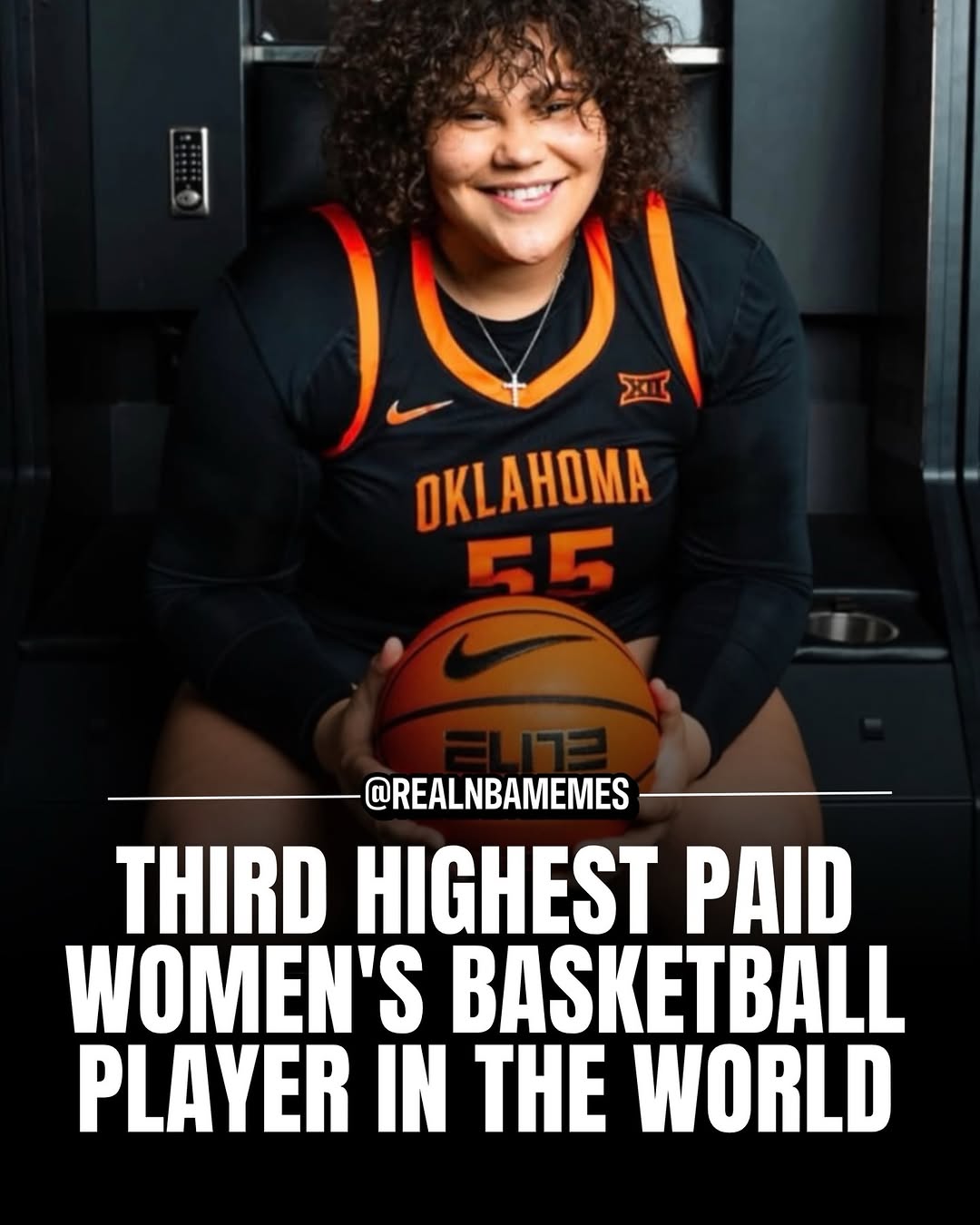
Women’s basketball has entered a financial era that would have been unimaginable just five years ago — and the latest proof arrives in the form of Audi Crooks, the Iowa State transfer who is heading to Oklahoma State not just with championship ambitions but with a $1.4 million NIL deal that makes her the third highest paid player in women’s college basketball behind only two of the most decorated names the sport has ever produced.
The money is real. The moment is historic. And the era of women’s basketball being an afterthought in the financial conversation is officially, completely, and permanently over.
The Crooks Deal — What $1.4 Million Means In Context
Let’s establish the weight of this number immediately. $1.4 million in NIL compensation for a college basketball player — in any sport, at any position — is a statement figure. It reflects not just Crooks’ individual value as a player and a brand, but the broader seismic shift in how women’s college basketball is being valued by programs, collectives, and the marketplace at large.
Crooks arrives at Oklahoma State as the most statistically dominant player to enter the transfer portal in this cycle — a center who averaged 25.8 points and 7.7 rebounds per game at Iowa State, numbers that place her among the most prolific scorers in the history of women’s college basketball at the collegiate level. The Cowgirls are not paying $1.4 million for potential. They are paying it for proven, elite, game-breaking production that puts fans in seats and eyeballs on broadcasts.
For Oklahoma State specifically, this investment represents a program-defining moment — a declaration that the Cowgirls are serious about competing at the highest level and willing to put the financial resources behind that ambition in a way that demands attention from every program in the Big 12 and beyond.
The Company She Keeps — A’ja Wilson’s Historic Extension
To fully appreciate where Crooks sits in the financial hierarchy of women’s basketball, you have to understand the contracts that sit above her — and the names attached to those contracts are nothing short of legendary.
A’ja Wilson — the two-time WNBA MVP, two-time Olympic gold medalist, and unquestionably the most dominant player in professional women’s basketball today — recently signed a contract extension with the Las Vegas Aces that set a new standard for player compensation in the WNBA. Wilson’s extension made her the highest-paid player in league history at the time of signing, a landmark moment that reflected both her individual excellence and the growing commercial and cultural power of the WNBA as a professional product.
Wilson’s deal was not just a contract. It was a statement — proof that women’s basketball had arrived at a place where its best players could command financial recognition commensurate with their actual value to the sport. For a player who has been the face of the league’s growth for years, the extension felt not just deserved but overdue.
Aliyah Boston’s Landmark Deal
Sitting between Wilson and Crooks in the financial hierarchy is Aliyah Boston — the former South Carolina national champion, WNBA Rookie of the Year, and Indiana Fever cornerstone who signed a contract extension that placed her among the highest-paid players in the league and cemented her status as one of the faces of women’s basketball’s commercial renaissance.
Boston’s deal with the Fever carries particular significance beyond the numbers. She is a player who built her value not through flash or spectacle but through the kind of sustained, complete, winning basketball that Dawn Staley’s program produces — and the market rewarded that value in the most concrete way possible. Her extension reflects the growing recognition that players who win, develop, and elevate their teammates are worth investing in at levels the sport has never previously contemplated.
The fact that Boston — a product of exactly the same South Carolina program that shaped her complete game — sits at the second tier of women’s basketball’s new financial order is a testament to both her individual excellence and the enduring value of what Staley builds in Columbia.
The New Financial Hierarchy — What It Tells Us About The Sport
The three-tier financial picture that has emerged — Wilson at the summit of the professional game, Boston close behind, and Crooks now commanding $1.4 million at the college level — tells a remarkably complete story about where women’s basketball stands in 2025.
At the professional level, the WNBA’s best players are finally being compensated in ways that reflect their actual market value rather than the artificially suppressed figures that characterized the league for most of its history. Wilson and Boston’s extensions are not outliers — they are leading indicators of a compensation culture that is shifting permanently and irreversibly toward genuine recognition of player value.
At the college level, NIL has created a parallel economy in which the sport’s most marketable and impactful players can generate professional-level income before they ever play a minute of WNBA basketball. Crooks’ $1.4 million deal at Oklahoma State is the clearest possible signal that women’s college basketball has arrived as a commercial product worth investing in at levels that rival men’s programs in the same tier.
The combined effect of these financial developments is transformative. Young girls watching women’s basketball today are seeing something that the previous generation never had — concrete, documented proof that this sport can be a genuine career, with genuine financial rewards, at the highest level.
Crooks Entering Her Senior Season With Maximum Pressure
Against the backdrop of this financial milestone, Audi Crooks steps into her senior season at Oklahoma State carrying expectations that the $1.4 million figure only amplifies. She arrives in Stillwater as a proven scorer, a physical force in the post, and a player who dominated the Big 12 at Iowa State with a level of offensive consistency that made her impossible to game-plan against.
The move to Oklahoma State also carries a storyline beyond the basketball — this is a player who chose a program that valued her enough to make a historic financial commitment, in a conference environment where she will face new challenges and new defensive schemes designed specifically to slow her down. How she responds to that challenge will define her senior season and, ultimately, her draft position and professional trajectory.
The pressure of being the third-highest paid player in women’s college basketball is real. But Crooks has spent her entire college career performing under pressure — and her statistical record suggests she has never found a reason to back down from it.
The Bigger Picture — Women’s Basketball’s Financial Revolution Is Here
Step back from the individual contracts and the specific figures and what you see is something genuinely historic unfolding in real time. Women’s basketball — at both the professional and collegiate levels — is experiencing a financial revolution that is redefining what is possible for the players who dedicate their lives to the sport.
A’ja Wilson’s extension. Aliyah Boston’s deal. Audi Crooks’ $1.4 million NIL package. These are not isolated moments. They are connected data points on a trajectory that is moving in one direction, consistently and with increasing velocity — upward.
The sport has never been more watched, more celebrated, or more financially rewarded. And the players at the top of that ecosystem — the Wilsons, the Bostons, and now the Crooks of this generation — are the direct beneficiaries of years of growth, advocacy, and the simple, undeniable reality that women’s basketball is must-watch entertainment for an audience that is only getting larger.
The Bottom Line
Audi Crooks is heading to Oklahoma State with $1.4 million, a chip on her shoulder the size of Gallagher-Iba Arena, and the kind of statistical pedigree that makes her one of the most compelling storylines in the entire sport heading into next season.
She joins A’ja Wilson and Aliyah Boston in a financial tier that would have been science fiction for women’s basketball players just a decade ago.
The sport has changed. The money has followed. And the players who built this moment — with their talent, their competitive fire, and their refusal to accept that women’s basketball was worth anything less than everything — deserve every dollar of it. 🏀💰
About The Author