Old Hollywood Met The WNBA Draft — Ta’Niya Latson’s ESPN’s Andscape Fashion Statement And It Landed Her Perfectly In LA
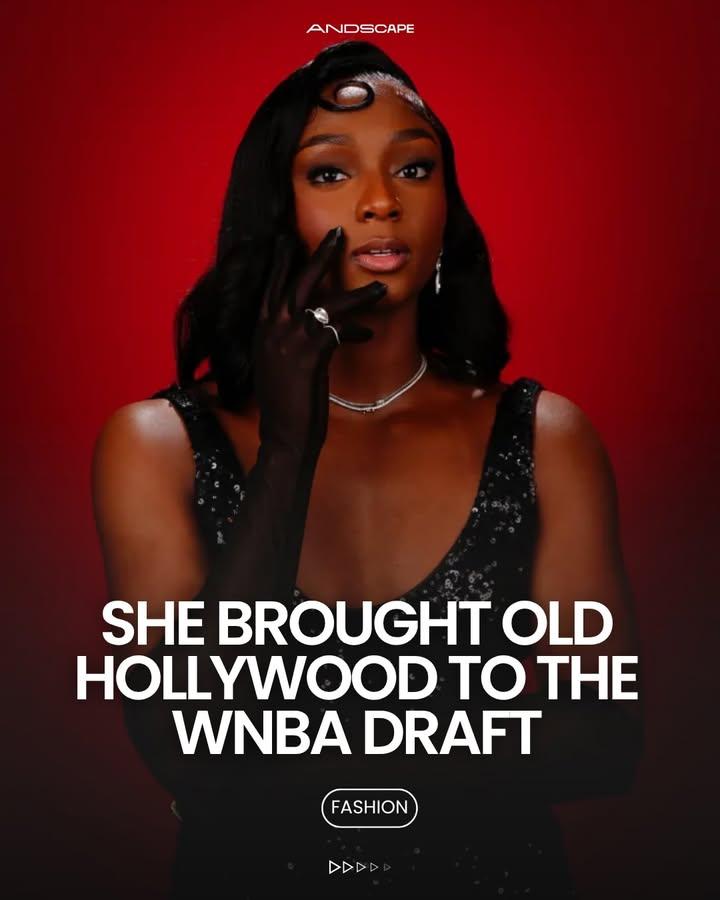
There are draft nights where players show up. And then there are draft nights where players arrive — where the moment before a name is even called, a statement has already been made that transcends the sport entirely and speaks to something deeper, something cultural, something that will be remembered long after the basketball details have faded.
Ta’Niya Latson’s WNBA Draft night was the second kind. Completely, deliberately, and magnificently.
The Vision Was Always Bigger Than Basketball
In an era where draft fashion has become its own cultural conversation — where athletes understand that the red carpet moment is as much a platform as the press conference that follows — Latson arrived not simply dressed for the occasion but transformed by it. She didn’t consult a stylist and pick something safe. She made a creative decision rooted in history, heritage, and the kind of intentional artistry that the fashion world reserves for its most considered moments.
She brought Old Hollywood to the WNBA Draft. And she did it in a way that felt not like costume but like homecoming.
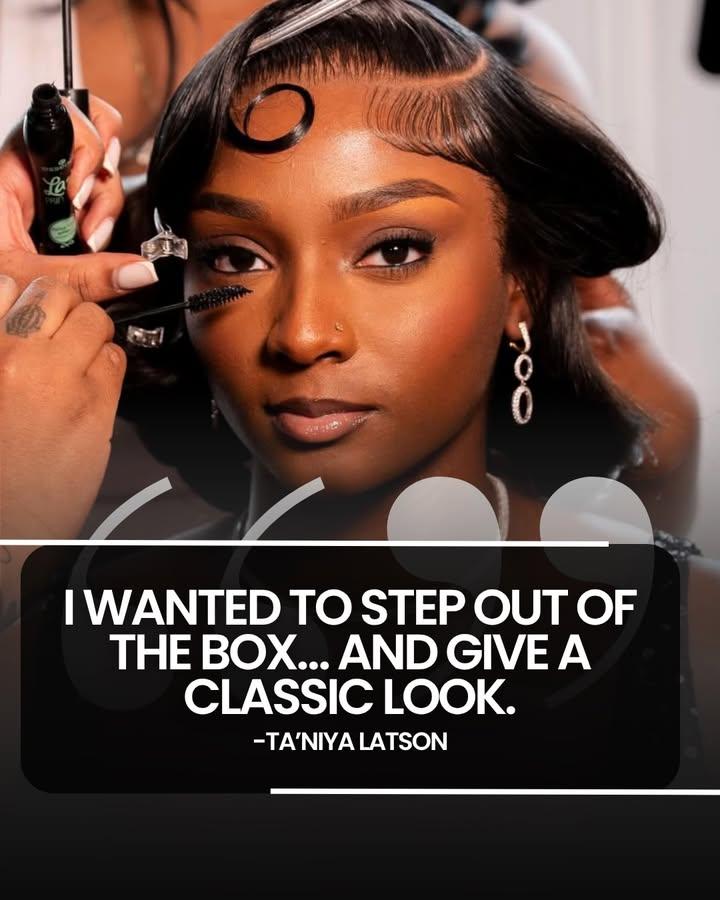
“I wanted to step out of the box and give a classic look,” Latson said — and in that single sentence, she revealed everything about the philosophy behind the aesthetic. This was not a young athlete dressing up. This was a young woman who understood exactly what she wanted to say, found the visual language to say it, and executed it with the kind of confidence that the look itself demanded.
Honoring Black Glamour — The Icons She Channeled
To understand the full weight of what Latson wore, you have to understand the lineage she was deliberately invoking. Every element of her appearance — from the sculpted curl that framed her face with the kind of architectural precision that defined Hollywood’s golden age, to the gloves that spoke directly to the formal elegance of a mid-century red carpet — was a conscious act of homage to a specific and powerful tradition.
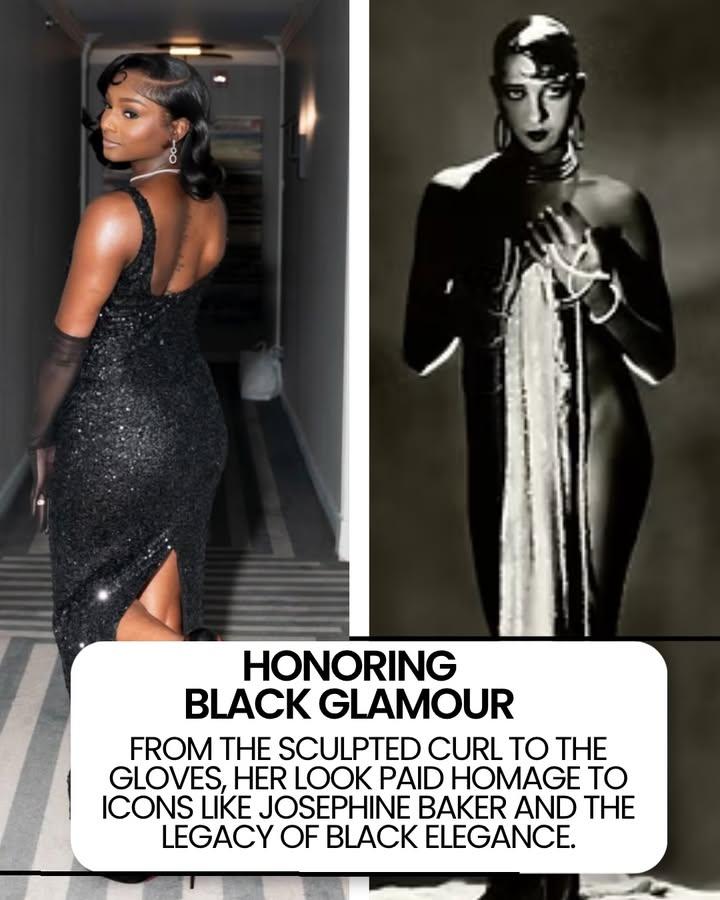
The comparisons to Josephine Baker were not accidental. Baker — the trailblazing entertainer, activist, and style icon who conquered Paris in the 1920s and became one of the most photographed women in the world — represents a particular strand of Black glamour that was radical in its context and timeless in its execution. She dressed not to assimilate but to command — to claim space, to declare beauty on her own terms, and to do it with a theatricality that made the world pay attention.
Latson channeled that same energy. The sculpted curl. The gloves. The vintage silhouette. Each element spoke to a tradition of Black elegance that stretches from the Harlem Renaissance through the golden age of Hollywood — a tradition built by women who understood that how you present yourself is an act of power, and who wielded that power with extraordinary grace.
This was not fashion for fashion’s sake. This was fashion as cultural memory — a young Black woman standing on one of sports’ most visible stages and saying, through her appearance, that the legacy of the women who came before her is not something to be archived and forgotten but something to be worn, celebrated, and carried forward into new spaces.
The Vintage Era — A Deliberate Aesthetic Choice
The specific visual language Latson chose — vintage glamour, rooted in the 1920s through 1950s aesthetic — carries its own significance when examined through the lens of the fashion world.
That era represented a golden age of deliberate, sculptural dressing. Silhouettes were considered. Accessories were architectural. Hair was an art form. The overall effect was one of total presentation — a complete visual statement rather than individual pieces assembled casually. Getting dressed was a performance, and the performance had meaning.
By reaching back into that vocabulary and translating it through a modern moment, Latson did something that the fashion world’s most celebrated stylists and creative directors have always understood instinctively: the most powerful statements are often made by looking backward with fresh eyes. Vintage references don’t signal a retreat from the present — they signal a command of history deep enough to know which moments are worth revisiting and why.
The gloves alone told an entire story. In contemporary fashion, gloves as a deliberate style choice communicate a very specific set of intentions — formality, theater, an awareness of how the body moves through space and how accessories extend that movement. They are not a casual addition. They are a declaration. And on a WNBA Draft night, when every camera in the room was pointed in her direction, the declaration landed with exactly the impact she intended.
Hollywood Glamour Meets Hollywood Destination
And then, in one of those moments that feel too perfectly scripted to be coincidental, the basketball world delivered its own poetic conclusion to the evening.
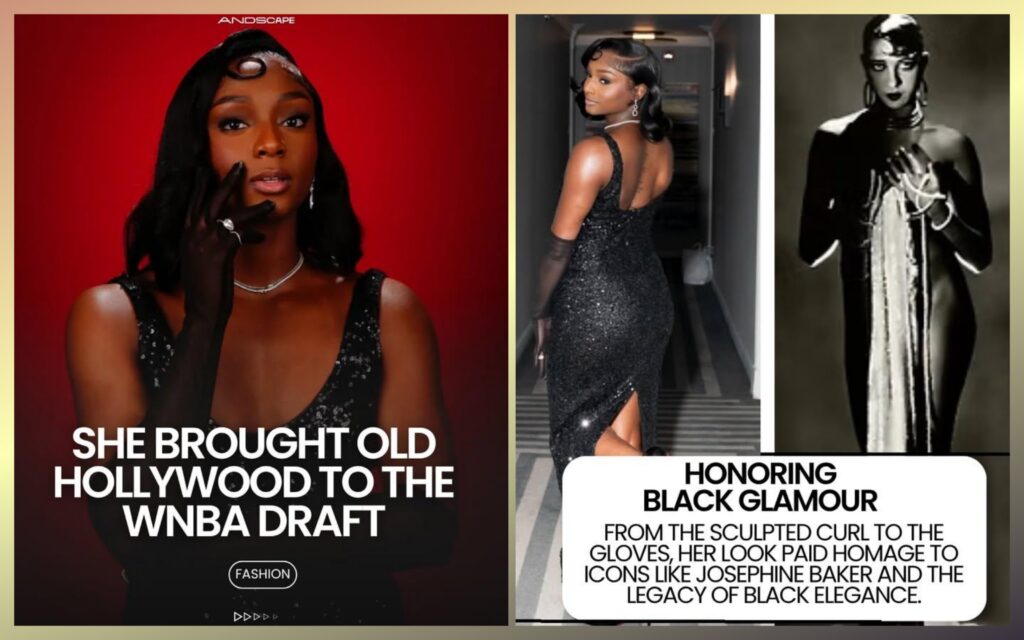
Ta’Niya Latson — dressed in Old Hollywood glamour, channeling the elegance of an era defined by Los Angeles at its most iconic — was drafted by the Los Angeles Sparks.
WATCH 👇 ESPN’s Andscape
The city that invented the aesthetic she wore to honor the night she arrived in. The city of Josephine Baker’s spiritual descendants, of golden age glamour, of Black excellence performing on the world’s most visible stage. The city where the vintage look she wore felt not like a reference from the past but like a prophecy about the future.
“Then landed exactly where the vision pointed — LA.” 🌴
If you believe in the poetry of sports moments — and there are plenty of reasons to — it is very difficult to look at that sequence of events and not feel that something was working exactly as it was supposed to.
Why This Moment Matters Beyond Fashion
The deeper significance of what Latson did on draft night extends beyond style commentary and into the broader cultural conversation about how Black women occupy space on the world’s most visible platforms.
In a sports media landscape that has historically been more comfortable with Black female athletes conforming to pre-existing aesthetic expectations than setting their own, Latson’s choice to arrive in full, unapologetic, historically rooted Black glamour was an act of creative self-determination. She decided what her draft night looked like. She chose the tradition she wanted to honor. She selected the icons whose legacy she wanted to invoke. And she did all of it with the confidence of someone who understands that the way you enter a room tells the room everything it needs to know about who you are.
“She brought Old Hollywood to the WNBA Draft. Honoring Black glamour — from the sculpted curl to the gloves, her look paid homage and channeled icons like Josephine Baker and the legacy of Black elegance.”
That is not a fashion review. That is a cultural statement — one that the WNBA, its growing audience, and the broader world of women’s sports was given the privilege of witnessing on one of the sport’s most celebrated nights.
The Bottom Line
Ta’Niya Latson walked into her WNBA Draft night with a basketball reputation, a chip on her shoulder about her draft position, and a fashion vision rooted in one of the most powerful traditions in the history of Black culture.
She left as a Los Angeles Spark — the city her aesthetic had been pointing toward all along — and as one of the most memorable style moments in the history of the draft.
The sculpted curl. The gloves. The vintage silhouette. The Josephine Baker energy.
Draft night was bigger than basketball. Ta’Niya Latson made sure of it. ✨🖤🌴
About The Author