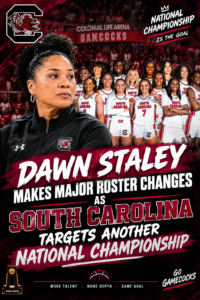
Dawn Staley Isn’t Done Yet: South Carolina Adds French Sharpshooter Justine Loubens to Complete a Historic Roster
Just when the college basketball world thought Dawn Staley had put the finishing touches on her 2026-27 roster, the South Carolina head coach made one more move — and it’s a telling one.
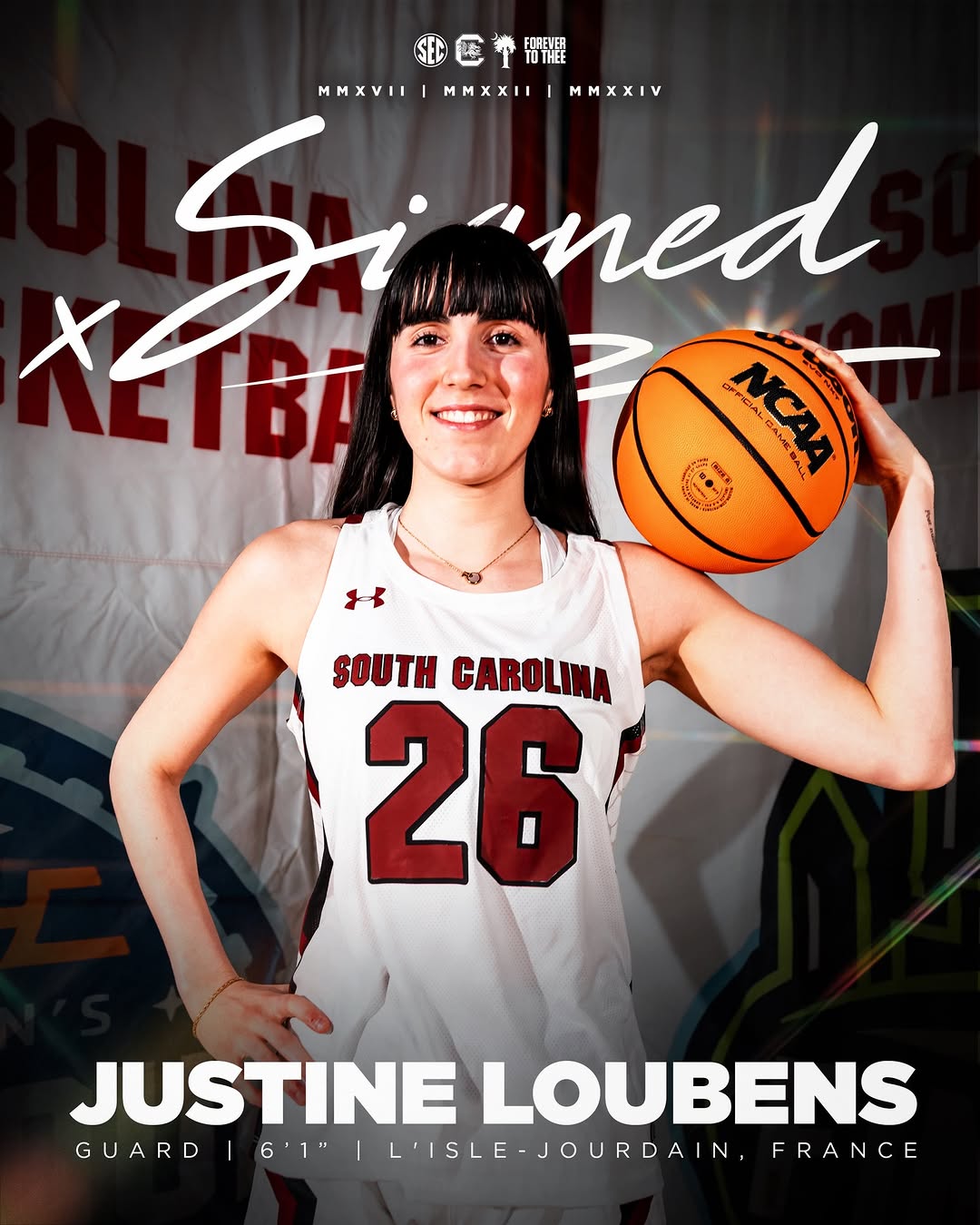
On April 29, the Gamecocks announced the addition of Justine Loubens, a 6-foot-1 guard from France, bringing the roster to 15 players and completing what is shaping up to be one of the most meticulously constructed teams in the history of women’s college basketball. This wasn’t a flashy portal grab or a blue-chip recruiting coup — it was a precise, calculated decision that addressed a specific structural need Staley had identified in her depth chart.
Who Is Justine Loubens?
Loubens arrives not from another college program, but directly from the professional ranks in France, where she most recently suited up for La Roche Vendée Basket Club. In 24 professional games, she averaged 6.5 points and 2.5 rebounds while shooting a remarkable 63.9% from the field — numbers that suggest a player with an advanced offensive skillset and exceptional efficiency for her age. She is not a project. She is a seasoned competitor who has already been forged in a professional environment, one that demands a level of tactical discipline and physical readiness that college programs routinely spend years trying to develop.
“We’re excited to bring Justine into our Gamecock family,” Staley said in a news release. “She is one of the best shooters coming out of France, and her experience playing for her club and national teams have helped prepare her for the SEC battles to come.”
That last line is the operative one. SEC battles. Staley isn’t bringing Loubens in as a long-term developmental project — she’s banking on the professional experience already embedded in the 6-foot-1 guard to translate quickly to the most competitive conference in women’s college basketball.
The France Connection Grows Stronger
Loubens becomes the second French player on the South Carolina roster, joining 6-foot-7 center Alicia Tournebize, who made her own unique arrival in January after starting her career professionally in France. The two are not strangers — Loubens and Tournebize shared a court together representing France in FIBA competition in both 2024 and 2025. That existing chemistry and shared national team background eliminates one of the most underappreciated challenges in roster integration: trust. These two players already know how each other moves, communicates, and competes. That familiarity is a quiet but meaningful advantage as the Gamecocks blend a roster with parts drawn from high school, the transfer portal, and now two different layers of French professional basketball.
Why This Addition Makes Strategic Sense
To fully appreciate the Loubens signing, you have to look at what the Gamecocks’ guard room looked like before she arrived. Staley had Robinson, the No. 6 overall recruit and a five-star prospect, as the only incoming guard in the 2026 class. Behind the veteran core of Tessa Johnson, Agot Makeer, Maddy McDaniel, Ayla McDowell, and newly signed transfer Jordan Lee — a 6-foot guard who spent two seasons at Texas — there was a notable absence of depth. One injury to a key perimeter player, or a foul-trouble situation in a high-stakes March game, and that guard depth could become a genuine vulnerability.
Loubens directly solves that problem. She gives Staley a professional-grade shooter who can absorb minutes behind an already elite guard rotation without the steep learning curve typically associated with freshman arrivals. With the average height of the 2026-27 roster sitting at 6-foot-2 before Loubens joined, she also maintains the Gamecocks’ emphasis on length and versatility at every position on the floor.
Context: The Roster Construction That Got South Carolina Here
The Loubens signing is the fifth piece in Staley’s 2026 class, and each addition has followed a clear design. The process began with four-star forward Kelsi Andrews, a 6-foot-3 prospect ranked No. 30 nationally. Then came Kaeli Wynn, a 6-foot-2 five-star ranked No. 19. Then Jerzy Robinson, the No. 6 overall prospect in the country. And most recently — in what everyone assumed was Staley’s final and most dramatic move — five-star forward Oliviyah Edwards, the No. 3 overall recruit in the 2026 class, who decommitted from Tennessee on April 7, visited South Carolina on April 14, committed nine days later, and signed on April 27.
The Edwards addition was the headline. Loubens is the footnote that actually reveals something more important about how Staley thinks — she doesn’t stop building when the big names are secured. She keeps filling every gap until the roster is complete, balanced, and built to withstand the grind of an SEC regular season and a deep NCAA Tournament run.
The Bigger Picture
This signing reinforces a philosophy that has defined South Carolina’s dynasty — Staley doesn’t just recruit talent, she engineers rosters. Every piece has a function. Every addition addresses a specific need. Loubens isn’t here to be a star. She’s here to make the stars around her more sustainable, giving Staley the flexibility to manage minutes intelligently across a grueling season without ever being caught short at the guard position.
For a program that has reached six straight Final Fours and three consecutive national championship games, that kind of depth-first thinking isn’t an afterthought — it’s precisely the reason the dynasty keeps running.
About The Author