Aaliyah Crump’s Back Story, of Duke’s Offer that Stole her Heart and Made her Snubbed Dawn Staley’s Dynasty
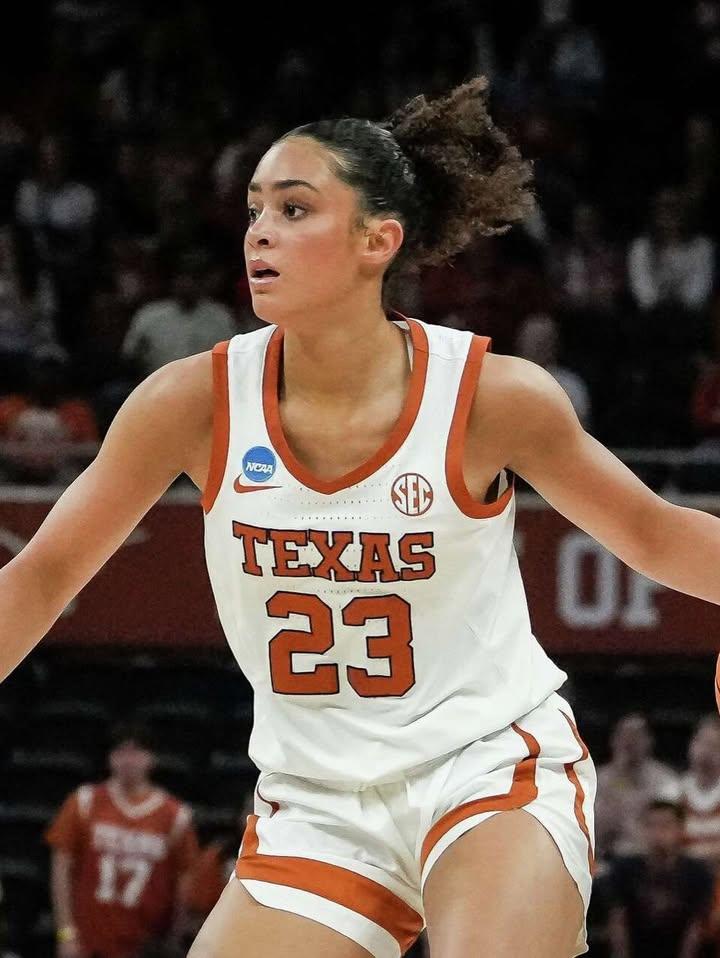
When Aaliyah Crump entered the transfer portal after her freshman season at Texas, the assumption in college basketball circles was straightforward — a five-star talent looking for a fresh start would inevitably gravitate toward the sport’s most dominant program. South Carolina was sitting at or near No. 1 in the country, had just won a national championship, and was rapidly assembling what rivals were openly calling a “super team.” Dawn Staley had landed Crump’s own Texas teammate, Jordan Lee, in the portal. The Gamecocks were recruiting Crump aggressively.
She still said no.
Instead, Crump committed to Duke — choosing Kara Lawson’s Blue Devils over the defending champions and everything South Carolina had to offer. To understand why, you have to understand not just where Crump is going, but where she’s been, and what she’s really looking for in this next chapter.
A Five-Star Prospect with Something to Prove
Aaliyah Crump arrived at Texas in the fall of 2025 carrying enormous expectations. The 6-foot-1 guard from Minnetonka, Minnesota was ranked as the No. 4 overall player in the country in the 2025 class, a five-star prospect who had already won a gold medal with USA Basketball’s U16 national team and led her high school team to a state championship. In high school, she averaged 24.4 points, 8.2 rebounds, 3.7 steals, and 3.3 assists per game. She was supposed to be a cornerstone piece of an already elite Texas program.
The reality of her freshman season was considerably harsher. Crump arrived at Texas as the No. 5 player in the 2025 class and was expected to play a key role, particularly as a three-point shooter. However, she missed 15 games due to a stress fracture in her foot and ended her freshman year averaging under 18 minutes per game. The numbers she did produce — 7.9 points, 2.2 rebounds, and 1.4 assists per game, shooting 41 percent from the floor and 32 percent from three — told the story of a player who never found her full rhythm, hampered by injury and the competitive depth of a Final Four roster that didn’t need her to carry much of a load.
By the time Texas’s season ended and the program began to unravel in the portal, Crump’s decision to enter the transfer market felt inevitable. The program she had committed to was no longer the same one she was leaving.
South Carolina Was the Obvious Choice — On Paper
South Carolina had recruited Crump and her Texas teammate Jordan Lee back in high school, meaning the relationship with the program wasn’t cold. Staley had already proven she could win Crump over in a general sense — the groundwork had been laid. And the program’s credentials speak for themselves. Six consecutive Final Fours. Three straight national championship game appearances. Ten straight SEC regular-season titles. Lee herself had just committed to the Gamecocks, lending the pitch an element of familiarity.
But here is where the analysis gets more nuanced — and where the conventional logic of “go to the best program” begins to break down.
The Star-Studded Problem with South Carolina
The very thing that makes South Carolina the most attractive program in the country is, paradoxically, the thing that likely made it the wrong fit for Aaliyah Crump in this specific moment of her career.
South Carolina returns All-American forwards Joyce Edwards and Chloe Kitts, in addition to Alicia Tournebize and Ashlyn Watkins, plus a loaded incoming freshman class that includes multiple top-30 recruits. The Gamecocks are actively building what South Carolina’s own athletic director described as a “super team.” For a player who just endured a freshman season defined by limited minutes and a foot injury — a player who hasn’t yet had the chance to show the country what she’s fully capable of — walking into that environment carries real risk.
At South Carolina, Crump would have been one elite piece among many. The minutes competition would have been fierce. The pressure to perform immediately in a championship-or-bust environment is unrelenting. And critically, for a player working to rediscover her confidence and establish her identity after an injury-interrupted first year, being part of a 15-deep roster of five-stars doesn’t guarantee the developmental runway she clearly needed.
The Gamecocks’ loss of Crump wasn’t a failure of their pitch — it was a natural consequence of their own success.
What Duke Actually Offered
“For me, choosing Duke University goes far beyond one sentence. The moment I connected with Kara Lawson and her coaching staff, I knew I was exactly where I belonged. Their dedication and vision for the program is truly special, and I couldn’t pass up the opportunity to be a part of it,” Crump said.
That language — exactly where I belonged — is telling. It reflects something that statistics and rankings can’t fully capture: fit. After a year of feeling out of place, under-utilized, and physically limited at Texas, Crump’s priority clearly shifted from joining the most powerful program to joining the right one.
“The connection Coach Lawson and I have built is one of a kind, and I fully trust in her plan for the success of this program,” Crump added. “This journey has led me to a Sisterhood that has consistently made me feel like part of the family. The support and love within it are so strong and unique.”
Lawson herself made the case for why the fit makes sense from both sides. “There is a great familiarity. When you talk about bringing in a player through the portal, I think it’s about connection and fit. There has to be a connection that exists between me and the player. Aaliyah and I have a strong connection already. The fit in the locker room with our team — they know her and she feels like she’s been a part of us for a long time already,” the Duke coach said.
This wasn’t a cold transaction. It was a relationship that had been building for years — dating back to Crump’s original high school recruitment, when she had considered Duke before ultimately choosing Texas. The familiarity between Crump and Lawson pre-dated the portal entirely, which gave Duke a critical head start the moment Crump’s name appeared in the database.
Duke’s Trajectory Makes the Bet Less Risky
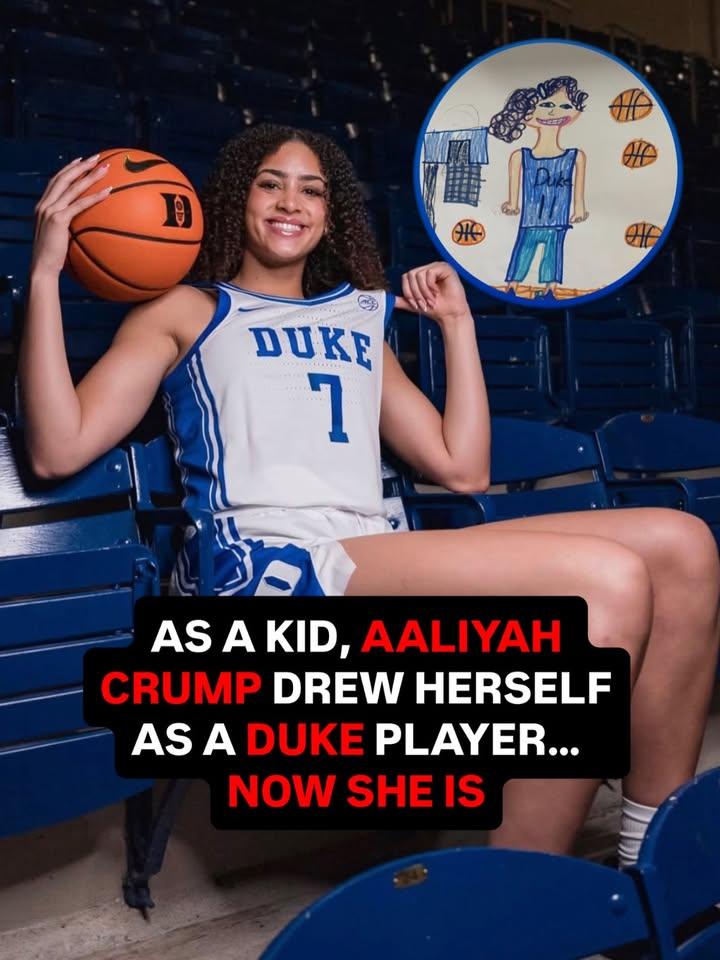
Choosing Duke isn’t a step down in competitive ambition. Duke finished the 2025-26 campaign 27-9 overall and 16-2 in ACC play — a program firmly on the rise under Lawson’s leadership and clearly positioned to compete at the highest levels of the sport. Crump isn’t retreating from competition; she’s joining a program where she’s more likely to be a central figure in that competition rather than a supporting player in someone else’s story.
“I can’t wait to be coached by genuine people who support my growth not only as a basketball player, but as a person as well. I’m looking forward to competing alongside these amazing players, and I know we will have a tremendous amount of success together. This program is on track to make history, and I’m so thankful that I get to call this outstanding university and program home,” Crump said.
That phrase — on track to make history — signals a player who wants to be part of building something, not inheriting it. There’s a meaningful psychological difference between joining a dynasty and helping create one, and Crump’s words suggest she is drawn to the latter.
The Bigger Picture: What This Decision Reveals About Modern Recruiting
Crump’s choice exposes a broader truth about the transfer portal era — one that programs like South Carolina, for all their dominance, have to reckon with. The biggest brand and the deepest roster don’t always win the recruiting battle, because elite players aren’t just seeking championships anymore. They’re seeking roles, development pathways, genuine relationships, and environments where they can rediscover themselves after setbacks.
Crump had a difficult freshman year. She needed to be seen, coached closely, and given space to rebuild her game and her confidence. Duke and Kara Lawson offered that. South Carolina, with its loaded roster and championship-level intensity, was the more complicated sell for a player in that specific situation.
The Gamecocks still landed Jordan Lee — rated the No. 2 portal player in the country — and assembled arguably the most talented roster in women’s college basketball. They didn’t need Crump. But Crump needed something different than what they were offering, and she was clear-eyed enough to recognize it.
In the modern era of women’s college basketball, that kind of self-awareness might be the most underrated recruiting factor of all.
About The Author