She Wanted To Quit Basketball Because of Caitlin Clark — Now She’s Her Teammate, Her Confidante, and Indiana’s Secret Weapon. The Raven Johnson Story Is One For The Ages.
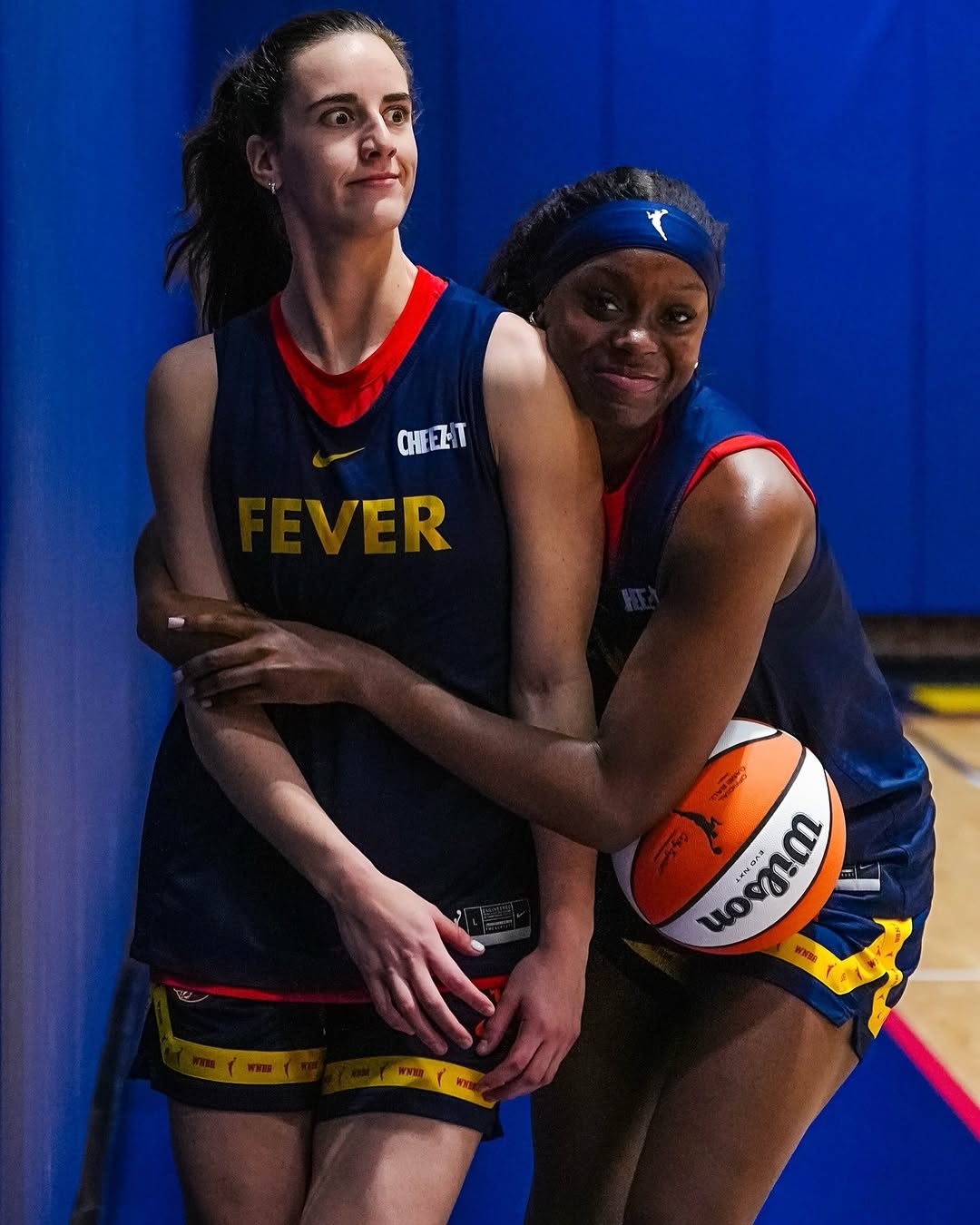
There are redemption arcs in sports. And then there is the story of Raven Johnson and Caitlin Clark — a narrative so improbable, so cinematically layered, that even the most seasoned basketball minds would have struggled to script it with a straight face just two years ago.
Because the truth, the full and uncomfortable truth, is that Caitlin Clark once drove Raven Johnson to the darkest edge of her basketball career. And now — in one of the most stunning reversals professional sports has produced in recent memory — that same woman is her teammate, her mentor, and by all accounts, one of her closest friends.
Wrap your mind around that for a moment.
The Wound That Almost Ended Everything
To understand the magnitude of what is unfolding in Indianapolis right now, you have to go back to 2023. Iowa versus South Carolina. The Final Four. Clark’s Hawkeyes knocked off Johnson’s Gamecocks in a game that would become infamous not just for the scoreline, but for a single gesture — Clark waving Johnson away on the court in a moment that exploded across every corner of social media.
For Clark, it was a competitive moment in the heat of battle. For Johnson, it became something far more sinister — a flashpoint that unleashed a torrent of online cruelty that no young athlete should ever have to endure.
“I got bashed, I got bullied, I got called all these things that I wasn’t,” Johnson revealed while appearing on the “I Am Next” podcast, her words carrying the unmistakable weight of someone who lived through genuine darkness. “I wanted to quit basketball that time.”
Read that again. One of the most gifted defensive players of her generation — a player with the instincts, the hands, and the basketball IQ to be selected No. 10 overall in the WNBA Draft — considered walking away from the sport she loves because of the psychological devastation that followed a single viral moment.
The fact that Raven Johnson did not quit is not merely a feel-good footnote. It is the axis around which this entire story turns. She stayed. She competed. She won a national championship with the Gamecocks under Dawn Staley. She built her game, sharpened her mechanics, and forced the professional basketball world to pay attention. Indiana did pay attention — selecting her 10th overall, valuing precisely the dogged defense and improving shot mechanics that the wave-away moment had so briefly threatened to extinguish.
That resilience is the foundation of everything that follows.
From Rivals to Roommates in Spirit: A Chemistry Nobody Predicted
When Indiana announced Johnson’s selection and the basketball world connected the inevitable dots — Johnson and Clark, same locker room, same jersey, same goals — a legitimate and reasonable question hung in the air. Would the history between them create friction? Would the ghost of that Final Four gesture linger in the hallways of Fever practice facilities?
The answer, delivered with characteristic warmth and disarming honesty by Johnson herself ahead of Indiana’s preseason matchup with the Dallas Wings, was an emphatic and resounding no.
Speaking to The Athletic’s James Boyd, Johnson painted a portrait of Clark that the public — conditioned by years of highlight reels and competitive fire — has rarely been permitted to see.
“Yeah. She’s loving. Like, she’s a goofy person. I think a lot of people don’t really know her outside of basketball. Outside of basketball, she’s funny. Like she has so much personality. I think that’s what people need to know about her, like her personality goes a long way. And she’s a great person.”
The significance of those words coming specifically from Raven Johnson cannot be overstated. This is not a neutral observer offering a character reference. This is the woman who nearly left basketball in part because of the public firestorm that Clark’s gesture ignited — and she is standing before the world, voluntarily, to humanize and celebrate the very person at the center of that storm. That is not something people do performatively. That is something people do when they mean it.
“She helps me through every little thing. Like I could ask a question and she has an answer for it. So I think just playing with somebody like her, it means a lot to me.”
The mentorship dimension embedded in that quote is analytically important. Johnson enters the WNBA as a rookie, but not an ordinary one — she arrives carrying the psychological and emotional weight of a journey that tested her in ways that statistics will never fully capture. Having Clark — a player who has herself weathered extraordinary public scrutiny, criticism, and pressure — available as both a basketball resource and a human anchor is an advantage that no scouting report can quantify.
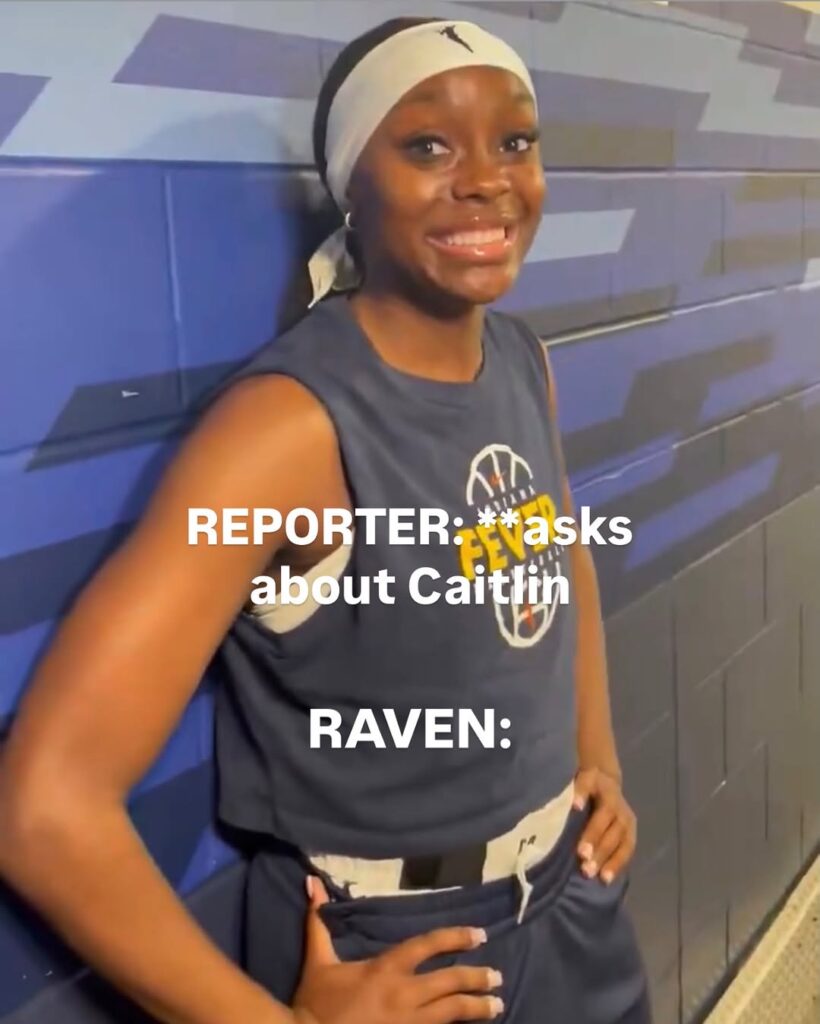
WATCH HERE 👇
The Humor Glue: Why This Friendship Actually Makes Perfect Sense
Beyond the basketball, beyond the narrative drama, what Johnson describes is something simpler and perhaps more durable than any tactical alignment: two genuinely funny people who found each other and clicked.
“She also has that sense of humor where she makes me laugh too. And I’m like, ‘Caitlin, where did that come from?’ So it’s little things like that. But I’m also funny too, so I think that’s where we kind of match together and vibe with each other like that. So I love being around her.”
Johnson further elaborated on their comedic chemistry, noting simply: “I think that’s where we kinda match together and we vibe with each other.”
In locker room culture, chemistry built on genuine laughter and mutual personality is frequently more binding than chemistry built on shared competitive goals alone. Teams that genuinely enjoy each other — that can cut jokes under pressure, that can laugh after a hard practice — tend to be teams that trust each other when the games actually matter. The fact that Johnson and Clark appear to have found that connection organically, without the forced camaraderie of a team-building exercise, is a detail Indiana Fever fans should hold onto tightly.
The Past, Buried. The Future, Burning.
What makes Johnson’s perspective so analytically compelling is its completeness. She is not ignoring the history. She is not pretending the pain didn’t happen. She is consciously and deliberately choosing to move forward — and she articulated that choice with a clarity that speaks to remarkable emotional maturity for a player her age.
“I put the past in the past,” Johnson said. “When I put the Indiana Fever jersey on, I said, ‘Let’s try to win a championship together.'”
That single statement reframes the entire preceding narrative. The wave-away. The bullying. The near-retirement. The national title. The draft. All of it — every painful and triumphant chapter — has been folded into fuel for a singular, unified purpose. Win a championship. Together.
The symmetry is almost poetic. Clark and Johnson first shared a floor as opponents in the Final Four, competing for the right to advance toward a championship. Now they share a floor as teammates, aligned in pursuit of the championship itself. Their basketball journeys, inextricably linked from the beginning as the article rightly notes, have completed a full and extraordinary circle.
What This Means For Indiana
Analytically, the Fever have constructed something genuinely fascinating. Clark’s offensive gravity — her ability to draw defensive attention and create for teammates — is maximized by pairing her with a player like Johnson, whose defensive disruption and improving offensive game make her difficult to ignore on the other end. They are complementary in the most structurally sound sense of the word.
But more than the X’s and O’s, Indiana now possesses something rarer and harder to manufacture: a locker room with a story. A team with emotional stakes. A partnership forged not in comfort but in adversity, tested before it even officially began, and emerging stronger for it.
The road from that Final Four wave-away to this Fever training camp is one of the most human, complicated, and ultimately uplifting journeys women’s basketball has ever produced. And it is only just beginning.
Raven Johnson wanted to quit. She didn’t. And now the entire league will spend the next season being reminded — loudly and repeatedly — exactly why that decision matters. 🐓🏀
About The Author