Kelsi Andrews and Kaeli Wynn updates Injuries, How They Feel about The Program’s Loaded Roster And Plans For When They’ll Arrive on campus
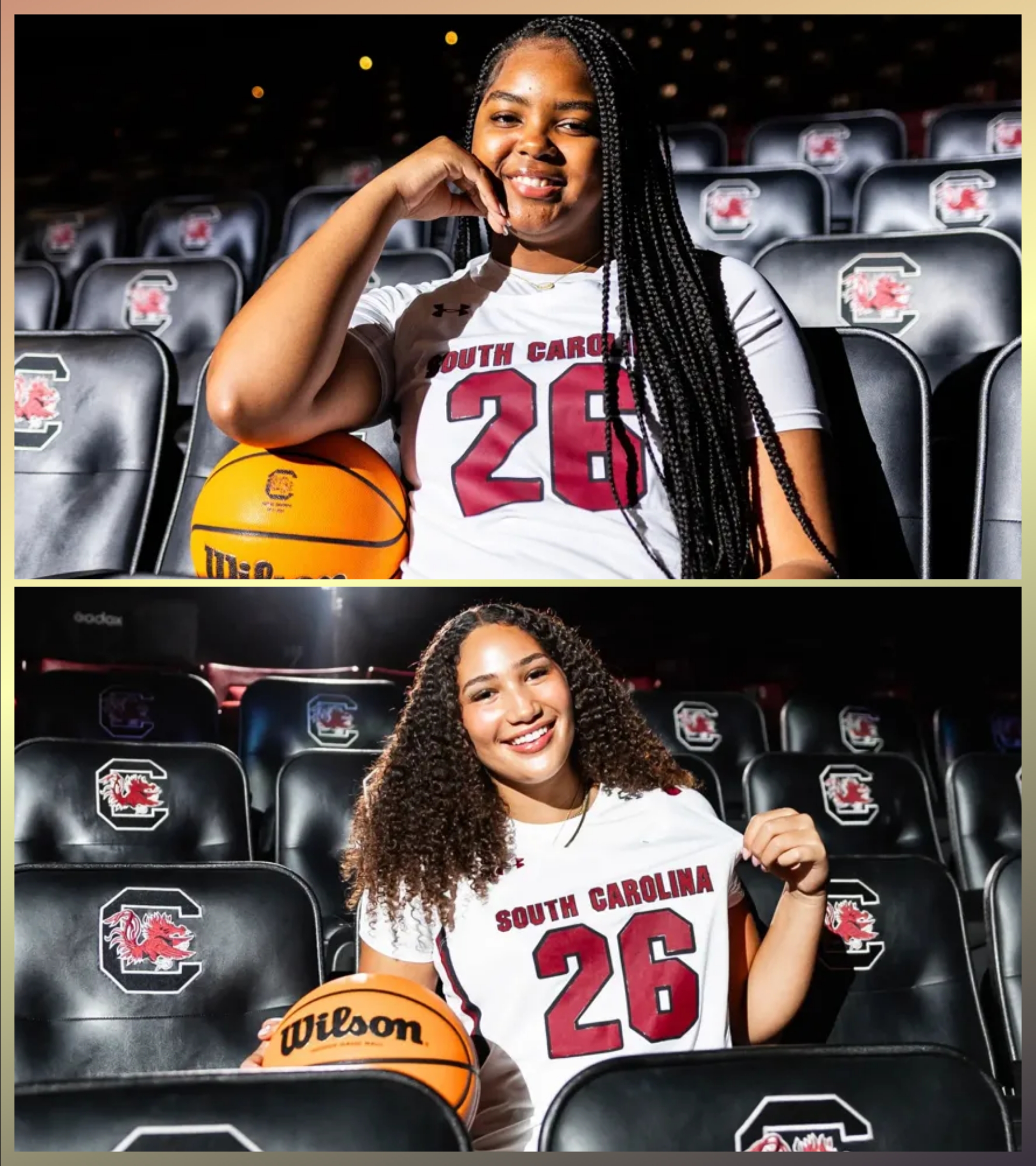
Dawn Staley has never built a dynasty by accident. Every recruit, every decision, every cultural cornerstone of the South Carolina women’s basketball program has been deliberate, calculated, and executed with the kind of organizational precision that has made the Gamecocks the most feared program in the country. So when Staley went out and locked in Kaeli Wynn and Kelsi Andrews as the foundational anchors of her 2026-27 recruiting class — two players arriving in Columbia carrying between them a combined injury resume that reads like a medical textbook — you can be absolutely certain she knew exactly what she was doing.
The question the rest of the country is quietly asking: did she get this one right?
The Culture First, Minutes Second Philosophy That Makes Columbia Different
Before unpacking the medical realities and the basketball analytics surrounding these two recruits, it is essential to understand the ideological framework into which they are walking. South Carolina under Staley does not operate on the currency of individual stardom. The program runs on something rarer and more powerful — collective accountability.
“Everybody plays. Everybody gets their chance. There is no star. The star is the team.”
That is not a motivational poster slogan in Columbia. It is a lived, enforced, championship-proven operating system. And critically, both Wynn and Andrews arrived already fluent in that language — not reluctantly, but enthusiastically.
“I’m just going to give everything I have to this team,” Andrews stated plainly. “Regardless of how many minutes I play.”
That is precisely the disposition Staley requires. Not entitlement. Not a minutes guarantee. Not a starring role negotiated before the first practice whistle blows. Andrews walked into one of the most celebrated programs in women’s college basketball history and, rather than demanding the spotlight, surrendered to the process. For a program that has produced A’ja Wilson, Aliyah Boston, and Raven Johnson through that very same process, that disposition is arguably the most important recruiting metric of all.
Kaeli Wynn: A Lights-Out Shooter Who Cannot Yet Step On A Court
Here is where the analysis becomes genuinely complicated — and where Staley’s calculated gamble reveals its most precarious dimension.
Kaeli Wynn is, by every available account from those closest to her, an exceptional basketball talent. Her mother Jody Wynn — herself a Division I head coach with stints at Long Beach State and Washington, and a player at Southern Cal — doesn’t parse words when describing her daughter’s gifts.
“Kaeli is highly competitive. She wants to win in everything she does. She can play all over the court,” Jody said, before identifying the weapon that most excites Gamecock fans searching for perimeter shooting solutions. “I would have to say her superpower would be her shooting ability — she’s a lights-out 3-point shooter.”
In a South Carolina offense that perpetually hungers for reliable three-point marksmanship, those words should register as genuinely significant. Wynn’s shooting ability addresses a structural need.
But here is the sobering counter-weight to all of that excitement: Kaeli Wynn has not played competitive basketball since January 2025. A knee injury cut her junior season short. She re-injured the same knee in April 2025. Then, in December, she dislocated her kneecap — erasing any possibility of playing her senior season entirely. She is currently limited to stationary ball-handling and shooting, spending her days with a physical therapist rather than in a gym, with no definitive recovery timeline publicly established.
She is set to graduate May 30 and enroll at South Carolina by mid-June. Which means she arrives in Columbia carrying the genetic basketball blueprint of two coach parents, the shooting touch her mother describes in glowing terms, innate leadership skills — and a knee that has been catastrophically tested three separate times in the span of roughly 18 months.
Jody Wynn, to her credit, addresses the reality with the unsentimental clarity of someone who has spent a lifetime in basketball:
“She understands it’s not always warm and fuzzy, there’s sweat and tears and tough days and hard times.”
What Jody is also quietly communicating is that her daughter’s psychological foundation is as formidable as her physical talent. Kaeli Wynn has reportedly not allowed the accumulating injury setbacks to diminish her competitive fire or her leadership instincts.
“I would say she isn’t afraid to speak up. She’s very vocal on the court,” Jody said. “I would say she has innate leadership skills.”
That leadership quality — vocally, relationally, culturally — may be Wynn’s most immediate contribution to South Carolina regardless of when she steps back onto a court in a meaningful capacity. In a program where culture is everything, a player who arrives with the DNA of two college coaches and a lifelong education in competitive basketball environments is never truly without value.
“I think she’s just so excited to be surrounded by excellence in every aspect of the program that it will hold her accountable, living out the tradition of excellence from that program,” Jody said. “Year-in and year-out, South Carolina does things the right way.”
Kelsi Andrews: The Post Weapon South Carolina Desperately Needs — If Her Body Holds
If Wynn represents the perimeter solution, Kelsi Andrews arrives as the answer to what is perhaps South Carolina’s most pressing personnel puzzle heading into 2026-27. The Gamecocks lost Madina Okot, and while Chloe Kitts and Ashlyn Watkins are expected to return, both are recovering from injuries of their own. Outside of 6-foot-7 Alicia Tournebize — projected again as a bench contributor — South Carolina currently lacks a dominant post presence.
Andrews, according to her head coach Frank Oliver Jr., is built to fill that void in the most versatile and dangerous way possible.
“She will be a great addition to an already storied program with a Hall-of-Fame coach,” Oliver said, before painting a portrait of a post player who refuses to be contained by traditional limitations. “She’s a very skilled post player, great footwork, she can shoot the ball, she can shoot from 15 feet, she can shoot the 3 from NBA range. Other teams can’t extend their defense and can’t sag off of her because she can hit that open 3.”
A post player with genuine NBA-range three-point range is not a detail — it is a structural weapon that warps entire defensive game plans. The spacing implications for South Carolina’s offense, if Andrews arrives healthy and in rhythm, are significant.
Here, however, is the clinical reality check that tempers enthusiasm: Andrews tore her meniscus and additional cartilage in October 2025. It is also not her first rodeo with devastating injury — she has suffered two previous ACL tears in her playing career. By the time this article was written, she was candidly self-assessing her own readiness.
“I think I’m about 75 percent,” Andrews admitted. “I’m still working on a few things, focusing on my conditioning and strengthening my knee.”
Seventy-five percent. Arriving at the most demanding women’s college basketball program in the nation at three-quarters capacity, after two ACL tears and a meniscus surgery, represents an enormous physical and psychological mountain to climb. The analytical concern here is not abstract — it is concrete and immediate. South Carolina needs post production from Day 1. Andrews, by her own honest accounting, is not yet at full capacity to provide it.
What she does possess, however, is the experiential credibility that money cannot buy. Oliver contextualized it with precision:
“She understands winning culture — she won a national championship her junior year, and had a double-double, as always,” Oliver noted. “I think she understands that being in a winning culture … it’s the same thing here. You play with multiple McDonald’s All-Americans here. Somebody’s going to Connecticut, somebody’s going to Stanford, those are her teammates. She’s used to the concept of having to earn your keep, so to speak.”
The championship pedigree. The double-double consistency. The exposure to elite competition at every level of her development. Andrews doesn’t arrive in Columbia as someone who needs to be taught what winning looks like — she arrives as someone who has already lived it, and who is determined to pursue it again. She said as much herself, laying out her priorities for her time at South Carolina with disarming clarity:
“Get to know my teammates more, even though I really have a close bond with them now. Getting to know the FAMs,” Andrews said. “I’m very excited, ready to get this thing rolling. I’m ready to win the championship — that will be our focus.”
She is also, almost endearingly, still in the last grind of high school — studying for exams so “she can finish that 4.0” before making the jump to college. A 4.0 student. A national champion. A post player with NBA-range shooting. Coming off a meniscus surgery. Heading to Dawn Staley’s South Carolina.
You could not write this if you tried.
The Bigger Analytical Picture: Genius or Gamble?
Viewed collectively, what Dawn Staley has assembled in Wynn and Andrews is either the foundation of another championship machine or the setup for a frustrating season of “what could have been” — and the determining factor is entirely out of anyone’s control.
Both players bring exactly the skills South Carolina needs. Wynn’s shooting addresses a chronic perimeter deficiency. Andrews’ post versatility fills the Okot-shaped void. Both arrive with championship experience and cultural fluency in what it means to compete within a winning program. Both have bought into Staley’s collective-over-individual philosophy before drawing a single breath of Columbia air.
And both are injured.
That is the irreducible truth at the center of this analysis. The best case scenario — both recover fully, arrive in elite physical condition by fall, and contribute meaningfully to a Gamecock team already loaded with Kitts, Watkins, Tournebize and the rest of Staley’s collection of elite talent — is tantalizing beyond measure. The floor scenario is considerably more sobering.
What is not in doubt is the character of the players Staley has recruited. Two young women who have had their bodies fail them repeatedly, who have stared at the possibility of careers unraveling, and who have responded not with bitterness or retreat but with renewed hunger and an undiminished will to compete. In a program built on precisely that kind of resilience — where the culture demands your best even when your best is being reassembled from the ground up — Kaeli Wynn and Kelsi Andrews may fit more perfectly than any recruiting ranking could ever capture.
Dawn Staley knew exactly what she was doing. She almost always does.
Now we wait to see if the bodies cooperate. 🐓
About The Author