He Was There Before the Titles, Before the Sellouts, Before Anyone Believed — And He’s Still There Now
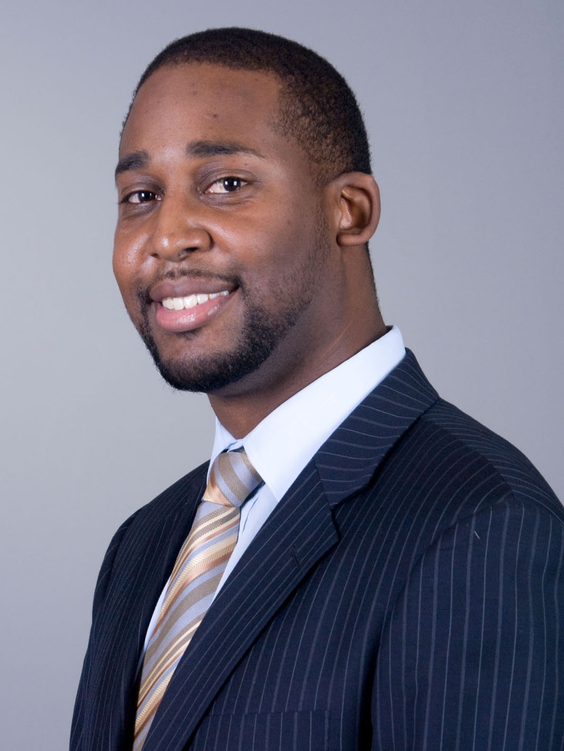
When South Carolina women’s basketball fans talk about the program’s rise, the names that come up are predictable ones. Dawn Staley. A’ja Wilson. Aliyah Boston. The players, the coaches, the championships. What rarely gets said — what rarely gets acknowledged in the way it deserves — is that some of the most important people in any dynasty are the ones who were there before it was a dynasty. The ones who stayed when staying didn’t make sense on paper.
Freddy Ready has been at South Carolina longer than Colonial Life Arena has existed. Longer than anyone currently on the roster has been alive. He has watched this program go from a few hundred people in the stands to a national powerhouse that fills arenas across the country, and he has never once thought about leaving.
That is the story worth telling.
From Blown Knees to a Career Built on Loyalty
Ready’s road to South Carolina women’s basketball was not linear, and it certainly wasn’t planned. A native of Aiken, South Carolina, he arrived in Columbia as a wide receiver recruited by the legendary Lou Holtz. When blown-out knees ended his football career prematurely, Ready pivoted — first toward athletic training, then away from it with characteristic directness.
“I was like, ‘You know what? I don’t want to deal with people’s feet.’ Especially all those football players,” Ready said. “I was like, I wanna be on the business side.”
He shifted to a sports management major, worked in the front office with the Gamecock Club, and waited for a graduate assistant opportunity to materialize on Holtz’s staff. It never did. What came instead was a conversation with then-women’s basketball coach Susan Walvius, who noticed his work on recruiting pieces and mailouts for the football program.
“Susan saw what I was doing with football, as far as recruiting pieces and mailouts, and she asked, ‘Hey, do you want to do your internship with us?'” Ready recalled.
He said yes. Twenty-four years later, he hasn’t left.
The Transition That Could Have Ended Everything
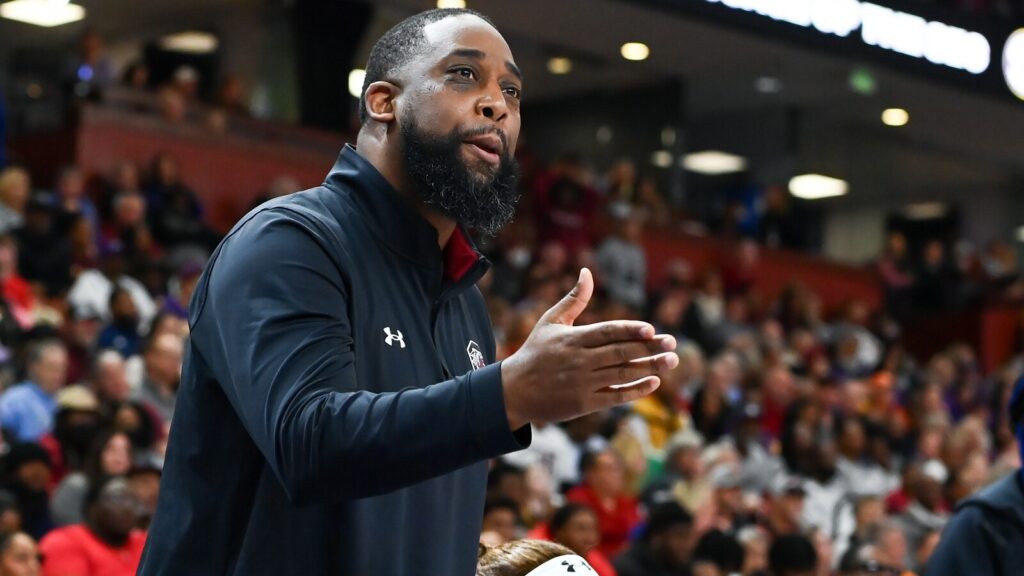
The most consequential moment in Freddy Ready’s career at South Carolina wasn’t a championship game or a recruiting coup. It was a quiet, uncertain spring in 2008 when Susan Walvius stepped down and, weeks later, Temple head coach Dawn Staley was introduced as the program’s seventh head coach by then-Athletics Director Eric Hyman.
For Ready, the announcement carried more anxiety than celebration. He was a graduate student in the final year of his master’s degree in Sports and Entertainment Management, and suddenly everything around him was changing — new administration, new staff, new uncertainty about whether he’d be kept on or quietly pushed out.
“I mean, it was just all new. New AD, everything was just new in the whole program,” Ready said. “It was the uncertainty of a lot of different things.”
What saved him wasn’t luck alone — it was preparation meeting opportunity. Staley’s other candidate for his position had complications getting into the school, and Ready had a window to demonstrate his value to an incoming head coach who didn’t know him.
“So, my thought process was just to do what I do. Show them what I can do,” Ready said. “I had a little window to showcase my value to the program, so I made myself indispensable.”
That phrase — made myself indispensable — is the operative one. In a profession where job security is perpetually tied to wins, losses, and staff turnover, Ready identified something more durable: being the person the program cannot function without. Not because of title, not because of tenure, but because of the breadth and quality of the work done every single day.
Defining a Role That Barely Existed
In 2010, Staley promoted Ready from graduate assistant to Director of Player Development — a title that, at the time, was essentially new to women’s college basketball. The position carried prestige, but Ready understood immediately that its real definition would be written in practice, not on paper.
“With my position, it’s kind of misleading. You can do it on the basketball side, or you can do it on the developmental side outside of basketball, and that’s where mine differentiates,” Ready explained. “Some schools, they allow that person to be on the court. Mine can be on the academic, personal development, and social development. So, I had to figure that part out too.”
What Ready figured out over the next decade and a half was a philosophy that goes far beyond basketball. His players are not just athletes in his eyes — they are young people whose parents have entrusted their safety, wellbeing, and growth to the program he helps run.
“When they come here, their parents entrust us with their kids,” Ready said. “They entrust us with their safety, they run out of gas on the side of the road, myself or Ari [Moore] will be the first person they call. We’re their parents away from their parents or their guardians away from their guardians.”
That is not a job description. That is a life commitment — and it is one Ready has honored without hesitation for over two decades.
What the Players See
The players who have passed through South Carolina’s program don’t talk about Freddy Ready in professional terms. They talk about him the way you talk about family.
Former Gamecock La’Keshia Sutton — Staley’s very first recruit at South Carolina — was there when the program was still earning credibility, when crowds were thin and expectations were modest. She watched Ready during those lean years and understood immediately what kind of person she was dealing with.
“It speaks volumes to his loyalty, his belief in Coach Staley,” Sutton told GamecockCentral. “He was there in the beginning, like I was, when it wasn’t, when it wasn’t popular to be South Carolina. When we had a few hundred people in the crowd. He never wavered, he never changed.”
The trust Sutton developed with Ready during her playing days has never expired. Decades removed from her time in Columbia, she still picks up the phone when he calls — and he still picks up when she does.
“Coach Freddy’s always like, ‘You know, the college game needs you,'” Sutton said. “And I’m like, ‘I understand, coach, I really enjoy where I’m at right now.’ But he’s just someone that when you call, he’ll pick up the phone, no matter what time, no matter where.”
Current player Ayla McDowell reflects a newer generation’s experience of Ready’s presence — one shaped by a program that has already won multiple national championships and operates at the highest level of women’s collegiate basketball. Yet the essence of what she describes is identical to what Sutton described from two decades earlier.
“They’ve been here a while to know how everything works around here,” McDowell said. “Anything you need, just go to them and ask for it. They’re always willing to help, and they’ll always have people around them who are also willing to help you.”
The Philosophy Behind the Work
What separates Ready from someone simply doing his job well is the clarity with which he understands why the work matters. The championships, the Final Fours, the sold-out arenas — these are the visible products of an infrastructure that most people never see. Ready is part of that infrastructure, and he knows it.
“Whatever is needed, we do. There’s no job too big or too small for us, whether that’s helping someone move in or staying after, whatever it is,” Ready said. “If I see Coach Staley out there ready to wipe the floor, that shows me I can do it as well.”
The team-wide commitment to collective purpose radiates through every aspect of the support staff’s operations, and Ready is candid about what drives it.
“I help Ari with things; she helps me with things. We all work to the common goal of making Coach’s job easier,” Ready said. “The main goal is to win the national championship, so, by any means necessary, let’s get it.”
But the national championships, as extraordinary as they are, are not ultimately what has kept Freddy Ready in Columbia for over two decades. The answer to that question lives somewhere quieter and more personal.
“That ride, it helps me fulfill my dream of helping kids be the first to graduate in their families,” Ready said. “A camper coming to USC as a Little Gamecock camper, being recruited, then seeing them graduate at USC. That keeps me around. Just seeing those kids graduate and become successful business people. It’s just that loyalty and that family, it’s kind of hard to get away from.”
A Program Seen From Every Angle
Ready has seen South Carolina women’s basketball from a vantage point that no highlight reel can capture. He was there for the first win in Knoxville against Pat Summitt in 2012 — the game that announced South Carolina’s arrival as a serious program. He was there when the first SEC titles came in 2014 and 2015, when the first national championship arrived in 2017, when the undefeated season of 2024 reached its perfect conclusion, and when national title defeats in 2025 and 2026 forced honest conversations about what still needed to grow.
Through every peak and valley, through roster turnovers and coaching adjustments and the relentless evolution of women’s basketball as a national product, one thing in Columbia has remained constant.
Freddy Ready, doing what needs to be done, for whoever needs it done.
Maybe one day he’ll be ready to move on. Based on everything he’s built and everyone he’s helped along the way, Columbia will never really be ready to let him go.
About The Author