Joyce Edwards Just Completed One of the Most Dominant Two-Week Stretches in USA Basketball History
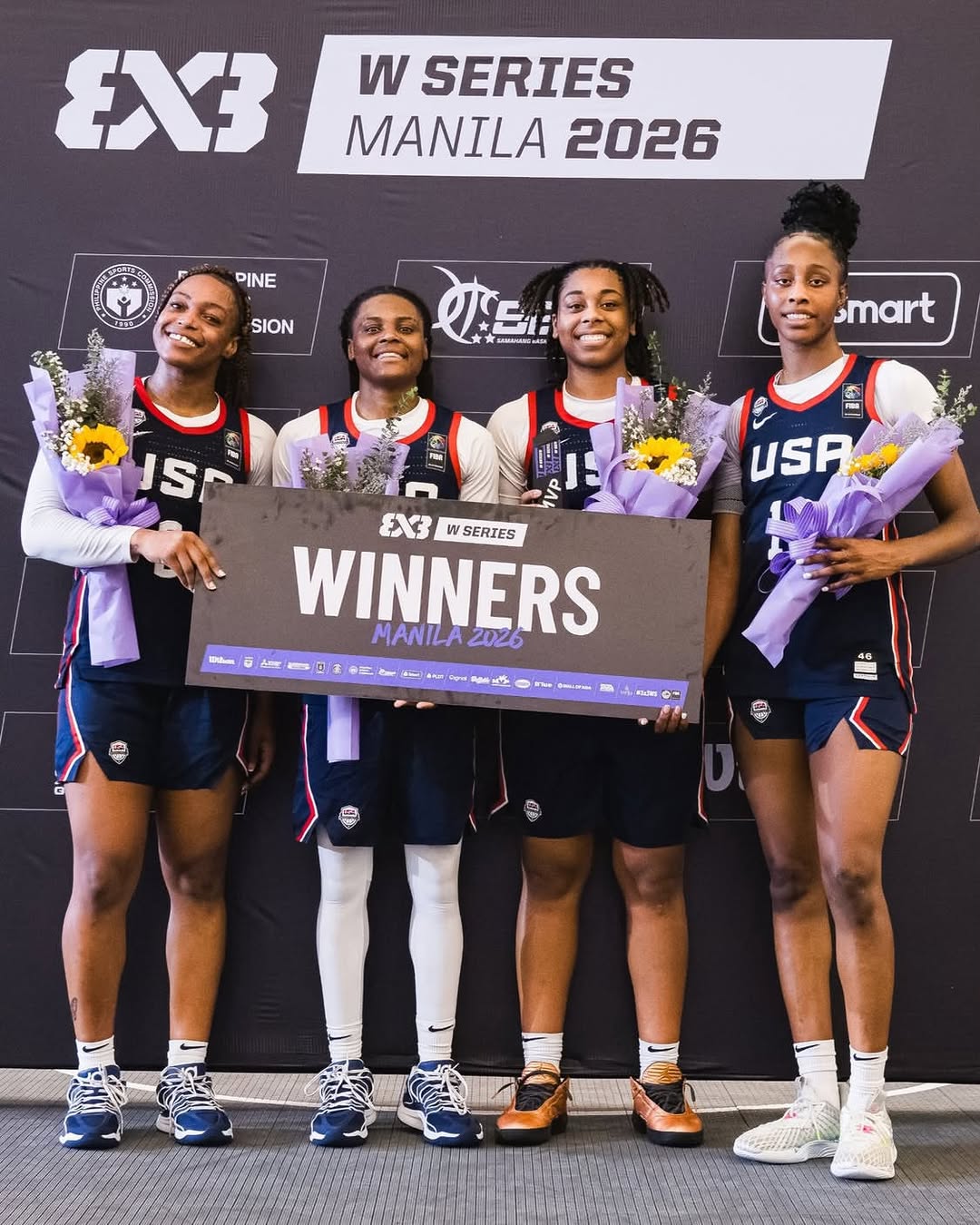
The numbers were already remarkable before she landed in Manila. By the time the final buzzer sounded on an overtime championship victory against Lithuania, the statistical case for Joyce Edwards as the most complete player on the most dominant 3×3 team in the world had been assembled game by game, tournament by tournament, across two countries in eight days.
The former South Carolina sophomore helped lead Team USA to back-to-back titles at the FIBA 3×3 Women’s Series stops in Chengdu, China and Manila, Philippines — making the United States the first women’s team in the history of the circuit to win consecutive stops. Edwards was there for every minute of it, and her contributions went far beyond the scoring column.
The Roster and the Context
Edwards was joined on the USA roster by Oklahoma’s Sahara Williams and LSU players Mikaylah Williams and MiLaysia Fulwiley — a four-player unit that, across two full tournaments separated by only days of rest and travel, went undefeated in every game that counted. Fulwiley missed the first day of action in Chengdu due to travel delays, meaning the USA navigated their opening pool games essentially shorthanded before getting to full strength for the knockout rounds.
That detail matters analytically: when Fulwiley finally arrived, this team didn’t just become whole — they became nearly unstoppable. The combination of Edwards’ interior dominance, Fulwiley’s disruptive playmaking, and Mikaylah Williams’ elite scoring created a three-headed challenge that no opponent across either tournament solved.
This was not entirely new territory for Edwards and Fulwiley as a pairing. The two were teammates on USA Basketball’s 3×3 Nations League team last summer in Punta Arenas, Chile, going 14-2 and winning the tournament title. That event was Edwards’ first exposure to the 3×3 international format — and yet she performed as though she had been playing it for years.
Her 5-on-5 international résumé adds critical context to why the adjustment was so seamless. Edwards has won three gold medals in traditional basketball: the 2023 U19 World Cup (with South Carolina future teammate Chloe Kitts), the 2024 U18 AmeriCup, and the 2025 AmeriCup. She has been winning in international competition from the moment she became eligible for it. The 3×3 format simply added another arena — and another set of gold medals.
Chengdu: Establishing the Standard
The USA’s path through Chengdu was everything a first stop of the season should be — competitive, revealing, and ultimately decisive.
The opening pool game against Brazil set the tone. Edwards contributed 8 points, 3 rebounds, an assist, and a block in a 21-5 demolition that sent an immediate message to the rest of the field. The only blemish of the entire Chengdu stop came in a 16-15 loss to Australia in pool play — a game where Edwards still produced 7 points and 4 rebounds and the USA demonstrated that they could lose a game cleanly without losing competitive footing.
The knockout rounds showed what this team is made of in the moments that define tournaments. The quarterfinal against Amsterdam was won 20-18, with Edwards delivering 7 points and a remarkable 9 rebounds — a rebounding performance in a 3×3 format that defies casual explanation. In the semifinal against Poland, a 21-20 thriller that came to the final possession, Edwards provided 7 rebounds and a block while the offense found what it needed to survive. In the championship against Germany, she closed the tournament with 7 points, 3 rebounds, and a block in a 20-18 victory that required composure and execution under the highest pressure the circuit could offer.
Mikaylah Williams earned MVP honors in Chengdu, leading the team in scoring and player value rating. Edwards ranked second in scoring, third in rebounding, and third in player value rating — an across-the-board elite contribution profile that tells the story of a player who impacts every dimension of a game, not just the one that earns award votes.
Manila: History Made, Game by Game
The Manila stop required more. The USA entered through the qualifying draw — an additional obstacle that forced them to win more games across two days than other seeded teams faced. They won them all.
In qualifying: a 21-5 demolition of Warsaw, where Edwards posted 7 points. A 21-12 win over Manila with 9 more. The USA then carried that momentum into the main draw without pause.
In pool play: a 21-12 win over Germany with Edwards contributing 6 points, a rebound, an assist, and a block. And then the signature individual performance of the entire two-week run — 12 points, 9 rebounds, an assist, and a block in a 21-10 destruction of the host Philippines. In a format where the game ends at 21, scoring 12 of your team’s points while pulling down 9 rebounds is not just statistically dominant — it is game-changing in the most literal sense.
The knockout rounds told the rest of the story. A 22-7 quarterfinal humbling of Ulaanbaatar, the tournament’s top seed, with Edwards adding 6 points, 4 rebounds, and 2 assists. A 21-16 semifinal win over Neftchi SOCAR, where Edwards contributed across multiple categories including a key block. And then the final — a 17-15 overtime victory over Lithuania, the hardest-fought game of the entire Manila stop, where Edwards delivered 6 points and 6 rebounds when the margin between winning and losing had never been thinner.
Williams claimed MVP honors in Manila as well, becoming the first player to win consecutive stop MVP awards in the 2026 series. But the MVP award measures individual scoring production. What Edwards provided across the entire Manila bracket — rebounding, interior defense, physicality, and the kind of sustained output that doesn’t fluctuate based on game flow — is the foundation that enabled everything Williams and the rest of the roster built on top of it.
What the Complete Picture Shows
Laid out in full, the box score of Joyce Edwards’ two-week international performance reads like a scouting report for a player several years ahead of her timeline:
Across Chengdu and Manila combined, Edwards delivered dominant performances in every format the competition offered — pool play, qualifying draws, quarterfinals, semifinals, and championship games. She elevated in knockout rounds, was a rebounding force that no opponent managed to contain, and provided the defensive presence that protected leads when opponents made runs.
The USA will not compete at the next Women’s Series stop in Shanghai on May 16-17. USA Basketball has not yet announced which future stops they will enter or who will represent the team. That pause creates an interesting dynamic — a team that has just accomplished something historically unprecedented in back-to-back titles now disappears from the circuit temporarily while the rest of the international field absorbs what just happened and tries to prepare for a rematch.
The FIBA 3×3 World Cup looms on the horizon as the ultimate stage, and based on everything Joyce Edwards has shown across two continents in the last eight days, whoever has to face her there should start preparing now.
The Gamecock sophomore doesn’t have an off mode. The international 3×3 community has officially been informed.
About The Author