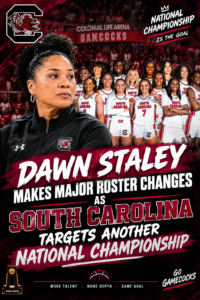
Loyalty or Overreach? Dawn Staley’s Defense of Laeticia Amihere Ignites a Larger Conversation About WNBA Media Coverage
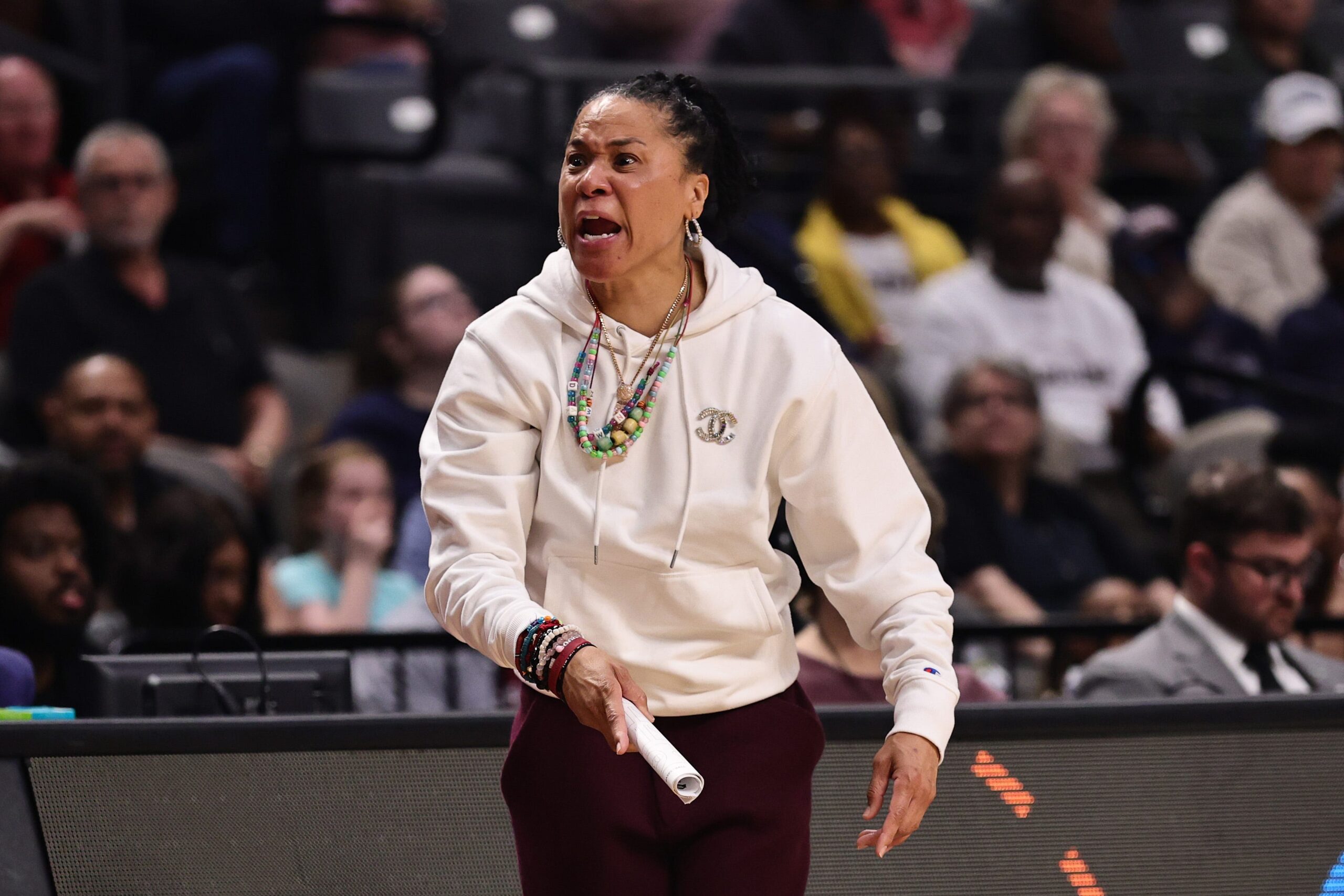
A routine roster transaction became a flashpoint — and the backlash raises uncomfortable questions about criticism, accountability, and the limits of advocacy
Dawn Staley is many things — a Hall of Famer, a three-time national champion, one of the most respected figures in women’s basketball. She is also, without question, one of the most fiercely loyal coaches in the sport. When her players leave Columbia, they don’t leave her circle. She has made that abundantly clear over the years. But loyalty, even the most well-intentioned kind, has its limits — and this week, Staley may have found them.
What started as a straightforward roster transaction turned into one of the more revealing social media flashpoints of the 2026 WNBA season’s opening days. At its center: a three-sentence post from a Bay Area reporter, a protective reaction from a college coach, and a broader debate about how the WNBA is — and should be — covered by the media.
The Roster Move That Started It All
On Thursday, the final day for WNBA rosters to be finalized before Friday’s season tip-off, the Golden State Valkyries waived Kate Martin, as the fan favorite continued to recover from a quad strain diagnosed on April 28. The move stung fans of the popular guard — a player who had become one of the most beloved figures in women’s basketball through her time at Iowa alongside Caitlin Clark and her run with the Valkyries.
Martin was one of the cornerstones of the Valkyries’ developmental project last year. The team finished with a 23-21 record, as Martin played in 42 games with four starts, averaging 6.2 points and 2.7 rebounds while shooting 32.3 percent from the field. She wasn’t a star in terms of statistics, but her cultural value — her ability to pull fans into buildings across the league — was undeniable. Even Valkyries head coach Natalie Nakase revealed that it was not an easy decision, given how loved Martin was within the organization, saying, “Kate was our family member and someone we cared about deeply.”
None of that changed the bottom line. The Valkyries made their call, and Matt Lively of CBS Sports Bay Area reported it simply and directly:
“Kate Martin is the final cut from the Valkyries. They opt to keep Kaitlyn Chen and Laeticia Amihere over Martin. The move makes sense in terms of need but Martin is an incredibly popular player with a fan base that shows up in every city.”
Context provided, facts stated, analysis offered. By any standard measure of sports reporting, that is exactly what a beat reporter covering a roster transaction is supposed to do.
Staley Steps In — and Misses the Room
Dawn Staley did not see it that way. Staley, the Gamecocks head coach, took umbrage at how the news of Martin’s waiver was announced — specifically at Amihere’s inclusion in the reporter’s social post. Amihere spent four years under Staley at South Carolina before beginning her WNBA career, and the suggestion that Staley was motivated by protectiveness toward her former player is entirely believable.
What is harder to defend is the framing of her response. “Not cool to actually use other players names specifically Laeticia Amihere for your personal preface,” Staley wrote. “I hope if you cover the Valkyries you can unbiasedly do so moving forward.”
The accusation embedded in that reply — that Lively was operating with bias, that naming Amihere constituted some sort of agenda — fell flat immediately. Staley’s tweet drew pushback across social media for trying to paint a narrative that Lively was somehow biased in his reporting or rooting for or against certain players to make the final Valkyries roster. The reality was simpler and far less sinister: three players were fighting for two spots, and Lively laid out exactly that. That’s not bias. That’s context.
What makes the criticism even more difficult to sustain is the backstory Staley seems to have overlooked. After spending the first two years of her WNBA career with the Atlanta Dream, Amihere was claimed by the Valkyries off waivers. She earned her spot. She competed for it. Naming her as one of two players retained over Martin wasn’t a slight — if anything, it was recognition that Amihere had won a competition for a professional roster spot against a popular opponent. That’s a compliment, not a condemnation.
The Media Pushback Was Swift and Pointed
Lively didn’t stand alone for long. Within hours, colleagues and media commentators rallied around the straightforward nature of his reporting and pushed back on what they saw as an unjustified attack.
Front Office Sports’ Ryan Glasspiegel was among the most direct in his critique of Staley’s position, framing her response as part of a troubling pattern in how criticism — real or perceived — gets handled around the WNBA:
“WNBA players shouldn’t be treated with kid gloves. There’s nothing wrong with a reporter specifying that there were three players for two spots.”
It’s a pointed observation, and one that touches on a tension that has been building in women’s basketball coverage for several years. As the sport has grown in visibility and emotional investment, the line between coverage and criticism has become increasingly contested. Reporters who provide unflattering context have at times faced accusations of bias or agenda-setting that, on closer inspection, don’t hold up.
Lively’s colleague Nathan Canilao offered perhaps the most grounded defense of the reporting:
“All respect to the Dawn, but personally I think this is uncalled for. Matt Lively is one of the best in the biz and he was simply pointing out the roster crunch.”
That’s not a defense of a narrative. That’s a description of basic sports journalism.
The Deeper Irony
There were also plenty of individuals who pointed out that Staley did the same thing she called out Lively for when she spoke openly about how Angel Reese’s trade away from the Chicago Sky would help open up things for another of her former players in Kamilla Cardoso. Whether intentional or not, that history undercuts the argument that naming players in roster discussions is somehow out of bounds.
The fans themselves were divided but largely unmoved by Staley’s intervention. “Correction — they chose to keep 14 extremely talented players over Martin. This is a professional basketball league where every player has to compete for a roster spot,” one fan wrote on X. “The two players you mentioned worked their butts off overseas and in the offseason.”
That captures the sentiment clearly. This is professional sport. Players compete, make rosters, get cut. Covering those decisions — including naming who stayed and who didn’t — is not a partisan act.
What Comes Next for Martin and Amihere
Amid all the noise, the two players at the center of this story are simply trying to build careers. According to Sports Illustrated, the Indiana Fever are now the favorites to land Martin, reuniting her with her college teammate Caitlin Clark. If that comes to pass, it would be one of the more compelling storylines of the early season — and a reminder that being waived is rarely the end of the road for a player with Martin’s profile and fan investment.
For Amihere, now in her second season with Golden State, the Valkyries’ decision to retain her signals genuine organizational belief in her ability as a workhorse in their frontcourt — a player who, by Staley’s own estimation, deserves more protection than she received this week in how she was discussed publicly.
Here’s the thing: Staley isn’t wrong to care about Amihere. She isn’t wrong to want the coverage of WNBA players to be fair and contextually responsible. What she got wrong was the target. Matt Lively wasn’t the problem. He was just doing his job — and doing it well.
About The Author