
More Players Than Minutes: How Dawn Staley Will Navigate South Carolina’s Loaded 2026-27 Roster
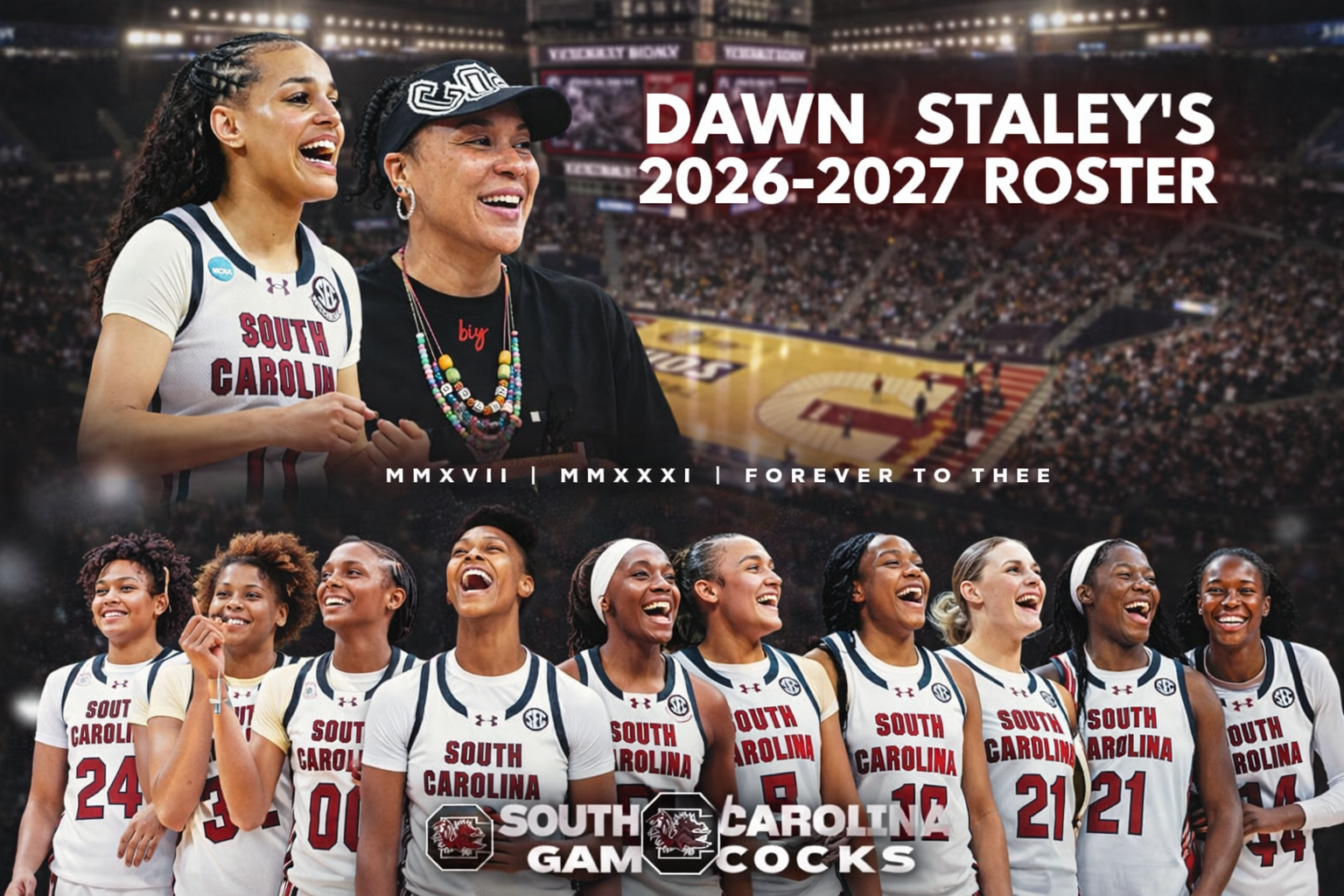
South Carolina women’s basketball enters the 2026-27 season with a problem most programs would envy — and a few have been destroyed by. The Gamecocks are expected to carry a full roster of 15 players, an unusually large number for a program that has historically operated with surgical precision in how it manages personnel. For head coach Dawn Staley, the challenge is not talent. It has never been talent. The challenge, as it was the last time she navigated a roster this deep, is clarity — making sure every player understands not just what she can do, but exactly what this program needs her to do.
Why Roster Size Is a Philosophical Problem
Staley has been transparent about her preferences for years. Her ideal roster sits at 12 to 13 players, and the reasoning is rooted in practicality rather than preference. Elite teams rarely play more than 10 players in any given game. Beyond that rotation, players struggle to find rhythm, practice reps become scarce — particularly given that South Carolina, like most women’s programs, uses male practice players — and the human cost of keeping talented athletes disengaged becomes a genuine threat to team chemistry.
In the NIL and revenue-sharing era, the calculus is even more pointed. Every player on a roster carries a financial commitment. The question Staley and her staff must ask is not simply whether they can afford players 14 and 15 — it is whether that investment produces more value than redirecting those resources toward strengthening the starting rotation. Most of the time, roster fillers at the back end are not championship difference-makers. But as Staley is well aware, the 2026-27 group is not a typical situation.
The Blueprint Already Exists
To understand how Staley will manage this roster, look back to 2021-22 — the last time she navigated this level of depth. That team, operating under a one-season waiver that allowed 16 players, featured veterans in their prime alongside the nation’s top-ranked recruiting class. The parallels to 2026-27 are striking: seniors Chloe Kitts and Tessa Johnson bring experience and proven production, junior Joyce Edwards is one of the most dynamic players in the country, and the incoming class — ranked second nationally — arrives alongside talented transfer Jordan Lee.
That 2021-22 team won the national championship. And before it played a single game, Staley delivered what now reads as a defining statement of her entire coaching philosophy.
“This is what we said from the very beginning of the year: to make this a special year for us, we only need what you do best. It is when you try to do stuff that someone is best at is going to get us in trouble.”
Those words were not motivational filler. They were a covenant — a promise to her players that their value would be defined by excellence within a specific role, not by how broadly they could perform. In a locker room full of former All-Americans and highly recruited prospects, that kind of framework is not just helpful. It is essential.
The 2018-19 Warning Still Echoes
Staley did not arrive at this philosophy by accident. The 2018-19 season serves as the cautionary tale that shaped everything that followed. That year, she had 13 talented players and no clearly defined hierarchy of roles. The result was South Carolina’s worst season since 2012 — a collapse that had far more to do with confusion and unmet expectations than with a lack of individual ability.
The lesson Staley took from that year was specific and actionable: talent without role definition is not an asset, it is a liability. She vowed going forward to communicate with each player — clearly, directly, and early — about exactly what her role would be and why. That commitment to transparency has been one of the most underappreciated pillars of South Carolina’s dynasty.
“That’s why we ask our players, we only want what you do best. We don’t want what you’re average at because what you’re average at, somebody else, it’s their best. That is hard for players. It kind of puts the clamps on them a little bit, but with who we have, we have to play that way,” Staley said ahead of that 2021-22 season.
That is an extraordinarily difficult thing to ask of elite athletes, most of whom have spent their entire lives being the best player on every team they have played for. Accepting a defined, limited role requires both trust in the coach and a genuine willingness to subordinate individual ambition to collective purpose. Staley asks for that every year. In her best seasons, she gets it.
Matchups Over Names: The Staley Lineup Philosophy
Perhaps no aspect of Staley’s coaching is more misunderstood by casual observers than her lineup decisions. The 2022 Final Four offers the clearest window into how she actually thinks about personnel. Against Louisville, she wanted size to counter the Cardinals’ small guards — meaning 6-foot-1 Saniya Rivers played 20 minutes while 5-9 Zia Cooke played just 22. Against UConn, the calculus shifted: more shooting was required, so Cooke’s minutes jumped to 30, Rivers dropped to five, and Bree Hall added 10. Kamilla Cardoso — one of the most physically dominant players in the country — played a combined 15 minutes across both games.
The lesson is blunt and important: Staley does not play the five most talented players. She plays the five players who give South Carolina the best matchup for that specific game, against that specific opponent, in that specific moment. That is not a small distinction — it is the entire philosophy, and it explains decisions that confuse fans who think about lineups the way they think about All-Star teams.
It also explains why Victaria Saxton — never the most talented player on any South Carolina roster — was a three-year starter. She understood her role, executed it consistently, and never asked the coaching staff to define her value in terms she preferred rather than terms the program needed.
The Injury Factor Is Real
One variable that could reshape this entire conversation is health. Ashlyn Watkins, Chloe Kitts, Kaeli Wynn, and Kelsi Andrews are all returning from significant injuries. The possibility that one or more of those players begins the season at less than full strength is not speculative — it is a genuine planning concern. In 2021-22, LeLe Grissett missed the first 12 games, and Raven Johnson tore her ACL in the second game of the season, meaning Staley never actually managed 16 players simultaneously. The same could prove true in 2026-27.
That uncertainty, while concerning on the surface, also creates a natural pathway for role clarity. Managed returns mean managed minutes, and managed minutes mean a more gradual integration of depth pieces — which is, in many ways, exactly what a 15-player roster needs.
The Summer and Fall Will Define the Season
The Gamecocks have the talent to win another national championship. They also have the depth to implode if roles are not defined and accepted before the first tip. Staley’s track record suggests she will handle this challenge the same way she always has — honestly, directly, and with an unwavering commitment to putting the team’s needs ahead of any individual player’s preferences.
The summer and fall workouts are where this season will actually begin. Not in November. Not in March. Now — in the conversations Staley and her staff are already having with each player about what she does best, what the program needs, and how those two things can become one.
When they align, South Carolina wins championships. History says so.
About The Author