Rebounding and Frontcourt Defense Were Major Trouble Spots for the Gamecocks
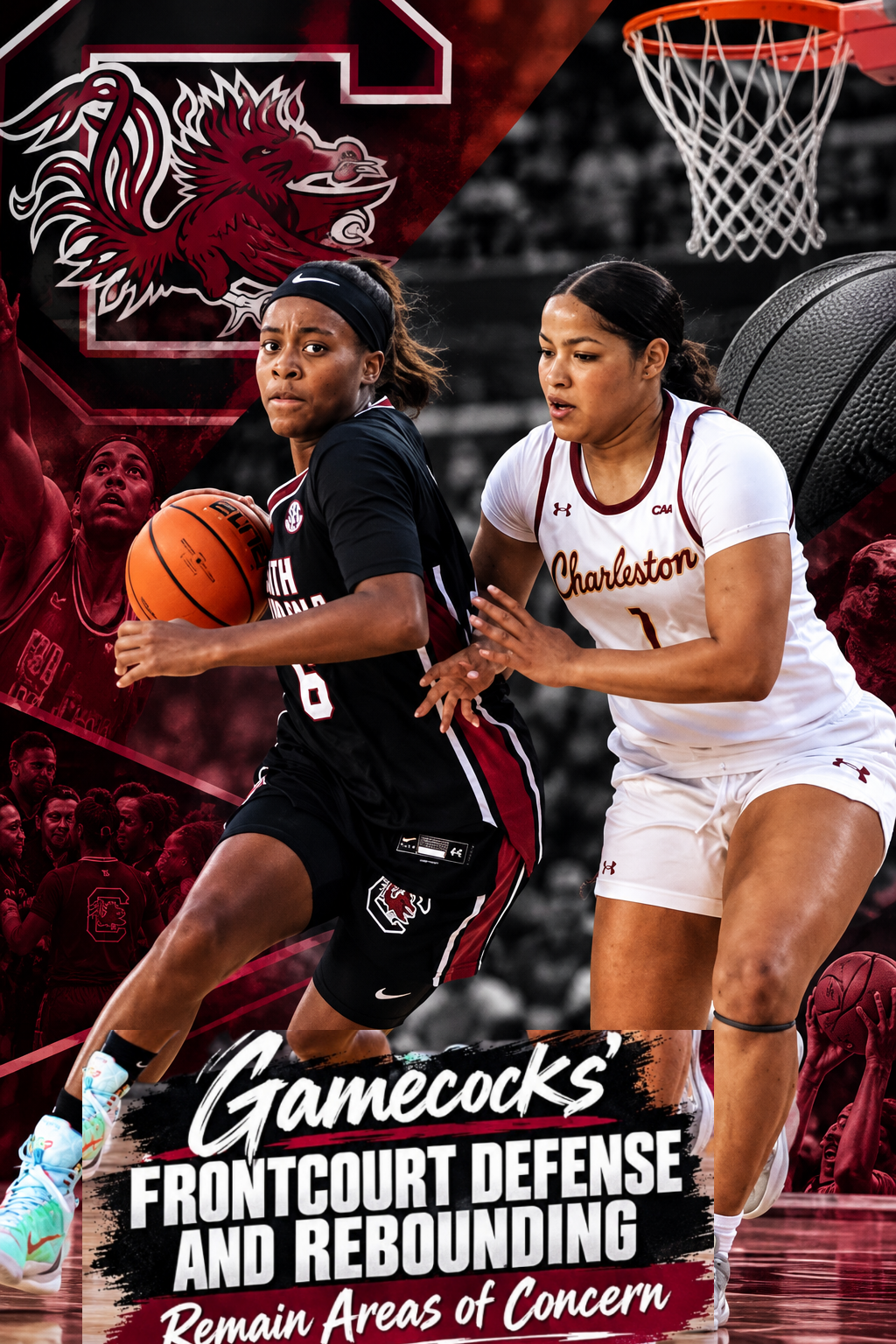
South Carolina’s frontcourt defense and rebounding were a clear weak spot in this game, exposing depth issues the team will need to sort out before conference play. The Gamecocks were only plus-six on the boards against a smaller College of Charleston team, and the Cougars pulled down 25 offensive rebounds — a number that suggests real structural problems in South Carolina’s interior defense and box-out execution.
Adhel Tac’s return was a bright spot emotionally, but not yet a solution on the floor. She was back on the court for the first time after missing the final two months of last season with a foot injury. However, the author notes that her lack of quickness becomes a real issue against smaller, faster opponents — rather than using her size advantage to dominate inside, she instead “becomes a liability” when forced to guard around the perimeter or react to quicker players attacking the rim.
The good news: help may already be on the roster, just not yet available. Three players who project as answers to South Carolina’s rebounding and interior defense questions were all held out of this particular game:
- Kitts was the team’s leading rebounder in 2024-25, pulling down 7.7 boards per game
- Ashlyn Watkins averaged 7.0 rebounds per game over her last two seasons and brings the lateral quickness needed to defend guards away from the basket
- Alicia Tournebize, listed at 6-foot-7, offers a disruptive defensive presence purely through her size and wingspan
All three players went through pregame warmups but ultimately sat out, and the author suggests both Kitts and Watkins are likely ahead of Tac in the rotation once healthy and available. Their absence in this particular matchup likely explains much of the rebounding disparity — this wasn’t necessarily a permanent personnel problem, but a temporary one caused by injuries or roster availability.
Freshman Oliviyah Edwards showed flashes of frontcourt potential but also the rawness expected of a first-year player. The author describes her game as a mix of impressive, “wow” moments alongside the kind of inexperienced mistakes typical of freshmen still learning the speed and physicality of the college game. The clear implication is that she has real long-term upside in the frontcourt, but isn’t yet a fully reliable contributor.
Part of the blame also falls on preparation, not just personnel. College of Charleston enters this season under a new head coach, Amanda Butler, with a largely overhauled roster. The Cougars committed heavily to offensive rebounding, sending five players to crash the glass on missed shots — an aggressive, non-traditional approach that South Carolina appeared unprepared for. While head coach Dawn Staley reportedly has some familiarity with Butler’s coaching tendencies from her previous stops at Florida and Clemson, the author notes there was little to no visible in-game adjustment or scheme-specific game-planning to counter the five-player crash strategy.
Bottom line: This piece frames South Carolina’s rebounding struggles as a fixable, short-term issue rather than a deep structural flaw — contingent on getting Kitts, Watkins, and Tournebize integrated into the rotation, along with better scouting and in-game adjustments against opponents willing to crash the boards aggressively. Tac’s return is encouraging for depth purposes, but her matchup limitations against smaller, faster teams may cap her role until the Gamecocks face bigger, more traditional frontcourts.
About The Author