“Three Guards, One Ball, No Playbook: How South Carolina’s Backcourt Found Chemistry on the Fly”
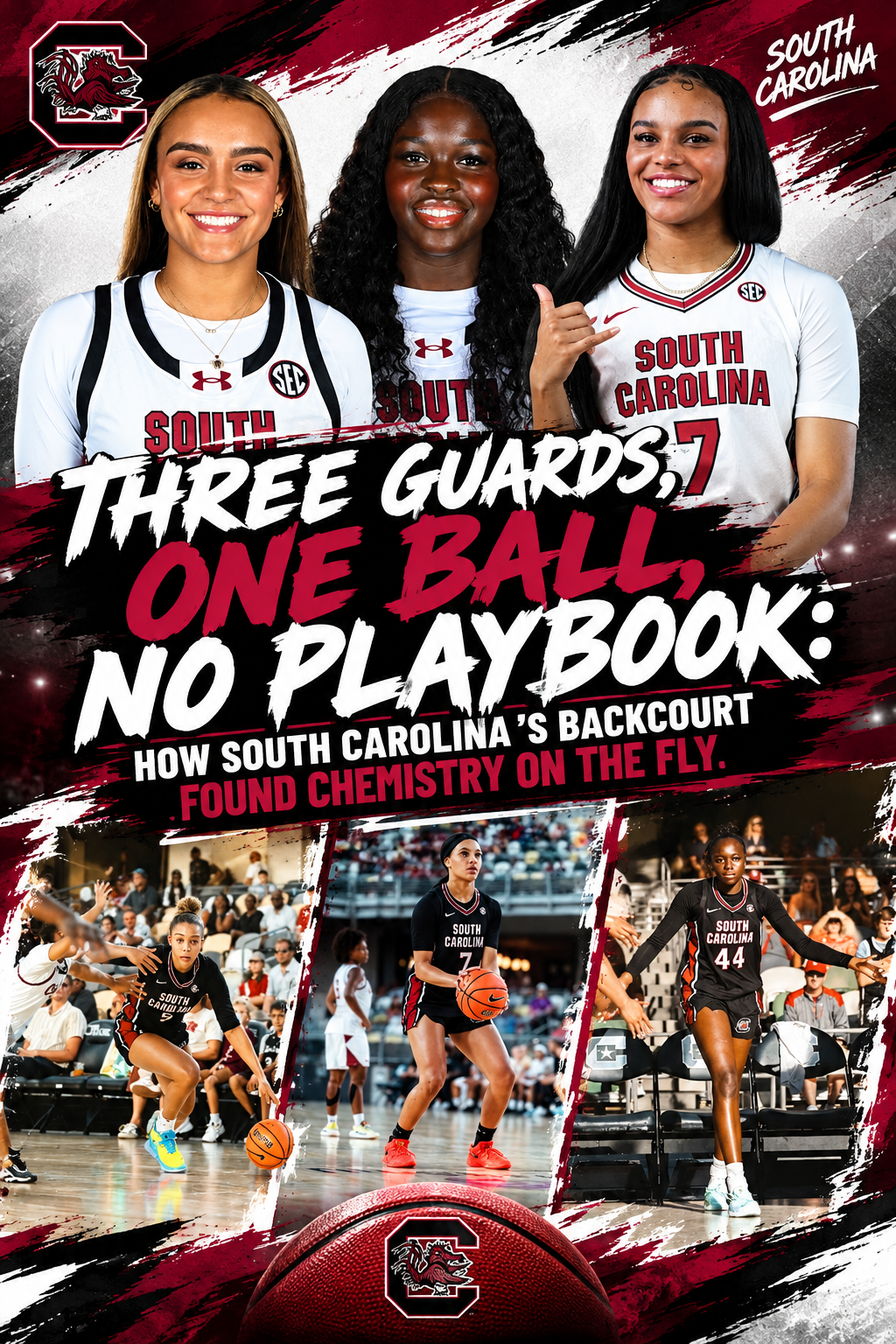
South Carolina’s backcourt trio of Tessa Johnson, Jordan Lee, and Agot Makeer delivered a genuinely fun, balanced offensive showing in this game, with all three scoring in double figures and each dishing out exactly three assists.
Tessa Johnson was the offensive standout of the group. She poured in 23 points — which would have set a new career-high — despite a rough shooting night from beyond the arc, going just 2-for-7 from three. She rounded out her stat line with six rebounds and three steals, showing she can impact the game beyond scoring even when her shot isn’t fully falling.
Jordan Lee had an efficient, if uneven, debut in a South Carolina uniform. She scored 15 points on a perfect 4-for-4 shooting night from three-point range — a strong shooting performance by any measure. However, the author notes she struggled with ball security early on, committing five turnovers, in what was her first game for the program. Importantly, she settled in and grew more comfortable as the game progressed, suggesting early-game jitters rather than a deeper issue.
Agot Makeer was the quiet, efficient piece of the trio. She added 12 points on 2-for-3 three-point shooting, doing damage without needing a high volume of shots.
Beyond the individual scoring, the chemistry between Johnson and Makeer — the two nominal point guards — stood out as a positive sign. The two shared ball-handling duties, trading off possessions bringing the ball up the floor, with Makeer taking on a larger share of that load as Johnson got hot and shifted more toward scoring. The author emphasizes that this arrangement worked well because neither player had to sacrifice what she does best to accommodate the shared responsibility — a notable feat of in-game adaptability.
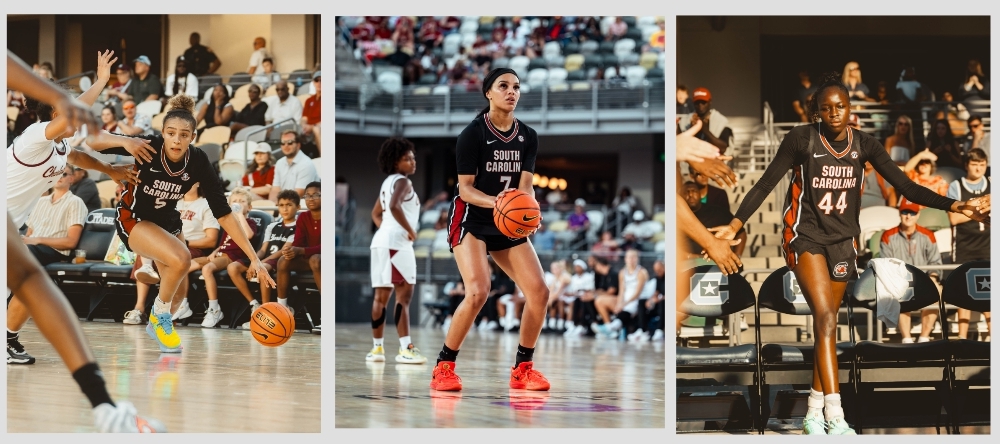
That said, the author is careful to flag that true point guard play — the structural, distributive kind — still needs refinement. The clearest evidence: South Carolina finished with more turnovers (15) than assists (12), a ratio that generally signals shaky offensive organization and decision-making, even amid an otherwise encouraging performance.
Despite that imbalance, head coach Dawn Staley expressed satisfaction with how the “committee” approach to point guard play functioned overall. Context matters here — the author notes this was a genuinely difficult assignment, as the team was missing six players and, notably, a full playbook, meaning the group was essentially improvising cohesion on the fly rather than executing a well-drilled system.
Bottom line: This piece frames the game as an encouraging, if imperfect, debut for South Carolina’s revamped backcourt — strong individual scoring and surprising on-court chemistry between Johnson and Makeer offset by turnover issues that are somewhat excusable given the shorthanded roster and lack of established sets. The takeaway is cautious optimism rather than either alarm or full confidence.
About The Author