Four Critical Miscues That Sank South Carolina Against Kentucky
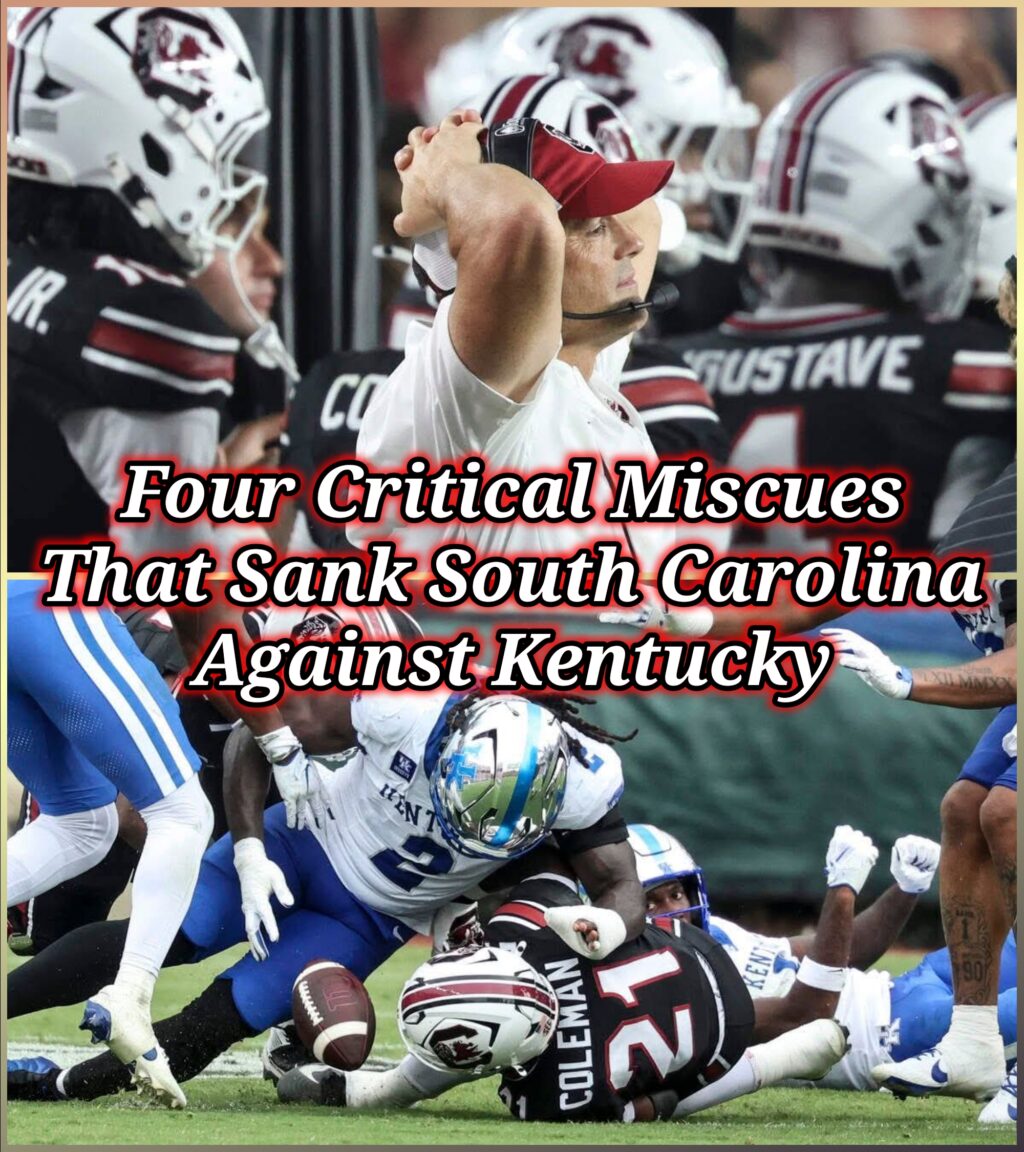
Despite some genuine positives — Sellers playing more like himself, finished drives early, and a defense that held firm in the first half — South Carolina’s 35-34 overtime loss to Kentucky ultimately came down to four costly breakdowns at pivotal moments.
1. The Second-Quarter Fumble
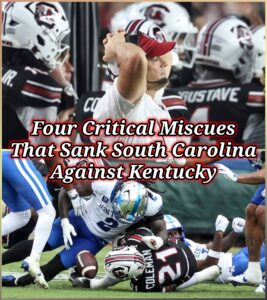
South Carolina started nearly flawlessly, scoring on three of its first four drives to build a 17-0 lead, aided by a defense that forced four straight punts while holding Kentucky to just 38 total yards. That momentum shifted when running back Jabree Coleman fumbled with five minutes left in the half, giving Kentucky the ball at the USC 33. The Wildcats capitalized, scoring five plays later to cut the deficit to 17-7 — their best offensive drive of the half by a wide margin. The two teams traded late field goals, sending South Carolina into halftime up 20-10.
2. A Botched Fourth-Down Conversion
Kentucky opened the second half with a touchdown drive, cutting the lead to 20-17. South Carolina appeared poised to respond, driving into Kentucky territory before Beamer elected to go for it on fourth down with a tight end sneak using Moe Brown, who was stopped for a two-yard loss. Beamer explained the decision afterward: “Felt like we had momentum, and wanted to finish the drive, and wanted to be aggressive… It’s a play that we’ve ran forever now… There was an unblocked linebacker that we weren’t going to get to, and I’ll take my chances with Moe and him one on one in the hole. He bounced it outside a little bit to where the unblocked guy is and good play by them.” Notably, this marked the second straight week South Carolina failed on a tight end sneak on fourth down, having run a similar failed play with Brady Hunt against Alabama. Kentucky capitalized immediately, taking a 24-20 lead, part of a disastrous third quarter where South Carolina managed just 32 yards after posting 257 in the first half, while Kentucky scored 14 unanswered points.
3. Sellers’ Costly Fourth-Quarter Fumble
South Carolina briefly regained control, retaking the lead 27-24 on a Sellers touchdown pass to DJ Black, then forcing a Kentucky three-and-out. Facing another fourth-down decision deep in Kentucky territory, Beamer again chose aggression over a field goal: “I don’t love kicking a field goal to go up six because a touchdown beats you. And I get it, there was a lot of time left. But we had made that decision early in that drive that if we got it to fourth and five or less… that we were going to go for it.” This time, a timing issue on a speed option led to a Sellers fumble: “We had a call that I liked, and the snap was off… The pitch phase got out of whack because the snap was off. So then the running back and LaNorris aren’t in phase anymore because the snap was off, and we didn’t get it done.” Kentucky responded with a 66-yard drive to tie the game and force overtime.
4. Busted Coverage in Overtime
After South Carolina scored first in overtime to take a 34-27 lead, Kentucky answered with a touchdown pass to a wide-open Henry Boyer, who leaked out undetected after initially blocking. Rather than kick the tying extra point, Kentucky gambled on a two-point conversion — and found a second wide-open receiver, tight end Willie Rodriguez, who caught the game-winning pass completely untouched. Despite a much-improved secondary performance compared to the Alabama disaster the week prior, two critical coverage breakdowns in the most important moments ultimately decided the outcome.
The Bigger Picture
Each of these four moments — a fumble, two failed fourth-down gambles, and a pair of busted coverages — represented a missed opportunity for South Carolina to either extend its lead or seal the win outright. Together, they paint a picture of a team capable of playing well for stretches but still unable to finish, extending the program’s troubling pattern of squandering leads in critical conference matchups.
About The Author