NCAA’s New Eligibility Rule: How the Five-Year Model Could Affect Dawn Staley’s South Carolina Roster
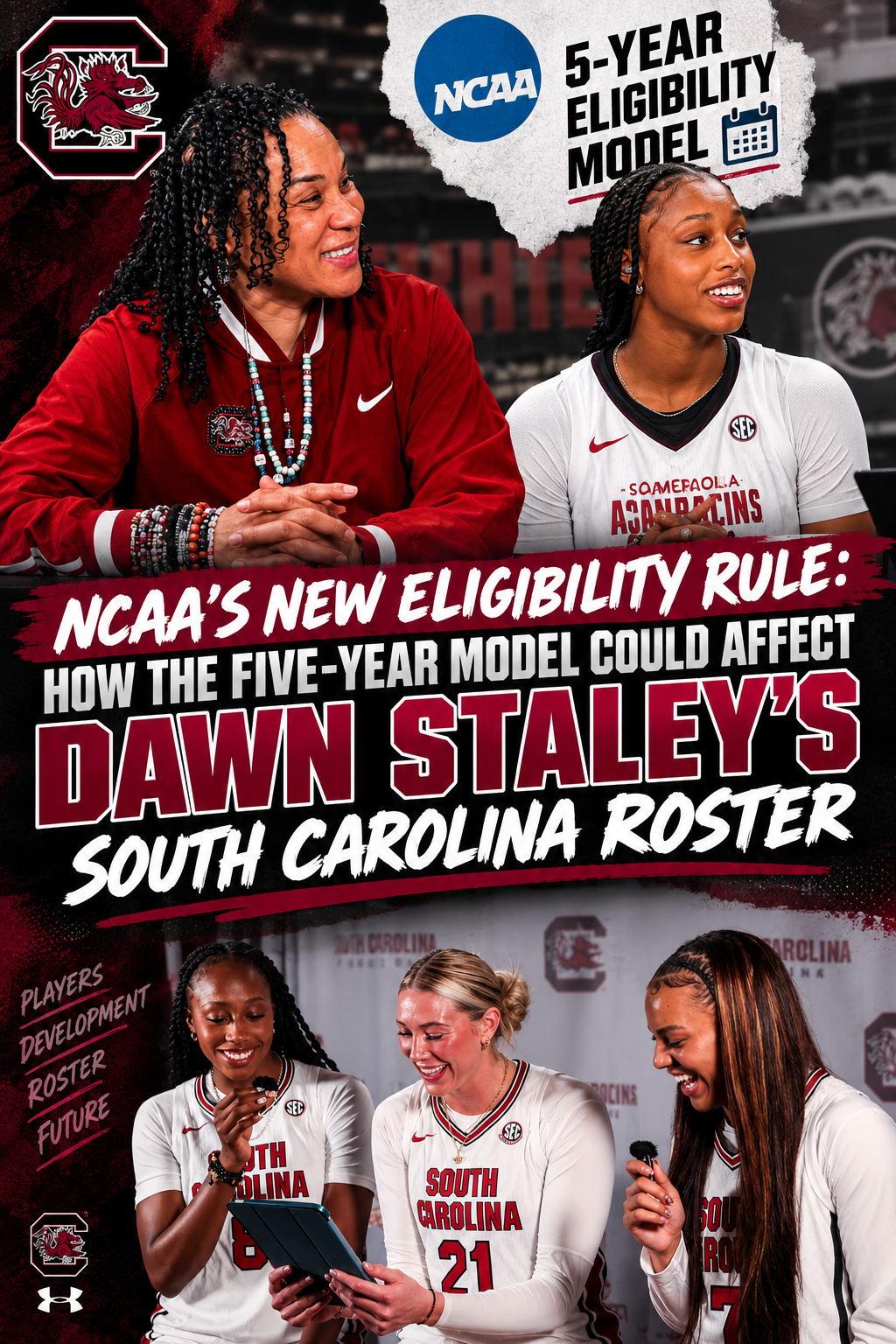
The NCAA’s new eligibility model is introducing a significant change to college sports, giving eligible student-athletes the opportunity to compete for up to five seasons within a five-year eligibility period. The change could influence how coaches recruit, manage player development and plan their rosters for the future.
For South Carolina women’s basketball coach Dawn Staley, however, the new system does not appear likely to dramatically change her roster-building strategy in the immediate future. With the Gamecocks consistently developing players with professional potential, Staley believes most of her athletes will pursue opportunities in the WNBA rather than remain in college for an additional season.
How the NCAA’s New Eligibility Model Works
Under the previous system, student-athletes generally had five years to complete four seasons of competition, with the possibility of using a redshirt season. The new age-based model shifts the emphasis toward a five-year eligibility period that can allow five seasons of competition, depending on the athlete’s circumstances.
The eligibility clock generally begins with full-time college enrollment or the academic year following the athlete’s 19th birthday, whichever comes first. The NCAA has also moved away from traditional athletic redshirt rules, although transitional arrangements apply to certain current student-athletes.
The change creates another consideration for coaches already navigating transfers, roster limits, revenue sharing and name, image and likeness (NIL) opportunities. Programs must evaluate how the new framework could affect player retention, recruitment and long-term roster planning.
For Staley, though, the potential impact appears limited because of the professional opportunities available to South Carolina’s top players.
Dawn Staley Explains Her Approach
Speaking during SEC basketball media day on October 13, Staley acknowledged that the situation remains uncertain but does not expect many Gamecocks to use all five years of eligibility.
“At this point, it’s so fluid,” Staley said at SEC hoops media day Oct. 13. “I don’t anticipate our players, or very few of them, sticking around for five years. If they have an opportunity to go to the league, they’re going to go to the league. I don’t think it will impact us much. But if we have to cross that road, we’ll do it.”
Her comments reflect the professional ambitions of players in South Carolina’s program. For athletes who develop into strong WNBA prospects, entering the professional draft may be more appealing than returning to college for another season.
That possibility means Staley is unlikely to build her roster around the assumption that players will automatically remain for five years. Instead, the Gamecocks will continue to balance immediate championship goals with the possibility of departures to professional basketball.
Tessa Johnson’s Future Could Be Worth Watching
Tessa Johnson is identified in the original report as the South Carolina player facing a potential decision about returning for a fifth year. She is projected to be a first-round selection in the 2027 WNBA Draft, making her professional outlook an important consideration.
If that projection holds, Johnson could have a compelling reason to pursue the next stage of her basketball career rather than extend her college tenure. However, a draft projection does not confirm what decision she will ultimately make.
For South Carolina, the larger question is whether the new rules will lead to meaningful changes in player retention over time. Staley’s comments suggest that professional opportunities will remain a major factor in those decisions.
Roster Listings Will Also Change
Another immediate effect of the new model concerns how players are classified on team rosters. With traditional redshirt designations being phased out, some athletes will now be listed according to their year of eligibility or academic standing in a different way.
The original report notes that Tac enrolled at South Carolina in January 2024 after an injury ended her high school season early. She received a redshirt for the 2023–24 season and was subsequently listed as a redshirt freshman in 2024–25. Under the newer terminology, she is now listed simply as a “junior.”
Chloe Kitts, meanwhile, missed the 2025–26 season because of an injury. Rather than being classified as a redshirt senior, she is listed as a “fifth-year” player.
These changes illustrate how the new system is altering eligibility terminology as well as the framework used to evaluate a player’s time in college.
What It Means for the Gamecocks
Ultimately, the NCAA’s eligibility overhaul gives eligible athletes another potential season of competition while requiring coaches to adapt to a different system.
For Staley, the priority remains assembling a roster capable of competing for championships while preparing players for opportunities beyond college basketball. If her athletes are ready to enter the WNBA, she does not expect the new rule alone to persuade them to stay.
The five-year model may create additional flexibility, but South Carolina’s roster decisions will continue to depend on player development, professional prospects and the team’s evolving needs. As Staley indicated, the program will address individual eligibility situations when they arise rather than assume the rule will fundamentally change its approach.
About The Author