South Carolina Falls 34-6 to Arkansas as LaNorris Sellers’ Absence Raises Questions About Quarterback Decision
South Carolina’s four-game winning streak came to an abrupt end Saturday night after the Gamecocks suffered a disappointing 34-6 defeat against Arkansas at Donald W. Reynolds Razorback Stadium.
The loss was particularly damaging for Shane Beamer’s team, as it ended South Carolina’s remaining hopes of reaching the College Football Playoff and overshadowed what had been an important stretch of the season.
While several factors contributed to the defeat, the decision not to play starting quarterback LaNorris Sellers became one of the biggest talking points following the game.
A disappointing performance on both sides of the ball
South Carolina struggled to compete with Arkansas physically throughout the evening. The Razorbacks controlled possession, established their running game and consistently won important battles along the offensive and defensive lines.
The Gamecocks, meanwhile, struggled to respond.
Arkansas repeatedly found opportunities to run between the tackles, with its offensive line creating additional room for ball carriers after initial contact. South Carolina’s defensive front had difficulty stopping those extra yards.
The offensive struggles were equally concerning. The Gamecocks missed several opportunities through dropped passes and failed to capitalize on a second-half interception opportunity.
Arkansas appeared more prepared and physically stronger, while South Carolina struggled to establish any consistent rhythm.
Two costly moments that exposed South Carolina’s problems
Beyond the overall performance, two particular situations highlighted Arkansas’ preparation and execution.
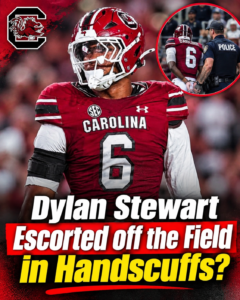
1. Dylan Stewart caught by Arkansas’ hard counts
Arkansas successfully drew South Carolina defensive standout Dylan Stewart offside twice through its use of hard counts.
SEC Network analyst Cole Cubelic suggested that the Razorbacks had studied Stewart’s tendencies and deliberately used different snap-count techniques to catch him moving before the play began.
It demonstrated how carefully Arkansas had prepared to exploit South Carolina’s defensive habits.
2. Cutter Woods’ opening interception returned for a touchdown
Another significant moment came during Woods’ first interception.
Arkansas cornerback Joker Johnson positioned himself deep in coverage, appearing to invite the inexperienced quarterback to attempt the throw. Johnson then moved toward the pass, intercepted it and returned it for a touchdown.
The play exposed the difficulties Woods faced against an Arkansas defense that understood his limited experience and mobility.
LaNorris Sellers’ absence becomes a major talking point
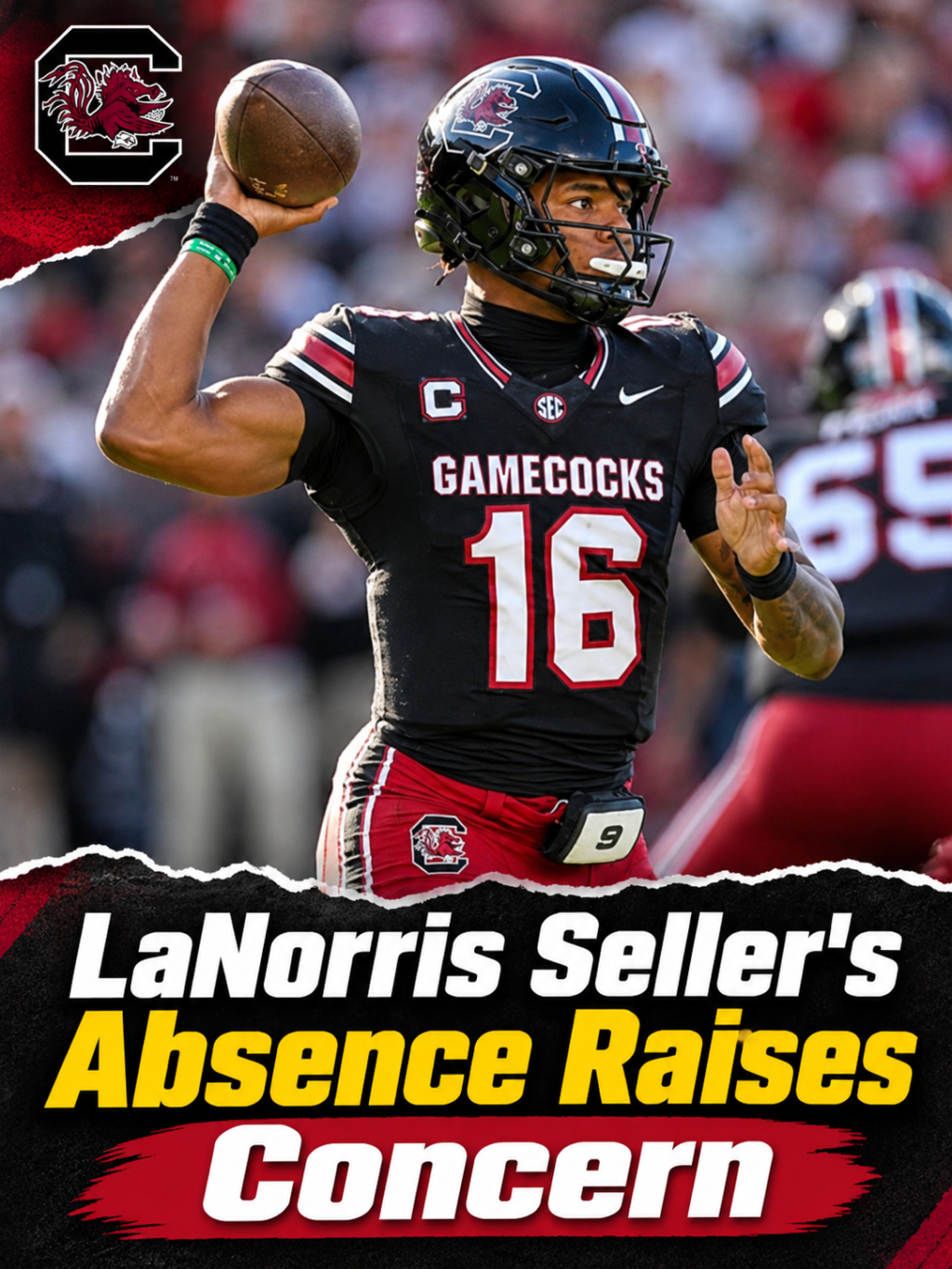
Perhaps the biggest question surrounding Saturday’s defeat was why LaNorris Sellers did not play, despite participating in pregame warm-ups with the first-team offense.
The quarterback had been listed as probable on Thursday and Friday’s SEC availability reports before being removed from the report several hours before kickoff.
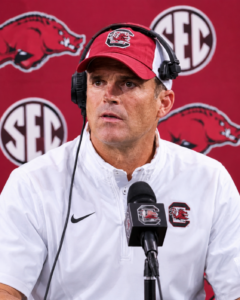
However, head coach Shane Beamer revealed during the SEC Network broadcast that Sellers had practiced only on Wednesday.
The broadcast also indicated that the coaching staff was not satisfied with how he looked during that practice.
Although Sellers followed a familiar pregame routine, the extensive tape around his left ankle suggested that he was still dealing with significant limitations.
Beamer explained the decision before kickoff:
“we felt like (Cutter Woods) gave us the best (chance) tonight,” Beamer told SEC Network.
Ultimately, the coaching staff decided that Woods offered South Carolina its best opportunity under the circumstances.
Cutter Woods struggles in difficult circumstances
South Carolina’s sophomore backup quarterback
Woods entered the game with limited experience against SEC competition, having attempted only 12 passes against conference opponents before Saturday.
The sophomore finished with three interceptions, while South Carolina’s offense managed just six points despite reaching the red zone five times.
It would be unfair to place the entire defeat on Woods. South Carolina was also missing its two leading wide receivers, Nyck Harbor and Mazeo Bennett, and struggled to establish an effective running attack.
Nevertheless, his performance highlighted the difference between having an experienced starting quarterback and relying on an inexperienced backup.
Woods did not possess the same running threat as Sellers, allowing Arkansas to defend the offense without worrying as much about the quarterback escaping the pocket.
Sellers’ mobility is an important part of South Carolina’s offensive identity, and his absence changed the challenges Arkansas faced defensively.
What the defeat means for Shane Beamer
South Carolina’s 34-6 loss leaves several questions about the team’s preparation, offensive execution and quarterback management.
Sellers’ injury created a difficult decision for Beamer. Playing a quarterback who was not physically ready could have created further problems, but the alternative also came with considerable risks.
The absence of Harbor and Bennett added another challenge, leaving the offense without two important receiving options.
Ultimately, Arkansas took advantage of South Carolina’s weaknesses, while the Gamecocks failed to find answers.
The biggest takeaway is that South Carolina needs greater offensive consistency and dependable depth at quarterback if it hopes to compete successfully against the SEC’s strongest teams.
For Beamer, the Arkansas defeat will likely prompt difficult questions about what could have been done differently and how the Gamecocks can respond during the remainder of the season.
About The Author