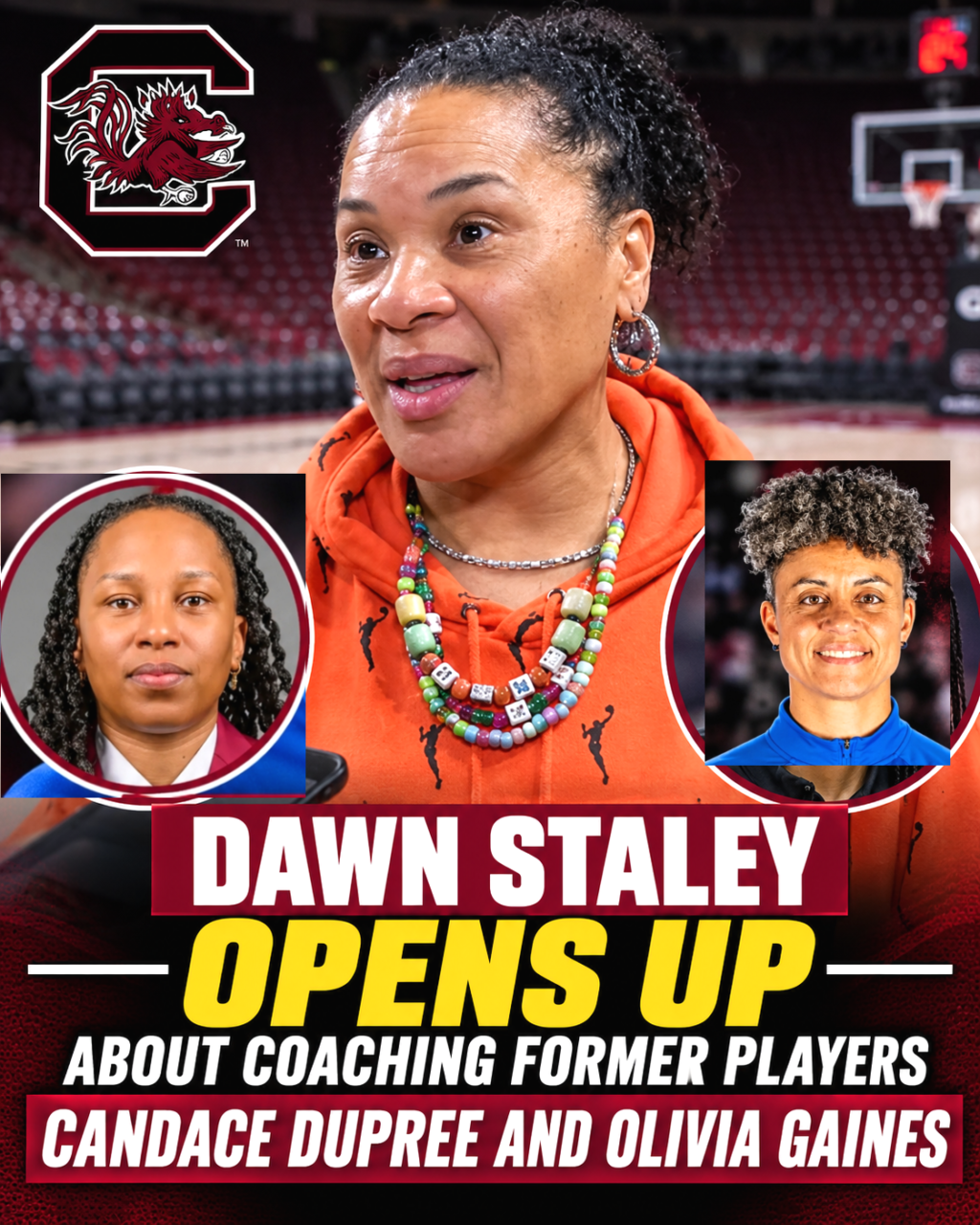
Dawn Staley Opens Up About Coaching Former Players Candace Dupree and Olivia Gaines at the PowHER Player Classic
The inaugural PowHER Player Classic means more to Dawn Staley than simply bringing four women’s basketball programs together for a Thanksgiving weekend tournament. It also offers an opportunity to reconnect with two former players who have taken different paths in the game but now share something important with their former coach: a passion for developing young basketball players.
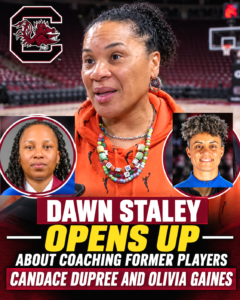
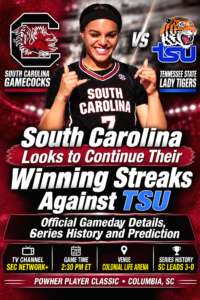
As South Carolina prepares to host Tennessee State and North Carolina Central in Columbia, Staley will find herself on the opposite sidelines from Candace Dupree and Olivia Gaines, two women whose basketball journeys were influenced by her coaching and mentorship.
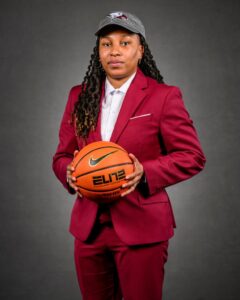
Dupree now leads Tennessee State, while Gaines is the head coach at North Carolina Central. Their presence gives the tournament an additional layer of meaning, turning what could have been an ordinary nonconference basketball weekend into a reunion of former players, mentors and coaches.
For Staley, seeing both women establish themselves in coaching is something worth celebrating.
Dawn Staley Reflects on Candace Dupree and Olivia Gaines’ Coaching Journeys
During her comments about facing her former players, Staley expressed happiness about seeing them pursue careers in coaching.
Speaking about Dupree, she admitted that coaching was not necessarily the career she originally imagined for her former player.
“I mean, it’s great, you know, I never thought Candice would be a coach at, at all, and she’s fallen in love with just helping young people and coaching them up.”
Dupree’s transition into coaching represents another chapter in a basketball career that already included considerable success as a player. Now, she has the responsibility of helping younger athletes develop their abilities and navigate the challenges of college basketball.
Staley also spoke positively about Gaines, whose interest in coaching was something she had recognized for a long time.
“And then you got O, who has always wanted to be a coach. So she’s, she’s living out her passion and it’s, it’s great to see them come back.”
The difference between their journeys makes the reunion particularly interesting. While Dupree discovered a passion for coaching along the way, Gaines had always envisioned herself working in that profession.
Both have now reached a position where they can influence the next generation of women’s basketball players.
Staley also emphasized the personal value of having both former players back in Columbia.
She explained that the tournament gives them an opportunity to spend time together in person rather than relying on phone calls, text messages or video conversations.
For Staley, the weekend is about more than basketball competition. It is also about enjoying the relationships built over years of playing, coaching and mentorship.
How the PowHER Player Classic Came Together
Perhaps the most revealing part of Staley’s comments concerned the thinking behind establishing the PowHER Player Classic.
According to the South Carolina coach, the idea developed through conversations involving the program’s scheduling process and its desire to create meaningful opportunities for historically Black colleges and universities.
Staley specifically credited Ari Moore, who handles scheduling for the Gamecocks, for helping bring the idea into focus.
“Ari Moore, she does our scheduling, and she knows we have a, an affinity for HBCUs.”
Staley explained that HBCU programs frequently face demanding nonconference schedules, with many having to travel to established programs for guarantee games.
She acknowledged that this arrangement can become repetitive, particularly when smaller programs are regularly placed in situations where they are expected to lose.
Her observation was important because it highlighted a challenge that extends beyond basketball results.
While these games provide financial opportunities for visiting programs, they do not always provide the same exposure, resources and commercial opportunities enjoyed by larger athletic departments.
Staley wanted to create something different.
She continued:
“You know, the fact that they got to go on the road, probably ninety percent of their non-conference, and that, that probably gets old, you know, they, they They sometimes surprise people by beating them. Sometimes, most of the times, they, they lose their guarantee games.”
Her comments suggest that the tournament was designed to change the experience for participating HBCU programs.
Rather than simply inviting them to Columbia for basketball games, South Carolina wanted to make the visiting teams feel valued and provide opportunities that extend beyond the court.
NIL Opportunities and Exposure: The Bigger Purpose Behind the Tournament
One of the most significant elements of the PowHER Player Classic is its emphasis on opportunities within the Name, Image and Likeness (NIL) environment.
Staley explained that South Carolina wanted the participating athletes to experience some of the benefits available within the modern college sports business.
She said:
“And for us, we just wanted to make them feel special, like really special, just create some, opportunities through Ray Rose Media, and having them feel what it, what it’s like to, to benefit in a NIL space. create, you know, wonderful experiences, and, and give perspective.”
This statement reveals that the tournament has a broader ambition than simply increasing the visibility of HBCU women’s basketball.
It is also about helping athletes understand how their basketball careers can create opportunities outside the traditional boundaries of competition.
Through the involvement of Rae Rose Media, the event creates an environment where participating players can engage with NIL-related activities, potential partnerships and professional networking opportunities.
That is particularly important for athletes at programs that might not have the same commercial reach as nationally prominent basketball schools.
Staley wants the players to leave Columbia with more than memories of competing against South Carolina. She wants them to leave with experiences and connections that could benefit their futures.
Dawn Staley Recognizes South Carolina’s Advantages
Another interesting part of Staley’s explanation was her acknowledgment of the advantages South Carolina enjoys compared with many smaller programs.
She understands that the Gamecocks operate in an environment where resources, exposure and opportunities are considerably greater than what some HBCU programs can access.
Staley explained:
“I think we are, in a position of, we don’t, we don’t want for nothing at this, at this level at South Carolina. So I think it, it puts things in perspective and, and knowing that people aren’t given the same, benefits that, that we get, and we want them to feel, feel that.”
This might be the most important message from her comments.
South Carolina has developed into one of the most successful women’s basketball programs in the country. Its national recognition, competitive resources and commercial opportunities place it in a position that many programs are still working toward.
Rather than treating those advantages as something exclusive to her program, Staley wants to use South Carolina’s platform to create opportunities for others.
That approach also reinforces her longstanding relationship with HBCU basketball and her belief that women’s basketball should grow collectively.
A Reunion That Goes Beyond Competition
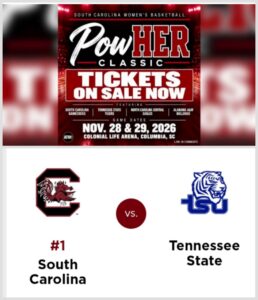
The PowHER Player Classic brings together four programs: South Carolina, Tennessee State, North Carolina Central and Alabama A&M.
The coaching connections make the event particularly meaningful.
- Dawn Staley: South Carolina head coach and mentor to both former players.
- Candace Dupree: Tennessee State head coach and former Temple player under Staley.
- Olivia Gaines: North Carolina Central head coach and former South Carolina Gamecock who helped the program reach its first Final Four in 2015.
The tournament provides an opportunity for Staley to compete against two former players while celebrating the professional journeys they have built since their playing days.
But the bigger victory could come from what the event accomplishes for the participating athletes.
Final Analysis: Staley Is Using Her Platform to Open Doors for Others
Dawn Staley’s comments offer an important look at the philosophy behind the PowHER Player Classic.
She could have simply organized another Thanksgiving tournament featuring South Carolina and three visiting programs. Instead, she and her partners created an event with a broader purpose involving HBCU visibility, NIL education, networking and community engagement.
Her reunion with Dupree and Gaines makes the occasion even more special because it demonstrates the lasting influence of coaching and mentorship.
Staley is not only interested in producing successful basketball players; she also wants to see former players become leaders, mentors and coaches themselves.
And perhaps that is what makes this tournament particularly meaningful.
The Gamecocks will be competing for victories, but Staley is also creating a platform where other programs and their athletes can experience opportunities that might otherwise be difficult to access.
Her message is straightforward: women’s basketball has grown, and the benefits of that growth should not be reserved for only the biggest programs.
For Dawn Staley, the PowHER Player Classic is another opportunity to make sure the next generation of women’s basketball players is not left behind.
About The Author